
Practical Tips on How to Select a Durable and Cost-Effective Industrial Wheel Loader
2026/08/14 15:41
1. Global Industrial Wheel Loader Market Status and Industry Trends
1.1 Latest Market Scale and Development Momentum
According to the latest global construction machinery industry data, the global market size of the industrial wheel loader reached USD 14.9 billion in 2026, with a compound annual growth rate of 4.3% from 2026 to 2030. It is expected to exceed USD 17.61 billion by 2030. Benefiting from the large-scale infrastructure construction in emerging markets, the upgrading of port logistics terminals, and the expansion of mining and metallurgical industries, the market demand for high-load and long-life wheel loader products maintains a long-term upward trend.
Among all regional markets, the Asia-Pacific region occupies the largest market share of nearly 35%, followed by North America, Europe, the Middle East and Africa. Different from ordinary construction loaders, industrial-grade loaders are mainly oriented to high-frequency, long-hour and heavy-duty working conditions, putting forward higher requirements for equipment durability, stability and energy-saving performance.
1.2 Main Development Trends of Industrial Wheel Loader Industry
In recent years, the procurement logic of global industrial equipment buyers has undergone obvious changes, driving the iterative upgrading ofdurable wheel loader products. First, full-life cycle cost has replaced one-time purchase price as the core evaluation standard. Buyers pay more attention to energy consumption, maintenance frequency and service life, rather than simply pursuing low quotation. Second, equipment durability and environmental adaptability have become rigid indicators. Harsh working environments such as dust, high temperature and heavy load require industrial wheel loaders to have reinforced structures and anti-aging performance. Third, intelligence and energy conservation have become mainstream development directions. Intelligent monitoring systems and optimized hydraulic configurations effectively improve the working efficiency and cost performance of industrial wheel loader.
2. Professional Selection Tips for Durable and Cost-Effective Industrial Wheel Loader
2.1 Match Model Specifications with Actual Working Scenarios
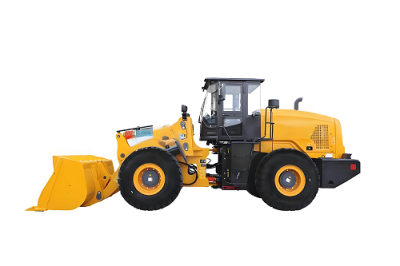
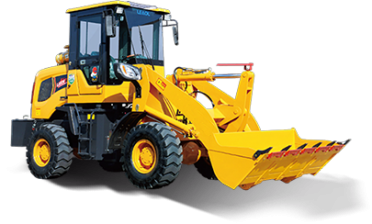
The premise of selecting a cost-effective wheel loader is to match the equipment tonnage and bucket capacity according to industrial application scenarios. Compact 1-3 ton wheel loaders are suitable for light material handling and workshop cleaning of small industrial parks; medium 4-6 ton industrial wheel loader is the mainstream model for aggregate yards, mixing stations and general industrial handling; 8-12 ton heavy-duty wheel loaders are specially used for open-pit mines, steel plants and large port bulk cargo operations.
For continuous high-intensity working conditions of 8-12 hours a day, buyers must choose a durable wheel loader with thickened high-strength steel frame, wear-resistant bucket and reinforced articulated structure, so as to avoid equipment aging, frequent failures and increased replacement costs caused by long-term overload operation.
2.2 Focus on Core Components That Determine Equipment Durability
The durability and stability of industrial wheel loader depend on three core components, which are the key inspection points for B2B procurement. First, the engine system. High-quality branded engines with stable power output and strong overload resistance can adapt to long-term high-load operation and reduce failure rates in harsh industrial environments. Second, the hydraulic system. The optimized load-sensing hydraulic system can realize efficient and energy-saving operation, and the fully sealed pipeline structure effectively prevents dust erosion, reducing the failure probability of hydraulic cylinders and gear pumps. Third, the chassis and bearing structure. The box-type welded main frame and heavy-duty drive axle greatly improve the overall stability and impact resistance of the durable wheel loader.
2.3 Evaluate Comprehensive Cost Performance Based on Full Lifecycle
Most overseas buyers easily fall into the misunderstanding of simply comparing ex-factory prices when purchasing wheel loader products. In fact, the real cost performance depends on the full-life cycle operating cost. A high-cost-effective industrial wheel loader has low fuel consumption, universal and cheap wearing parts, and perfect after-sales service support. Energy-saving engine and hydraulic matching technology can reduce annual fuel consumption by 10%-18%. Standardized spare parts can greatly shorten the maintenance cycle and reduce later operating costs. In contrast, low-priced loaders with insufficient configuration often bring higher maintenance costs and production shutdown losses in the later stage.
2.4 Verify Manufacturing Technology and Quality Control Standards
The production process directly determines the quality and durability of durable wheel loader. Formal industrial wheel loader manufacturers adopt standardized production processes such as robotic precision welding, shot blasting rust removal, multi-layer anti-corrosion spraying and finished product load aging test. Strict raw material inspection and finished product performance debugging ensure that the equipment can adapt to various harsh industrial working conditions such as high dust, high humidity and heavy corrosion. Before purchasing, buyers can verify the manufacturer's production qualifications, process standards and equipment test reports to eliminate inferior assembled equipment with poor durability.
3. Production Process and Main Industrial Application Scenarios
A qualified industrial wheel loader needs to go through complete standardized production links: raw material forging and cutting, frame welding and forming, core engine and hydraulic assembly installation, system pressure test and aging test, anti-rust spraying and finished product debugging. Every production link is strictly controlled to ensure the overall stability and durability of the wheel loa
At present, high-qualityder. durable wheel loader products are widely used in global industrial fields, including mine ore loading and transportation, aggregate yard material turnover, concrete mixing station feeding, metallurgical factory scrap handling, port bulk cargo stacking, and industrial park solid waste cleaning. By replacing different attachments such as rock buckets and fork clamps, the equipment can realize multi-functional operation and further improve the comprehensive utilization rate and economic benefits.
4. Buyer FAQ: Common Procurement Questions for Industrial Wheel Loader
Q1: What is the essential difference between industrial wheel loader and ordinary construction wheel loader?
A: The industrial wheel loader is specially optimized for long-term continuous heavy-load industrial working conditions. It has thicker bearing frame, reinforced wear-resistant parts, dust-proof and anti-corrosion system and stronger overload protection capability. Compared with ordinary construction wheel loaders suitable for intermittent operation, it has higher durability and longer service life, and is more suitable for high-frequency industrial production scenarios.
Q2: How to quickly identify a high-quality durable wheel loader?
A: Buyers can judge from three core indicators: first, the frame adopts thickened high-strength steel and full penetration welding process; second, it is equipped with brand closed hydraulic system and stable power assembly; third, it is equipped with heavy-duty drive axle and wear-resistant working device. These configurations are the core symbols of a qualified durable wheel loader.
Q3: Which is more cost-effective, electric wheel loader or diesel wheel loader?
A: It depends on the actual working scenario. Electric industrial wheel loader is suitable for indoor closed workshops and short-distance cyclic handling, with zero fuel consumption and low maintenance cost. For outdoor open mines, high-altitude areas and scenarios without stable power supply, energy-saving diesel wheel loader has stronger stability and higher comprehensive cost performance.
Q4: How long is the service life of a standard industrial wheel loader?
A: A well-maintained durable wheel loader can achieve a stable service life of 8-12 years under 8-hour daily standardized operation. Regular lubrication, hydraulic oil replacement, filter element update and chassis inspection can effectively avoid equipment aging and failure, and maximize the service value of the equipment.
5. Conclusion
In the booming global industrial machinery market, selecting a reliable, durable and cost-effective industrial wheel loader is crucial to the long-term operation of industrial projects. Global B2B buyers should no longer simply compare purchase prices, but take equipment durability, scenario matching degree, full-life cycle cost and manufacturer's manufacturing strength as the core procurement standards. By scientifically selecting tonnage specifications, checking core component quality, verifying production technology and evaluating after-sales service, buyers can select high-quality wheel loader products that meet industrial working conditions, effectively reduce operating costs, and create greater economic benefits for construction and industrial projects.