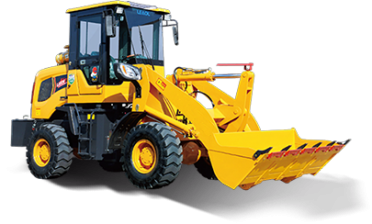

Global Wheel Loader Market Trends 2026: Efficiency & Electrification Reshape Construction Equipment
2026/07/30 13:35
Current Status and Scale of the 2026 Global Wheel Loader Market
Supported by continuous global infrastructure investment and equipment renewal demand, the global wheel loader market maintains steady growth in 2026. According to professional construction machinery industry data, the overall market scale has exceeded 19.6 billion US dollars, with a compound annual growth rate of nearly 5.9%, and the market growth is expected to continue steadily until 2034.
In terms of market demand structure, large-scale mining, road construction and port bulk cargo handling scenarios still dominate the market, contributing more than 68% of the overall equipment demand. Among them, heavy-duty wheel loader products with 5-ton to 15-ton load capacity are the mainstream equipment for heavy-load working conditions, widely used in quarries, open-pit mines, national road infrastructure and coastal port logistics operations.
Regionally, the Asia-Pacific region holds a 46% market share, benefiting from the rapid urbanization process in China, Southeast Asia and South Asia; the European market accelerates equipment electrification iteration driven by strict Stage V emission standards; the North American market is dominated by fleet equipment renewal demand; emerging markets in Africa, Central Asia and the Middle East show strong demand for cost-effective, durable and low-maintenance wheel loaders.
It is worth noting that while traditional diesel wheel loaders still occupy the main market share, the electric wheel loader segment has ushered in explosive growth. The global electric wheel loader market is expected to grow from 1.6 billion US dollars in 2026 to 3.17 billion US dollars in 2030, with a CAGR of 18.6%, becoming the fastest-growing track in theglobal wheel loader market.
Core Trend 1: Efficient Wheel Loader Upgrades Reduce Full Lifecycle Operating Costs
Against the backdrop of rising global energy prices, high-efficiency energy-saving technology has become the core competitive advantage of new-generation wheel loaders, and efficient wheel loader products have gradually become the preferred choice for medium and small engineering projects and long-term fleet operation enterprises.
Leading machinery manufacturers have completed systematic upgrades of powertrain, hydraulic system and transmission structure for traditional diesel wheel loaders. The newly upgraded intelligent load-sensing hydraulic system effectively eliminates invalid energy consumption in cyclic loading and unloading operations. Compared with old-fashioned equipment, the overall fuel consumption is reduced by about 15%, which greatly cuts the daily operation cost of construction teams.
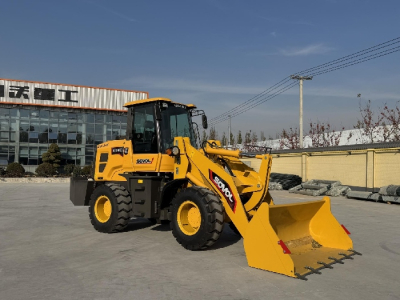
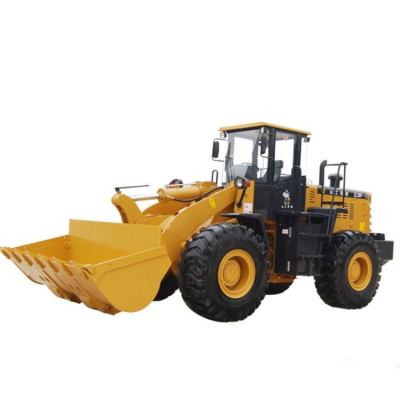
For the heavy-duty wheel loader used in harsh working conditions such as mines and large stockyards, manufacturers have optimized the overall frame structure and enhanced the wear resistance of core accessories such as buckets and tires. The improved equipment has longer maintenance cycles and lower failure rates, effectively reducing equipment downtime and parts replacement costs for large-scale continuous operation projects.
In addition, intelligent telematics systems have become the standard configuration of new equipment. The system can remotely monitor equipment working hours, real-time fuel consumption, operation status and fault early warning data, helping global fleet managers realize refined equipment management and maximize the utilization rate of each efficient wheel loader.
Core Trend 2: Full-Scale Electrification Reshapes Construction Equipment Competition Pattern
Electrification is the most disruptive development trend of the global wheel loader market in 2026. Driven by global dual-carbon policies and terminal users' demand for low-cost and low-noise equipment, electric wheel loaders are rapidly penetrating urban construction, municipal engineering, tunnel operation and environmentally sensitive construction scenarios.
Different from traditional diesel equipment, electric wheel loaders achieve zero tailpipe emissions and ultra-low noise operation, fully meeting the strict environmental protection and noise control requirements of urban construction projects. At the same time, electric equipment cancels complex diesel power systems, filter elements and lubrication structures, reducing daily maintenance costs by 30% to 40% compared with diesel models.
With the breakthrough of lithium battery technology and fast-charging supporting facilities, the endurance and charging efficiency of electric wheel loaders have been fully improved. At present, the market has formed a full-product layout covering compact electric wheel loaders for municipal use and medium and large heavy-duty wheel loader electric models for mines and ports.
Industry analysts said that electrification will not completely replace diesel wheel loaders in the short term. In remote areas without stable power supply and large-scale open-pit mining scenarios with extremely high load requirements, high-performanceefficient wheel loader diesel models will still maintain irreplaceable advantages, and the coexistence of electric and diesel dual technical routes will become the long-term normal of the global wheel loader market.
Main Application Scenarios of Modern Wheel Loaders
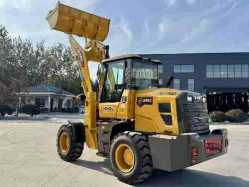
With the continuous technical iteration, wheel loaders have achieved full-scene coverage in the construction machinery field, and the differentiated matching of efficient wheel loader and heavy-duty wheel loader meets the diversified construction needs of global buyers.
Mining and Quarry Engineering: This is the core application scenario of heavy-duty wheel loader. The equipment is required to have strong breakout force, wear-resistant loading structure and stable continuous operation capability, and is mainly used for ore stacking, loading and material transportation in quarries and open-pit mines.
Infrastructure and Urban Construction: Medium and small efficient wheel loader products are widely used in road construction, building foundation excavation, aggregate stacking and site cleaning. Electric wheel loaders are preferentially adopted in urban core areas and environmentally restricted zones due to their zero-emission and low-noise advantages.
Ports, Agriculture and Environmental Protection Projects: Wheel loaders undertake bulk material handling and stacking work in port logistics yards; compact models are applied to farmland renovation and landscape construction; and energy-saving wheel loaders are also widely used in garbage sorting and stacking in environmental protection projects.
FAQ: Common Questions for Global Wheel Loader B2B Buyers
Q1: Which is more suitable for overseas engineering projects, diesel or electric wheel loader?
A: It depends on the construction environment and policy requirements. For urban projects with emission and noise restrictions and sites with stable power supply, electric wheel loaders have lower long-term operating costs. For remote mining and wild construction sites without perfect charging facilities, the mature and stable diesel heavy-duty wheel loader is still the most reliable choice.
Q2: What core indicators should be prioritized when purchasing an efficient wheel loader?
A: Buyers should focus on fuel efficiency, hydraulic system performance, rated load capacity, equipment durability and after-sales service support. It is recommended to take the full lifecycle TCO as the core evaluation standard instead of only focusing on the initial purchase price.
Q3: Are electric wheel loaders suitable for long-time heavy-load operation?
A: The upgraded large electric heavy-duty wheel loader has solved the pain points of insufficient endurance and weak power in the early stage. Equipped with high-capacity lithium batteries and energy recovery systems, it can fully meet the needs of long-time heavy-load operation in ports and mines.
Q4: What will be the mainstream development direction of the global wheel loader market in the next five years?
A: The global wheel loader market will continue to move towards high efficiency, electrification and intelligence. High-energy-saving efficient wheel loader will replace traditional high-consumption equipment, and electric and intelligent models will become the mainstream procurement trend of global engineering fleets.
Conclusion
2026 is a key turning point for the iterative upgrade of the global wheel loader market. Dual trends of energy efficiency upgrading and full-scene electrification are completely changing the competition logic of construction machinery equipment. The optimized efficient wheel loader reduces the operation threshold for global small and medium-sized engineering teams, while the upgradedheavy-duty wheel loader provides stable power guarantee for large-scale infrastructure and mining projects.
In the future, with the continuous improvement of intelligent technology and electrification supporting facilities, wheel loader products will achieve higher energy efficiency, lower failure rate and stronger environmental adaptability. For global distributors, contractors and equipment lessors, grasping the 2026 market trends will help optimize equipment procurement strategies, reduce long-term operating costs and gain sustainable competitive advantages in the global construction equipment market.