1. Global Wheel Tractor Industry Background & Latest Market Data
The global agricultural machinery market has maintained stable and rapid growth in recent years, with wheel
tractors occupying a dominant market share in the
agricultural tractor segment. According to professional agricultural machinery industry research data, the global agricultural
wheel tractor market scale reached USD 115.85 billion in 2025 and is projected to hit USD 122.36 billion in 2026, maintaining a steady year-on-year growth trend . The overall farm tractor market is expected to grow at a CAGR of 7.44%, reaching USD 129.11 billion by 2032, driven by rising global farm mechanization rates and labor resource shortages .
As the most widely used agricultural machinery type,
wheel tractor products account for 68% of the total agricultural tractor market demand, far exceeding crawler tractors in market penetration . Compared with traditional crawler equipment, wheel tractors feature flexible movement, low operating costs, convenient maintenance, and strong accessory compatibility, making them suitable for diversified agricultural scenarios. Among them, scenario-specialized models including
professional farmland tractor for large-area farmland cultivation, narrow-body
orchard tractor for fruit garden management, and precision
planting tractor for crop sowing and seedling maintenance have achieved segmented market growth exceeding the industry average.
In the segmented market track, the orchard tractor market shows outstanding growth potential. Driven by the rapid development of global specialty fruit crop planting industries, the orchard tractor market is projected to grow at a CAGR of 5.1% from 2026 to 2035, with the market scale expected to reach USD 7.3 billion by 2035 . Narrow orchard tractor models maintain the highest growth rate in the orchard machinery segment at a CAGR of 7.1%, fully reflecting the market’s strong demand for scenario-specialized wheel tractor equipment . Meanwhile, medium and small-power planting tractors are widely adopted in grain and cash crop planting bases in Asia, Africa, and South America, becoming the mainstream equipment for global precision planting operations.
2. 2026 Core Development Trends of Wheel Tractor Series
With the iterative upgrading of global agricultural technology and the implementation of energy-saving and emission-reduction policies, the wheel tractor series is ushering in three major development trends: scenario specialization, intelligent precision operation, and green energy conservation. These trends directly guide the R&D, manufacturing, and procurement directions of farmland, orchard, and planting tractors, and also raise higher technical standards for global agricultural machinery manufacturers.
2.1 Scenario Customization Becomes the Mainstream Procurement Demand
Traditional universal wheel tractors can no longer meet the refined operation needs of modern agriculture. The market is increasingly inclined to customized farmland tractor, orchard tractor, and planting tractor products for specific scenarios. Large open farmlands require high-power, high-efficiency wheel tractors to complete deep plowing, land leveling, and bulk harvesting operations; dense fruit orchards require narrow-body, low-ground-pressure orchard tractors to avoid damaging fruit tree roots and branches; and standardized crop planting bases need precision planting tractors matched with sowing, fertilizing, and seedling protection accessories to achieve one-stop planting operations. Scenario-segmented customized wheel tractor models have become the core competitive advantage of mainstream agricultural machinery brands.
2.2 Precision Agriculture & Intelligent Technology Integration
Intelligent upgrading is a key driving force for the iterative update of the wheel tractor industry. Modern high-end wheel tractor products are gradually equipped with GPS navigation systems, automatic driving modules, intelligent monitoring terminals, and precision operation control systems . These intelligent configurations enable planting tractor equipment to realize fixed-point quantitative sowing and variable fertilization, effectively improving crop germination rate and fertilizer utilization. Farmland tractors can complete automatic route planning and unmanned cultivation, reducing manual operation errors; orchard tractors support intelligent obstacle avoidance, adapting to complex and changeable orchard terrain environments. The integration of intelligent technology has greatly improved the operating efficiency and operation accuracy of the wheel tractor series.
2.3 Green Energy-Saving & Low-Emission Manufacturing Upgrading
Global environmental protection policies and agricultural sustainable development requirements have promoted the comprehensive green upgrading of wheel tractor manufacturing. The new generation of farmland tractor, orchard tractor, and planting tractor adopts optimized fuel engine systems and energy-saving transmission structures, which effectively reduce fuel consumption and exhaust emissions. Many manufacturers have launched low-carbon power models that meet EU Stage V and US EPA emission standards, solving the environmental compliance problems of agricultural machinery export and overseas operation. In addition, lightweight body design and low-loss tire technology reduce the ground pressure of wheel tractors, avoid soil compaction, and protect farmland ecological environment, in line with the development concept of sustainable modern agriculture.

3. Technical Advantages & Application Characteristics of Wheel Tractor Series
The complete wheel tractor series covers full-scenario agricultural operation needs, including three core product lines: farmland tractor, orchard tractor, and planting tractor. Each series has independent technical design and performance advantages, adapting to different terrain, crop, and operation scenarios, and is widely recognized by global B2B buyers.
3.1 Farmland Tractor: High Efficiency & Durability for Large-Area Cultivation
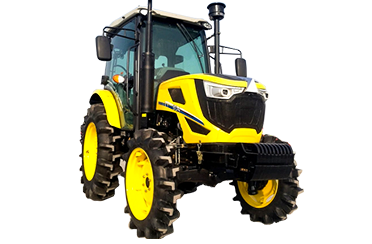
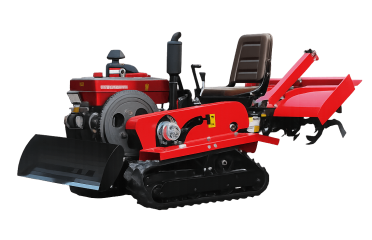
The farmland tractor is a high-power, high-efficiency wheel tractor designed for large-scale farmland cultivation, suitable for flat and open grain crop bases such as wheat, corn, and rice. This series of wheel tractors is equipped with high-torque engines and multi-speed transmission systems, with strong climbing ability and stable power output, which can efficiently complete deep plowing, harrowing, ridging, and land preparation operations. The reinforced chassis and wear-resistant wheel structure adapt to long-term high-intensity farmland operations, reducing equipment failure rates. In addition, the farmland tractor supports the quick connection of various agricultural accessories such as plows, harvesters, and sprayers, realizing multi-functional operation of one machine, greatly improving the comprehensive utilization rate of equipment and reducing farm operation costs.
3.2 Orchard Tractor: Narrow Body & Low Damage for Fine Orchard Management
The orchard tractor is a specialized narrow-body wheel tractor developed for fruit tree planting scenarios such as vineyards, citrus orchards, and apple orchards. Different from ordinary farmland wheel tractors, the orchard tractor features an ultra-narrow body design, flexible steering performance, and low ground pressure tires, which can freely shuttle between dense fruit tree rows without scratching branches or pressing roots . The whole machine is lightweight and flexible, suitable for complex terrain such as sloped orchards. It can efficiently complete orchard weeding, fertilization, pesticide spraying, and fruit transportation operations. The optimized low-noise engine design avoids disturbing the growth of fruit trees, and the fully enclosed body structure prevents dust from entering, reducing equipment wear and meeting the refined management needs of high-standard orchards.
3.3 Planting Tractor: Precision & Multi-Function for Standardized Crop Planting
The planting tractor is a precision operation-oriented wheel tractor, focusing on the whole-process operation needs of crop sowing, seedling raising, and early-stage maintenance. This series of wheel tractors adopts precise speed regulation and stable power output technology, which can be perfectly matched with precision seeders, fertilizer applicators, and seedling protection equipment to realize uniform sowing and scientific fertilization, effectively improving crop yield and quality. The compact body design adapts to small and medium-sized planting bases and inter-row operation scenarios, with flexible movement and low operation loss. The multi-functional hydraulic lifting system supports quick replacement of different planting accessories, meeting the diversified planting operation needs of different crops such as vegetables, cash crops, and grain crops.
4. Professional Manufacturing & Quality Control Standards
All products of the wheel tractor series strictly follow international agricultural machinery manufacturing standards, adopting standardized production processes and strict quality inspection systems from raw material selection to finished product delivery. In the manufacturing process, high-strength steel materials are used for the body chassis to ensure the structural stability and durability of the equipment under long-term complex working conditions. The core power components are imported or domestically high-quality brand parts, with stable performance and low failure rate.
In terms of production processing, all farmland tractor, orchard tractor, and planting tractor products undergo precision machining, anti-rust painting, and overall performance testing. Each piece of equipment will pass load operation testing, terrain adaptation testing, and emission standard testing before leaving the factory to ensure that the product meets the operation needs of different regional agricultural environments and international export standards. At the same time, the product supports personalized parameter customization such as power horsepower, accessory configuration, and body size, meeting the differentiated procurement needs of global distributors and large farms.
5. FAQ: Common Questions for Global Wheel Tractor Buyers
To solve the procurement and use doubts of global B2B buyers for the wheel tractor series, we have sorted out 4 high-frequency consulting questions and professional answers, providing accurate reference for buyer decision-making.
Q1: What is the difference between farmland tractor, orchard tractor and planting tractor?
The three types of wheel tractors are positioned for different agricultural scenarios. The farmland tractor focuses on high-power and high-efficiency large-area land cultivation, suitable for flat large farmlands; the orchard tractor adopts narrow-body lightweight design, specially used for dense orchard fine management, with flexible steering and no damage to fruit trees; the planting tractor focuses on precision sowing and seedling maintenance, with stable speed and precise control, suitable for standardized crop planting operations. Buyers can select models according to their actual planting scenarios and operation needs.
Q2: What horsepower models are the most popular for export wheel tractors?
According to global market sales data, wheel tractors below 50HP occupy 59% of the market share, which are the most mainstream models for small and medium-sized farms and planting bases . 30-60HP planting tractor and orchard tractor are the best-selling export models, while 80-120HP high-power farmland tractor is more popular in large-scale grain planting bases in Europe, America and Central Asia. We can provide customized horsepower configuration according to buyer’s regional operation needs.
Q3: Are your wheel tractors compliant with international emission standards?
All our wheel tractor series products meet EU Stage V and US EPA international emission standards, adapting to the import and operation policies of most countries and regions in the world. The new generation of energy-saving engines effectively reduce fuel consumption and exhaust emissions, with low-carbon and environmentally friendly operation, which can smoothly pass local customs inspection and environmental compliance testing, solving the export compliance concerns of global buyers.
Q4: What after-sales support and accessory services are provided for bulk procurement?
For global B2B bulk buyers, we provide one-stop supporting services including free product customization, factory direct price, long-term warranty, and spare parts supply. We support global logistics transportation and door-to-door delivery in most regions, and provide professional English operation manuals and remote technical guidance. At the same time, we can provide customized accessory packages for farmland tractor, orchard tractor and planting tractor to ensure long-term stable operation of equipment.
6. Conclusion
Driven by the global agricultural mechanization and precision agriculture development wave, the market demand for professional wheel tractor, farmland tractor, orchard tractor, and planting tractor will continue to grow steadily. Scenario specialization, intelligent precision operation, and green energy conservation will remain the core development direction of the wheel tractor industry. As professional agricultural machinery equipment, the complete wheel tractor series can fully cover the diversified operation needs of global farmland cultivation, orchard management, and crop planting, and is the preferred mechanical equipment for modern agricultural upgrading and efficiency improvement. For global agricultural machinery distributors and farm investors, choosing high-quality, standardized, and customizable wheel tractor products will help reduce operating costs and improve agricultural production benefits, and seize the development opportunities of the global modern agricultural market.