
Global Wheel Tractor Market Booms as Farm Mechanization Accelerates Worldwide
2026/07/11 08:35
1. Current Global Wheel Tractor Market Overview
In recent years, the global wheel tractor market has maintained robust and stable growth, with clear market expansion momentum. According to authoritative industry data, the global wheel tractor market value reached USD 68.4 billion in 2025, and it is projected to grow at a CAGR of 4.9% from 2026 to 2034, eventually exceeding USD 105.7 billion by 2034. This substantial growth fully reflects the strong market demand for high-performance, multi-functional farming equipment in global agricultural production.
The market growth is mainly driven by two core factors. First, developing countries in Asia, Africa and Latin America are accelerating the elimination of traditional manual farming modes and vigorously promoting full-process agricultural mechanization, which greatly boosts the procurement demand for basic wheel tractor equipment. Second, developed economies in Europe and North America are upgrading old farming equipment, replacing low-efficiency traditional models with intelligent, low-emission and energy-saving wheel tractors, forming a steady renewal demand in the market. As the most versatile type of agricultural machinery, wheel tractors account for more than 70% of the global agricultural tractor market share, occupying a dominant position in worldwide farming operations.
2. Core Driving Force: Global Farm Mechanization Upgrading
Farm mechanization is the fundamental engine driving the continuous expansion of the wheel tractor market. Traditional manual farming and semi-mechanized operation can no longer meet the production needs of modern large-scale farms, standardized planting bases and commercial agricultural parks. Mechanized operations represented by wheel tractors effectively solve the problems of labor shortage, high production cost and low farming efficiency, and become the standard configuration of modern agriculture.
In terms of regional development, emerging agricultural countries are the main growth engine of the current mechanization process. Central Asia, Southeast Asia, West Africa and South America have accelerated agricultural infrastructure construction in recent years, and local farmers and agricultural enterprises have continuously increased their investment in professional farming equipment. Unlike crawler tractors which are only suitable for complex muddy terrain, wheel tractors feature flexible operation, low ground damage and strong road mobility, and can freely switch between field farming and road transportation, perfectly adapting to the diversified landforms and planting modes of worldwide farming.
In addition, the policy support of various countries has further boosted the popularization of wheel tractors. Many governments have launched agricultural subsidy policies for purchasing farming equipment, reducing the procurement cost of farmers and distributors, and stimulating market consumption potential. The continuous improvement of the global farm mechanization rate has laid a solid foundation for the long-term prosperity of the wheel tractor industry.
3. Product Technology Iteration and Manufacturing Advantages
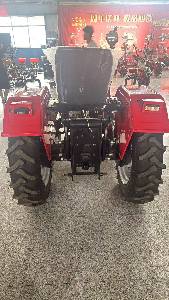
With the upgrading of worldwide farming standards, the technical performance of wheel tractors has been continuously optimized, and product segmentation and intelligence have become the core development directions of the industry. Modern wheel tractor manufacturing adopts standardized production processes, covering multiple power segments from mini 20HP models to heavy-duty 200HP+ high-power models, which can fully meet the operational needs of orchards, greenhouses, dry land, paddy fields and large-scale farms.
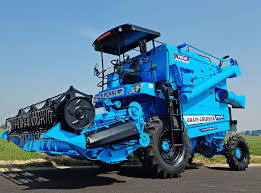
In terms of core technology, mainstream upgraded wheel tractor products are equipped with energy-saving low-emission engines, intelligent control systems and multi-functional matching interfaces. On the one hand, optimized power systems effectively reduce fuel consumption and carbon emissions, meeting EU and global environmental protection standards, and solving the pain points of high energy consumption and poor environmental adaptability of traditional farming equipment. On the other hand, multi-functional interfaces can be matched with plows, seeders, harvesters, sprayers and other supporting farm tools, realizing one machine with multiple functions and greatly improving the utilization rate of farming equipment.
In the manufacturing link, mature industrial supply chains have greatly improved the cost performance and stability of global wheel tractor products. Professional manufacturers adopt precision processing technology and strict quality inspection standards to ensure that the wheel tractor has strong terrain adaptability, stable operation and low failure rate in long-term field operations. The improvement of manufacturing level also supports large-scale batch export, making high-quality wheel tractor farming equipment popular in global markets.
4. Global Wheel Tractor Market Development Trends
4.1 Intelligent and Precision Farming Becomes Mainstream
Digital and intelligent transformation is an inevitable trend of worldwide farming. New-generation wheel tractors are gradually equipped with GPS positioning, automatic driving, precise fertilization and intelligent monitoring systems, which can realize unmanned farming, accurate land preparation and scientific planting, helping farmers reduce resource waste and improve crop yield. Intelligent wheel tractors have become the preferred equipment for modern large-scale precision agriculture.
4.2 New Energy and Low-Carbon Products Gain Popularity
Against the global low-carbon development background, hybrid and electric new energy wheel tractors have achieved rapid technological breakthroughs. Compared with traditional diesel models, new energy wheel tractor farming equipment has lower operating costs, zero exhaust emissions and lower noise, which meets the environmental protection requirements of European and American markets and the sustainable development needs of global agriculture, and its market penetration rate is increasing year by year.
4.3 Regional Market Demand Continues to Diversify
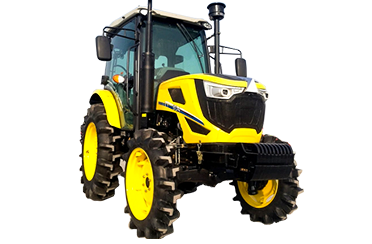
Different regional agricultural characteristics drive the diversified development of wheel tractor products. Small and medium-power compact wheel tractors are widely popular in Southeast Asia and orchard planting areas, suitable for small-area refined farming; high-power 4WD heavy-duty wheel tractors are in strong demand in Central Asia, Russia and South America, adapting to large-scale dry land and open-field continuous operations. The diversified product layout has further expanded the market coverage of wheel tractor farming equipment.
5. FAQ: Common Questions for Global Wheel Tractor Buyers
Q1: What are the core advantages of wheel tractors compared with other farming equipment?
A1: Wheel tractors stand out in worldwide farming due to their high cost performance, flexible operation and strong versatility. Compared with crawler tractors, they have better road mobility, lower ground pressure and less damage to farmland soil; compared with small specialized farming equipment, they support multi-tool matching and full-process agricultural operations, with wider application scenarios and higher equipment utilization rate.
Q2: Which power model of wheel tractor is more suitable for export and bulk procurement?
A2: Medium-power 40-100HP 4WD wheel tractors are the most mainstream bulk procurement models, suitable for most global farming scenarios and regional landforms. Mini compact models are suitable for orchards and greenhouses, while high-power 120HP+ models are preferred for large-scale farmland operations. Buyers can select models according to local planting scale and terrain characteristics.
Q3: Are modern wheel tractors compliant with international environmental and quality standards?
A3: Formal exported wheel tractor farming equipment has passed international quality certification and EU emission standards. Equipped with upgraded low-emission engines and standardized production processes, the products meet the market access requirements of most countries and regions, supporting smooth customs clearance and local after-sales use.
Q4: What is the future market prospect of wheel tractor industry?
A4: The global wheel tractor market will maintain steady growth in the next decade. Driven by continuous farm mechanization upgrading and intelligent agricultural transformation, the demand for high-efficiency, energy-saving and intelligent wheel tractor farming equipment will continue to rise, with broad market space and stable investment value for global distributors and buyers.
6. Conclusion
As farm mechanization accelerates worldwide, the global wheel tractor market continues to boom and usher in sustained development dividends. As the core equipment of modernfarming equipment, wheel tractors are constantly iterating in intelligence, energy saving and versatility, perfectly matching the diversified needs ofworldwide farming. With the continuous expansion of emerging markets and the upgrading of mature markets, the wheel tractor industry will maintain a high growth trend, providing reliable mechanical support for the modernization of global agriculture and bringing long-term commercial opportunities for global agricultural machinery partners.