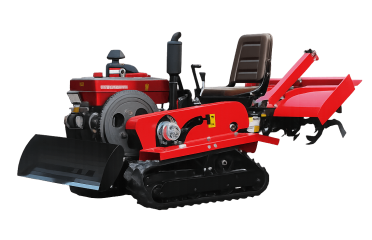

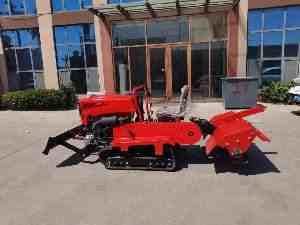
Riding Crawler Rotary Tiller for Farm Tillage
2026/08/05 10:31
1. Global Agricultural Tillage Machinery Industry Background & Current Market Status
Global agricultural mechanization has entered an era of refined and scenario-based upgrading in 2026. Traditional wheeled tillage equipment is gradually showing limitations in complex farmland scenarios, including poor passability on soft soil, insufficient grip on sloped terrain, and low adaptability in paddy fields. Against this backdrop, the Riding Crawler Rotary Tiller has emerged as a core specialized tillage device, filling the market gap of high-efficiency tillage for hilly, mountainous, and wetland farmland.
According to the latest global agricultural machinery market research data, the global crawler self-propelled rotary tiller market reached a scale of USD 680.62 million in 2025, and is projected to grow steadily to USD 714.93 million in 2026, with a compound annual growth rate of 6.5% from 2027 to 2035. It is expected to break through USD 1.04 billion by 2032. The continuous market expansion is mainly driven by the accelerated mechanization process in developing agricultural countries, policy support for small and medium-sized farmland renovation, and the growing demand for refined farming in hilly and paddy field areas.
In traditional agricultural regions of Southeast Asia, South America, and Africa, scattered farmland, complex terrain, and diverse planting modes make large-scale heavy tillage machinery inapplicable. The lightweight, flexible, and multi-scenario adaptable Riding Crawler Rotary Tiller has become the preferred equipment for local farmers and agricultural cooperatives. Meanwhile, developed agricultural regions are also upgrading old tillage equipment, focusing on energy-saving, efficient, and low-soil-compaction tillage devices, further boosting market demand for high-performance crawler tillers.
2. Core Market Development Trends of Crawler Rotary Tillers
2.1 Scenario Specialization: Rising Demand for Hilly Land Tiller and Paddy Field Rotary Tiller
The most prominent industry trend in recent years is the segmented development of tillage machinery based on farmland scenarios. Ordinary universal tillers can no longer meet the refined farming needs of different terrains. The Hilly Land Tiller represented by riding crawler rotary tillers has outstanding anti-slip and anti-tipping performance, which can stably operate on 0-35° sloped farmland, solving the problems of difficult tillage and low safety of wheeled equipment on mountainous and hilly land.
In addition, the customized Paddy Field Rotary Tiller version has become a hot-selling segment in the market. Its optimized crawler grounding design reduces ground pressure, effectively avoiding sinking and mud accumulation in wet paddy fields. The specially modified rotary blade structure can complete stubble removal, soil turning, and puddling operations in one pass, greatly improving the preparation efficiency of rice seedbeds. The market demand for scenario-specialized tillers has increased by more than 40% year-on-year, becoming the main growth driver of the industry.
2.2 Intelligent & Energy-Saving Upgrading
With the popularization of smart agriculture technology, modern Riding Crawler Rotary Tiller products have realized iterative upgrades in intelligence and energy conservation. More high-end models are equipped with GPS positioning, soil sensor monitoring, and automatic depth adjustment systems, which can accurately control tillage depth and spacing according to soil conditions, reducing soil compaction and improving tillage uniformity. Industry data shows that intelligent tillage equipment can increase farmland yield by up to 15% and reduce fuel consumption by 12%-18% compared with traditional manual-adjustment tillers.
In terms of power, mainstream products adopt low-emission diesel engines that meet international environmental protection standards, matching optimized transmission systems to reduce power loss. At the same time, lightweight alloy materials are used for the body and rotary blades, which reduces the overall weight of the equipment while ensuring structural strength, further improving equipment flexibility and terrain adaptability.
2.3 Labor-Saving & High-Efficiency Mechanization
Global agricultural labor shortages and rising labor costs have forced farms to accelerate full mechanization. Different from walking-type tillers that require manual follow-up operation, the Riding Crawler Rotary Tiller adopts a riding operation mode, which greatly reduces the labor intensity of operators. A single device can complete 3-5 mu of farmland tillage per hour, with an efficiency 2-3 times that of traditional manual tillage equipment, helping farmers save a lot of labor costs and shorten the farming cycle.
3. Core Technical Advantages & Manufacturing Process of Riding Crawler Rotary Tiller
3.1 Core Structural & Technical Advantages
The excellent performance of the Riding Crawler Rotary Tiller is derived from its professional structural design, which perfectly adapts to hilly land, dry land, and paddy field tillage scenarios. First, the full crawler walking chassis increases the grounding area, effectively dispersing the body weight, with ultra-low ground pressure, ensuring no sinking operation in wet paddy fields and soft soil. Second, the adjustable rotary tillage system supports stepless adjustment of tillage depth (10-25cm) and tillage width, meeting the tillage requirements of different crops such as rice, corn, vegetables, and fruits.
In terms of operational stability, the equipment is equipped with a hydraulic balance system, which can automatically adjust the body level when operating on sloped hilly land, avoiding tilting and missing tillage. The high-hardness alloy rotary blades have strong wear resistance and impact resistance, which can efficiently crush soil, remove crop stubble, and loosen hardened soil, realizing one-time completion of plowing, harrowing, and soil preparation. Compared with traditional tillers, the soil breaking rate is increased by more than 20%, and the flatness of the tilled field is significantly improved.
3.2 Standardized Manufacturing & Application Process
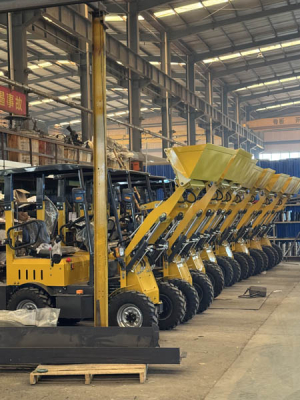
Formal manufacturers adopt standardized industrial production processes for Riding Crawler Rotary Tiller production, including precision cutting of structural parts, integral welding of the chassis, high-temperature quenching of rotary blades, and multi-layer quality testing. All core components such as power systems, transmission systems, and hydraulic systems adopt international standard parts, ensuring the stability and durability of the equipment in long-term high-intensity operation. Each piece of equipment will pass no-load operation test, load tillage test, and terrain adaptation test before leaving the factory to ensure that the product meets international agricultural machinery quality standards.
In actual farmland application, the operation process is simple and efficient. After starting the equipment, the operator can adjust the tillage depth and walking speed according to farmland terrain and soil hardness. The equipment can freely switch between straight walking, turning, and climbing modes, suitable for small and scattered plots, hilly slopes, and waterlogged paddy fields. After one round of operation, the farmland can reach the sowing and transplanting standard, greatly simplifying the traditional multi-step tillage process.
4. Main Application Scenarios of the Equipment
As a multi-functional integrated tillage machine, the Riding Crawler Rotary Tiller covers almost all complex farmland tillage scenarios, solving the pain points of difficult mechanized operation in special terrains.
Hilly and Mountainous Land Tillage: As a professional Hilly Land Tiller, it adapts to sloped farmland, terraced fields, and mountain scattered plots. It solves the problems of easy skidding, low efficiency, and poor safety of wheeled tillers on sloped land, and is widely used for tillage of economic crops such as tea, fruit trees, and vegetables in hilly areas.
Paddy Field Tillage: The customized Paddy Field Rotary Tiller version is optimized for wet and muddy paddy field environments. It has excellent anti-sinking and anti-mud performance, which can complete stubble cleaning, puddling, and soil loosening before rice transplanting, creating a soft and flat seedbed for rice growth.
Dry Land & Orchard Tillage: It is also applicable to dry land tillage of corn, wheat, and soybeans, as well as inter-row tillage and weeding of orchards. The flexible body design can adapt to narrow row spacing operation, realizing fine tillage and reducing soil waste.
5. FAQ: Common Questions for Global Bulk Buyers
Q1: What terrains is the Riding Crawler Rotary Tiller suitable for?
This equipment is a multi-scenario universal tillage machine, specially designed for complex terrains that traditional wheeled tillers cannot adapt to. It is fully applicable to hilly slopes, mountain terraced fields, wet paddy fields, dry land, and orchard inter-row farmland. It can normally operate on 0-35° sloped land and soft muddy soil, covering most small and medium-sized farmland tillage scenarios worldwide.
Q2: What is the working efficiency and tillage quality of the Paddy Field Rotary Tiller version?
The standard paddy field dedicated model has a working width of 1.2-1.8 meters and a hourly operating area of 3-5 mu. It can complete stubble removal, soil turning, and puddling in one operation. The soil breaking rate is higher than 90%, and the field flatness meets international rice transplanting standards. Compared with traditional manual and walking tillers, it saves 60% of labor and improves tillage efficiency by more than 200%.
Q3: Is the Hilly Land Tiller easy to operate and maintain?
All riding crawler rotary tillers adopt humanized riding operation design, with simple operation buttons and hydraulic control handles, and operators can master the operation skills after simple training. In terms of maintenance, the equipment adopts a modular structure, with detachable rotary blades and easily accessible core power components. Daily maintenance only requires regular oil replacement, blade cleaning, and track tension inspection, with low maintenance cost and simple process, suitable for long-term use by farms and cooperatives.
Q4: Can the equipment meet international environmental and quality certification standards?
Our series of Riding Crawler Rotary Tiller products comply with CE, ISO and other international quality and environmental protection certifications. The power system meets EU low-emission standards, with low fuel consumption and low noise. All products undergo strict factory testing, with stable quality and long service life, supporting long-distance ocean transportation and long-term high-intensity farmland operation, meeting the procurement standards of global agricultural machinery distributors and large farms.
6. Industry Outlook & Procurement Suggestions
In the next five years, the global complex farmland tillage machinery market will maintain a high growth trend. With the continuous advancement of smart agriculture and the continuous improvement of agricultural mechanization levels in emerging markets, the market demand for high-efficiency, energy-saving, and multi-scenario Riding Crawler Rotary Tiller, Hilly Land Tiller, and Paddy Field Rotary Tiller will continue to rise.
For global B2B buyers, choosing professional and standardized crawler rotary tiller products can effectively solve the pain points of difficult tillage in special terrains, reduce farm operating costs, and improve agricultural production efficiency. At present, customized models of different powers and working widths are available in the market, which can meet the differentiated procurement needs of distributors, large farms, and agricultural cooperatives in different regions. In the context of industry upgrading, high-quality multi-functional crawler tillers will become the mainstream choice for global farmland mechanization renovation.