
Riding Crawler Rotary Tiller: Latest Innovation for Paddy Farming
Riding Crawler Rotary Tiller: Latest Innovation for Paddy Farming
As global rice markets tighten and rural labor pools shrink, paddy producers are rethinking every stage of the cultivation cycle. Soil preparation — the foundation of a healthy crop — has historically been the most labor-intensive and physically demanding step in rice farming. That equation is now changing. A new generation of tracked tillage equipment is entering the field, and the riding crawler rotary tiller has emerged as one of the most promising innovations for paddy farming in years.
This article examines the industry forces behind the shift, the engineering that makes the riding crawler rotary tiller effective in flooded and saturated soils, and what buyers should consider when evaluating a crawler rotary tiller manufacturer for their next procurement cycle.
The Mechanization Imperative in Global Rice Production
Rice feeds more than half of the world's population, and roughly 90 percent of global output is grown in Asia, where paddy fields are often small, fragmented, and waterlogged. For decades, these conditions made mechanization difficult. Today, three converging pressures are pushing even conservative producers toward machinery.
Labor Shortages Reshape Paddy Farming
Rural-to-urban migration has drained the agricultural workforce across every major rice economy. China alone has lost more than 42 million agricultural workers since 2010, and Vietnam and Thailand now report daily farm labor costs exceeding $12 to $15. Manual paddy cultivation can require 10 to 15 workers per hectare for weeks during peak season — a model that is no longer economically viable at current wage rates. Machinery that replaces this labor is no longer a convenience; it is a business necessity.
Mechanization Rates Still Lag in Key Markets
Despite the urgency, adoption remains uneven. Rice mechanization in China has reached roughly 85 percent and Japan approaches full mechanization, while India — the world's second-largest rice producer — still sits near 53 percent for rice operations, with many regions far lower. The gap represents a substantial addressable market for tillage equipment, and it explains why international demand for reliable, wet-field machinery continues to climb. For every percentage point of mechanization gained, demand grows for compact, wet-field platforms such as the riding crawler rotary tiller.
Why the Riding Crawler Rotary Tiller Is a Game Changer
Tillage is the single most important determinant of seedbed quality, yet it is also where wheeled machines most often fail in paddy conditions. The riding crawler rotary tiller addresses these failures directly through its core design.
Superior Traction and Flotation in Wet Fields
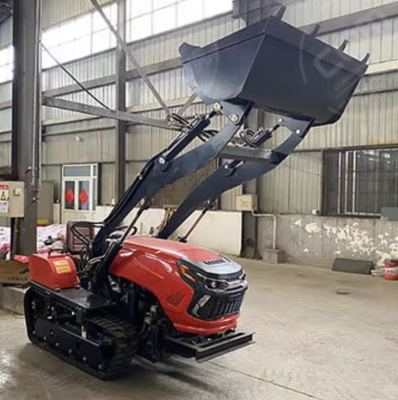
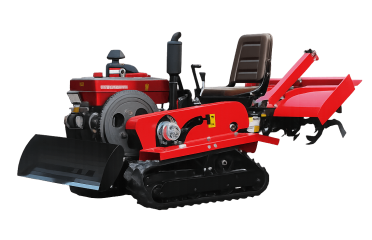
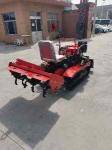
Conventional wheeled tractors sink, slip, and compact soil in flooded paddies, wasting fuel and leaving an uneven seedbed. The crawler undercarriage of a riding crawler rotary tiller spreads the machine's weight over a large contact area, dramatically lowering ground pressure. The result is reliable traction in soft, saturated soils, minimal rutting, and reduced soil compaction — conditions that directly support better root development and crop establishment.
Operator Comfort and Higher Rice Cultivation Efficiency
Riding models place the operator on a suspended seat rather than requiring hours of walking behind the machine. This shift cuts operator fatigue, enables longer working days, and allows a single operator to prepare more area per shift. Combined with a wide rotary working width and depth-adjustable tines, a modern riding crawler rotary tiller can complete seedbed preparation in a fraction of the time required by manual methods or older walk-behind units. For contractors and large farms alike, this translates directly into measurable gains in rice cultivation efficiency — more hectares prepared, fewer workers required, and a more consistent tilth across the entire field.
Inside the Manufacturing Process
A reliable riding crawler rotary tiller begins with disciplined manufacturing. Reputable crawler rotary tiller manufacturers produce their machines through a controlled sequence: high-strength steel is laser-cut and precision-formed for the frame and tillage housing; transmission gears and axles are heat-treated and ground to tight tolerances; the rotary blade assembly is balanced and dynamically tested; and the full unit is assembled, lubricated, and run through a functional test bed before leaving the factory. Many established manufacturers also apply anti-corrosion coating systems to components that operate in standing water, extending service life in demanding paddy environments. For buyers, inspecting these production capabilities — not just the brochure — is an important step in qualifying a supplier.
Market Trends Driving Adoption
The market context supports sustained growth for this category. Industry research values the global rotary tiller market at roughly USD 2.1 to 2.3 billion in 2025, with forecasts projecting growth at a compound annual rate of about 6 percent toward USD 3.5 billion by the early 2030s. Analysts attribute the expansion to accelerating farm mechanization across South Asia, Southeast Asia, and Africa, along with rising demand for efficient soil preparation equipment. Within this category, the riding crawler rotary tiller is gaining traction faster than the broader market, as buyers in flooded paddy regions prioritize tracked platforms that combine productivity with low soil disturbance. Several trends are shaping where this growth lands:
Custom hiring and rental models are spreading mechanization to smallholders who cannot justify owning a machine, expanding the total addressable market for tillage equipment.
Government subsidy programs in major rice economies, which can cover 40 to 50 percent of equipment costs, are lowering the barrier to adoption.
Fuel efficiency and durability are becoming primary selection criteria as diesel prices and input costs remain elevated.
Compact and specialized platforms, such as the riding crawler rotary tiller, are gaining share because they match the scale of typical Asian paddy holdings better than oversized implements.
Choosing a Reliable Crawler Rotary Tiller Manufacturer
For B2B buyers, the machine is only half the decision. Evaluating a crawler rotary tiller manufacturer requires attention to several factors: verified export experience and compliance certifications, availability of genuine spare parts and local service support, documented after-sales training, and proven field performance in conditions similar to the buyer's own. Requesting reference lists, warranty terms, and maintenance schedules before purchase is standard practice among serious distributors and farm cooperatives. A crawler rotary tiller manufacturer that can document consistent quality control and responsive supply will protect the buyer's uptime through every planting season.
Frequently Asked Questions
Q: What is a riding crawler rotary tiller, and when should I use it?
A: A riding crawler rotary tiller is a self-propelled tillage machine that uses a track undercarriage and a rear-mounted rotary blade assembly to prepare seedbeds in paddy and wetland conditions. It is best suited to flooded, soft, or waterlogged fields where wheeled tractors lose traction and cause soil compaction.
Q: How does it compare to a walk-behind tiller in operating cost?
A: While a riding crawler rotary tiller has a higher initial purchase price, it reduces labor requirements, increases working speed, and lowers per-hectare operating costs on fields larger than about one to two hectares. For contractors and commercial farms, the payback is typically rapid because one operator can cover substantially more area per day.
Q: Can the riding crawler rotary tiller work in dry fields as well?
A: Yes. Modern riding crawler rotary tiller units allow depth and working-width adjustment, so they perform effectively in both wet paddy conditions and relatively dry, previously harvested fields. The track system also reduces soil compaction in dry conditions compared with wheeled alternatives.
Q: What should I look for when choosing a crawler rotary tiller manufacturer?
A: Prioritize verified export credentials, availability of spare parts and local service, documented after-sales support and training, and proven performance in field conditions similar to yours. Always request specifications, warranty terms, and reference installations before committing.
Conclusion
Rice cultivation efficiency is no longer determined by how many workers a farm can mobilize, but by how intelligently it deploys machinery. The riding crawler rotary tiller answers the most persistent challenge in paddy farming — preparing a quality seedbed in wet, difficult terrain without excessive labor or soil damage — and it does so while raising overall farm output per hectare. With global mechanization gaps still wide and market demand growing at roughly 6 percent annually, this innovation is well positioned to become standard equipment for progressive rice producers and the distributors who serve them. For buyers, the path forward is clear: choose a crawler rotary tiller manufacturer with proven manufacturing discipline, honest specifications, and genuine field support.