
Wheel Loader Exports Surge Amid Global Infrastructure Investment Boom
2026/07/21 09:19
1. Global Infrastructure Expansion Fuels Heavy Machinery Market Growth
In recent years, large-scale infrastructure stimulus plans have been continuously launched across Southeast Asia, the Middle East, Africa, Latin America and Europe, covering highway network construction, open-pit mining expansion, port upgrading, urban renewal and industrial park development. These long-term engineering projects have generated rigid, sustained demand for high-quality construction machinery and heavy machinery equipment.
According to the latest global construction machinery industry report, the global infrastructure investment scale maintains a steady growth rate of 7.2% in 2026. As a versatile and high-efficiency heavy machinery device, the wheel loader accounts for more than 27% of the total market share of engineering earthmoving equipment, ranking first in the single-product sales volume of global construction machinery. The booming infrastructure construction wave has directly stimulated the continuous surge in wheel loader exports, forming a positive industry cycle of investment growth, project construction and equipment procurement.
2. Official Market Data Shows Sustained Boom in Wheel Loader Exports
Latest customs and industry association statistical data fully verify the strong upward trend of wheel loader overseas shipments. In the first half of 2026, China’s total export volume of wheel loaders reached 40,656 units, a year-on-year increase of 39.5%, with export revenue hitting USD 9.2 billion, accounting for 35% of the total export value of domestic heavy machinery products.
In terms of regional market distribution, Southeast Asia remains the largest demand market, contributing 38.9% of total wheel loader exports, benefiting from cross-border transportation infrastructure and hydropower engineering projects. The Middle East market follows closely with a 26.6% market share, driven by smart city construction and commercial concrete plant expansion. Notably, the African market has achieved the fastest growth, with wheel loader export volume surging 70% year-on-year, as mining development and rural road renovation projects in Nigeria, Kenya and South Africa accelerate.
In addition, the subdivision track of new energy construction machinery has outstanding performance. The export volume of electric wheel loaders increased by 208% year-on-year in H1 2026, becoming a new growth highlight of heavy machinery overseas sales and gradually adapting to the low-carbon emission policies of European and American markets.
3. Core Advantages of Export-Grade Modern Wheel Loader Equipment
The continuous growth of wheel loader exports is inseparable from the iterative upgrading of product manufacturing technology and comprehensive performance advantages. Modern export-oriented wheel loaders adopt mature industrial manufacturing processes, including precision steel plate cutting, integrated frame welding, optimized power assembly matching, intelligent hydraulic system debugging and strict offline load testing, all complying with international construction machinery quality certification standards.
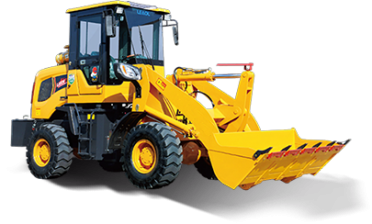
In terms of technical performance, mainstream export wheel loaders have three core competitive strengths. First, the optimized energy-saving power system effectively reduces fuel consumption by 15% compared with traditional models, supporting long-term continuous operation in high-intensity working scenarios such as mines and ports. Second, the built-in intelligent remote monitoring system realizes real-time monitoring of equipment operation data, fault early warning and fuel consumption statistics, helping overseas fleet operators reduce maintenance and operation costs by nearly 20%. Third, diversified customized models cover full-scenario demands, including compact wheel loaders for narrow urban construction sites, heavy-duty wheel loaders for large-scale mining operations, and zero-emission electric wheel loaders for environmentally restricted areas.
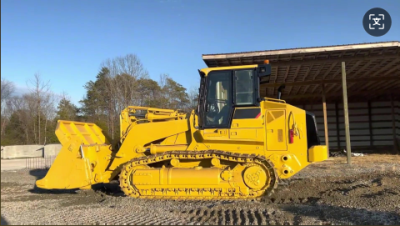
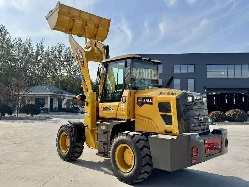
As universal heavy machinery, wheel loaders are widely applied in global infrastructure fields, including mine ore loading and transportation, road and bridge earthwork construction, port bulk cargo handling, urban renewal transformation and concrete station raw material feeding, with strong market adaptability and practicality.
4. 2026-2028 Global Construction Machinery Market Trend Analysis
Industry professional analysts predict that the prosperity of wheel loader exports will continue in the next two to three years, supported by stable global infrastructure investment. The global heavy machinery market will present two major development trends.
First, equipment electrification will become the mainstream development direction. Driven by global carbon neutrality policies, the market demand for low-carbon and zero-emission construction machinery is rising rapidly. It is expected that by 2028, the export proportion of electric wheel loaders will increase from the current 4% to 18%, becoming the core procurement product of developed regional markets such as Europe and North America.
Second, customized and segmented products will replace universal standard equipment as the mainstream choice. Overseas buyers pay more attention to equipment adaptability to local climate, working conditions and emission standards. Wheel loader products with high temperature resistance, dust prevention, corrosion resistance and low-carbon performance will gain greater market competitive advantages.
Meanwhile, industry competition will shift from single price competition to comprehensive competition focusing on product technology, full-life cycle cost control and global after-sales service capabilities. Professional construction machinery manufacturers with complete wheel loader product lines and localized overseas service networks will continue to seize incremental market shares.
5. FAQ: Common Questions From Global Wheel Loader Buyers
Q1: What tonnage of wheel loader is most suitable for overseas infrastructure and mining projects?
A: For conventional urban renewal and road construction projects, 3-ton to 5-ton compact wheel loaders are the most cost-effective option. For large-scale open-pit mines and port bulk cargo yards, 6-ton to 12-ton heavy-duty wheel loaders are recommended. For European and American low-carbon engineering projects, 4-ton to 6-ton electric wheel loaders can fully meet local environmental emission standards.
Q2: Can wheel loaders be customized for harsh working environments?
A: Yes. All export wheel loaders support personalized customization. We can configure high-temperature resistant heat dissipation systems, multi-layer dustproof filters, anti-rust marine coatings and sealed cabs for high-temperature, rainy and dusty working scenarios in Africa and Southeast Asia, ensuring stable equipment operation in harsh environments.
Q3: What after-sales services are provided for bulk wheel loader export orders?
A: We have built localized after-sales service centers in more than 60 major infrastructure countries. All exported wheel loaders are equipped with complete spare parts packages, remote intelligent fault diagnosis and on-site engineer maintenance services, effectively reducing equipment downtime and ensuring the stable operation of customer construction machinery fleets.
Q4: Will the infrastructure boom affect wheel loader prices and delivery cycles?
A: Affected by strong market demand, the price of standard wheel loaders fluctuates slightly within 5% in 2026. With stable raw material supply and large-scale standardized production lines, we can guarantee a fast delivery cycle of 15-30 working days for bulk orders, avoiding project delay risks for global buyers.
Conclusion
Against the background of booming global infrastructure investment, wheel loaders, as core construction machinery and heavy machinery equipment, continue to release strong market potential. With mature manufacturing technology, diversified product layouts and perfect cross-border service systems, high-quality wheel loader products will continue to empower global infrastructure construction. In the future, the construction machinery industry will further promote technological innovation and product upgrading to meet the increasingly diversified and low-carbon development needs of the global engineering market.