
Wheel Loader Technology Trends: Energy‑Saving and Customization Take Lead
2026/08/27 09:19
1. Current Global Wheel Loader Market Status and Demand Changes
The global wheel loader market has maintained steady and positive growth in the past five years. Driven by the reconstruction of regional infrastructure in Asia, Africa, Latin America and the continuous investment in large-scale mining projects, the market scale continues to expand. According to professional construction machinery industry research data, the global wheel loader market size exceeded USD 21 billion in 2025, and it is expected to maintain a compound annual growth rate of more than 5% from 2026 to 2034.
In terms of market demand, the industry has ushered in a prominent structural transformation. In the past, global customers mainly focused on the loading weight, breakout force and basic durability of heavy-duty wheel loader, and preferred standard general-purpose models. However, with the continuous rise of fuel and labor costs, the total operation cost of equipment has become the primary assessment index for enterprise procurement. Meanwhile, the working environment of overseas projects is becoming more complex, including high-altitude and low-oxygen mining areas, high-temperature desert zones, coastal salt-fog ports, and narrow tunnel construction sites. Standard wheel loaders are difficult to adapt to all special working conditions, which directly promotes the rapid rise of market demand for customized wheel loader.
As a major global manufacturing base of construction machinery, China’s wheel loader export volume has increased year by year. Local OEMs rely on mature manufacturing systems and flexible customization capabilities to continuously launch energy-efficient and highly adaptable wheel loader products, gradually occupying the high-quality overseas market share and winning long-term cooperation with global engineering enterprises.
2. Core Technology Trend 1: Full-scene Energy-Saving Upgrade of Wheel Loader
Energy conservation and emission reduction is the primary technological iteration direction of the current wheel loader industry. Global environmental protection regulations such as EU Stage V and EPA Tier 4 have forced construction machinery manufacturers to carry out comprehensive upgrades of power systems, hydraulic systems and intelligent control systems, realizing low fuel consumption, low emissions and high efficiency of wheel loaders.
2.1 Optimized Powertrain and Intelligent Hydraulic System
Traditional heavy-duty wheel loader generally has the problem of high invalid energy consumption in frequent start-stop, shoveling and unloading operations. The new generation of wheel loader is equipped with high-efficiency electronically controlled common-rail engines, matched with independent researched and developed variable displacement hydraulic systems. The system can intelligently adjust hydraulic oil output and power distribution according to real-time load changes of material shoveling, idle standby and full-load operation, effectively reducing unnecessary power loss. After actual site testing, the optimized wheel loader can reduce comprehensive fuel consumption by 10%-18% under conventional working conditions, greatly lowering the long-term operation cost of customer fleets.
2.2 Multi-mode Intelligent Operation and Remote Energy Management
Modern wheel loader products are equipped with intelligent working mode switching systems, including economy mode, standard mode and power mode. The economy mode is suitable for light-load and long-time material stacking and handling, while the power mode meets the heavy-load operation needs of mine rock shoveling and heavy material loading. In addition, the built-in IoT remote monitoring module can Real-time upload fuel consumption data, engine operating status and working cycle records, helping fleet managers optimize equipment operation habits and further improve energy-saving efficiency.
2.3 Electrification and Hybrid Energy-Saving Technology Iteration
To adapt to the zero-emission construction needs of urban municipal engineering and closed operation sites, electric wheel loaders have been rapidly popularized in the small and medium-tonnage market. For large-scale heavy-duty wheel loader mining scenarios that require long-hour continuous operation, hybrid power technology has become the best transitional solution, which not only ensures strong operating power but also effectively reduces fuel consumption and exhaust emissions, realizing a perfect balance between performance and energy conservation.
3. Core Technology Trend 2: Customization Becomes Core Competitive Advantage
With the diversification of global engineering scenarios, standardized wheel loaders can no longer meet the personalized construction needs of different regions and projects. Customized wheel loader tailored for special working conditions has become an important core competitiveness of construction machinery enterprises, and also the key factor for international buyers to select high-quality equipment suppliers.
3.1 Main Customization Dimensions for Wheel Loader
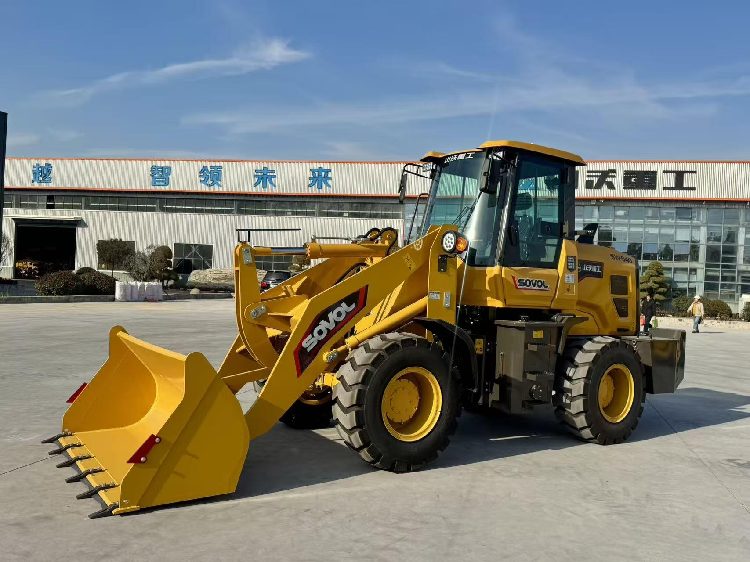
Mature manufacturers can carry out all-round personalized modification based on standard wheel loader prototypes according to customer site conditions and project demands, covering multiple core dimensions. In terms of working devices, customers can choose reinforced wear-resistant buckets, high-discharge booms, quick-change attachments, grain grabbing devices and snow removal accessories to adapt to different material handling needs. In terms of power adaptation, professional modifications such as high-altitude oxygen-deficient power calibration, high-temperature enhanced heat dissipation and coastal anti-corrosion treatment can be carried out for special environments. In terms of safety and comfort, ROPS/FOPS safety cabs, dust-proof and noise-reducing configurations and multi-language intelligent instrument panels can be customized to meet local operating habits and safety standards. In terms of environmental protection, the engine emission standards can be adjusted in accordance with local regulatory requirements to ensure that the equipment meets market access conditions.
3.2 Standardized Manufacturing Process of Customized Wheel Loader
The production and manufacturing of customized wheel loader follows a complete and rigorous process. First, the technical team conducts in-depth communication with customers to confirm key information such as project working conditions, material characteristics, daily operating hours, regional environment and certification standards. Then the engineering department formulates targeted modification plans and technical drawings, and starts modular transformation on the mature heavy-duty wheel loader production platform after customer confirmation. After the completion of equipment assembly, multiple tests such as bench test, load test and simulation working condition test will be carried out to ensure that all customized configurations can operate stably and efficiently in the actual project environment, and finally deliver qualified products to customers.
3.3 Practical Application Value of Customized Wheel Loader
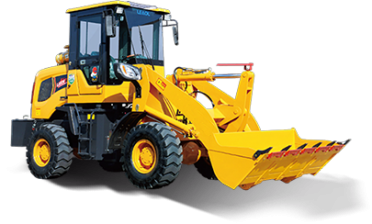
In actual overseas projects, customized wheel loaders have solved many pain points of standard equipment operation. In South American high-altitude mining areas, customized heavy-duty wheel loaders with enhanced power and wear-resistant accessories effectively reduce equipment failure rates and extend service life. In Southeast Asian coastal ports, anti-corrosion customized wheel loaders adapt to high-salt and high-humidity environments and are widely used in bulk cargo handling. In narrow tunnel and urban renovation projects, compact customized wheel loaders realize flexible operation in limited space, greatly improving construction efficiency.
4. Industry Future Outlook
In the next 3-5 years, energy-saving innovation and personalized customization will continue to lead the technological upgrading of the wheel loader industry. On the one hand, with the continuous maturity of hydraulic energy-saving technology, hybrid power and pure electric technology, the overall energy consumption level of wheel loaders will be further reduced, and the total life cycle cost of equipment will be continuously optimized. On the other hand, major manufacturers will further improve the modular production system of customized wheel loader, shorten customized production cycles, reduce customized costs, and realize the popularization of high-adaptability equipment.
For global B2B buyers, equipment procurement will no longer simply pursue high parameters and low prices. More customers will take energy-saving performance, customized adaptability, after-sales service guarantee and total life cycle cost as the core procurement standards to select high-quality heavy-duty wheel loader and customized wheel loader products suitable for their own project scenarios.
5. FAQ – Questions from Global Wheel Loader Buyers
Q1: What is the most important index to evaluate the energy-saving performance of a wheel loader?
A: Buyers should focus on the actual fuel consumption data under real working conditions rather than theoretical nominal parameters. The configuration of intelligent variable hydraulic system, multi-mode energy-saving operation function and remote fuel consumption monitoring system are the core indexes to judge the energy-saving level of wheel loaders. Long-term operation data shows that energy-saving wheel loaders can save 15%+ of fuel cost every year for engineering fleets.
Q2: What information do I need to provide for customized wheel loader production?
A: Customers need to provide detailed working condition information, including main loading materials, material density, daily working hours, site environment characteristics (high altitude, high temperature, salt fog, dust), required working attachments, local emission standards and special safety configuration requirements. Providing on-site construction photos can help manufacturers formulate more accurate and professional customization solutions.
Q3: Will customized heavy-duty wheel loader bring higher purchase cost and longer delivery cycle?
A: At present, mainstream manufacturers adopt modular production for customized products. Conventional customized configurations will not greatly increase the cost and delivery time. Although the initial purchase cost of individual special customized equipment is slightly higher, it can effectively reduce equipment failure rate, maintenance cost and downtime loss in the later stage, with far higher comprehensive economic benefits than standard wheel loaders that are not suitable for working conditions.
Q4: How to balance energy-saving performance and heavy-duty operation capacity of wheel loaders?
A: High-quality wheel loader will not sacrifice heavy-duty loading performance for energy saving. The optimized matching of power system and hydraulic system is the key. Buyers can clearly put forward peak load operation demands to suppliers before procurement. Professional manufacturers will match the most appropriate power and hydraulic combination scheme according to the working conditions to ensure that the equipment has both strong heavy-duty operation capacity and excellent energy-saving performance.
About Us
We are a professional global manufacturer and supplier of heavy construction machinery, focusing on the R&D, production and customization of high-performance wheel loaders. The company has mature production lines and perfect customized service systems, providing standardized and customized wheel loader, heavy-duty wheel loader products and one-stop after-sales solutions for global engineering, mining and logistics customers. Adhering to the concept of energy-saving, efficient and customized innovation, we continue to create high-value construction machinery equipment for global B2B buyers.