
Wheel Tractor: Reliable Choice for Farm Mechanization
2026/09/06 15:04
1. Introduction
Global agricultural development is undergoing comprehensive upgrading driven by mechanization transformation. With rural labor shortages, rising manual operation costs and expanding large-scale planting industries worldwide, traditional manual farming modes can no longer meet modern agricultural production needs. As the core farm mechanization equipment, the wheel tractor has become the most practical and cost-effective mainstream equipment for global farm upgrading. Steady market demand growth has also made wholesale wheel tractor business a high-potential trading project for international machinery distributors.
This news report analyzes the current situation, technical advantages, application scenarios and future trends of the global wheel tractor market, providing professional procurement reference for global B2B buyers and industry practitioners.
2. Global Industry Background and Market Overview
In recent years, countries in Asia-Pacific, Latin America, Africa and Southeast Asia have continuously increased investment in agricultural modernization, and the penetration rate of farm mechanization has maintained a year-on-year upward trend. Agricultural departments of various regions have introduced subsidy policies for farm machinery replacement and mechanized planting, greatly stimulating market demand for medium and small agricultural equipment represented by wheel tractors.
According to global agricultural machinery industry monitoring data, the global wheel tractor market maintains a stable compound annual growth rate. The market growth is mainly attributed to two core factors: the iterative upgrading of old farm equipment in mature agricultural regions, and the blank-filling demand for mechanized equipment in emerging agricultural countries. As a versatile piece of farm mechanization equipment that integrates plowing, sowing, fertilizing and transportation, the wheel tractor has ultra-high market adaptability and user stickiness.
In the global cross-border trade market, the market share of wholesale wheel tractor continues to rise. More and more overseas importers choose bulk procurement models to reduce unit costs and enrich local farm machinery product lines, further promoting the continuous expansion of the global wheel tractor market scale.
3. Core Technical Advantages of Modern Wheel Tractors
3.1 Diversified Power and Driving Configuration
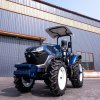
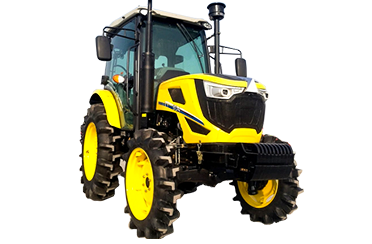
Modern mainstream wheel tractor products cover multiple horsepower segments from 20HP to 120HP, fully covering the operation needs of small family farms, medium planting cooperatives and large-scale agricultural bases. The products are divided into 2-wheel drive and 4-wheel drive models. The 4-wheel drive wheel tractor features strong traction, stable driving and excellent adaptability to muddy farmland, sloped land and complex soil conditions, which is the mainstream choice for global end users.
Equipped with high-efficiency energy-saving diesel engines that meet international emission standards, the wheel tractor effectively reduces fuel consumption per mu and long-term operation costs. The optimized transmission and hydraulic system realizes stable power output, avoiding power loss and operation failure during high-intensity continuous operation.
3.2 High Reliability and Standardized Manufacturing
Regular qualified manufacturers adopt standardized production processes for wheel tractor manufacturing. The whole process includes raw material cutting, high-strength steel frame welding, power assembly matching, hydraulic system debugging, finished vehicle performance test and factory safety inspection. Key load-bearing parts such as chassis, boom and drive axle are made of wear-resistant and impact-resistant alloy materials, ensuring long-term stable operation in harsh farm environments.
All finished equipment strictly implements international quality inspection standards, with stable failure rate and long service life, which is the core reason why the wheel tractor is recognized as a reliable farm mechanization equipment by global users. Forwholesale wheel tractor buyers, standardized manufacturing also ensures consistent product quality of bulk orders.
3.3 Multifunctional Adaptability
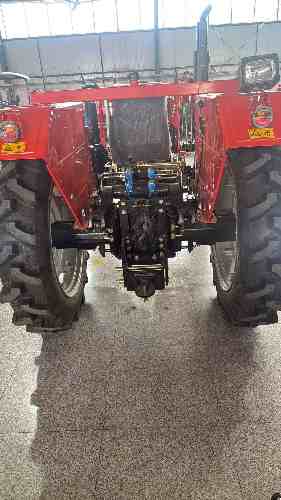
The modern wheel tractor reserves standard PTO power output interface and hydraulic quick-change interface, which can be quickly matched with rotary tillers, plows, seeders, sprayers, trailers and other supporting farm tools. It can complete the whole process of farmland preparation, crop management and post-harvest transportation, realizing multi-purpose of one machine. This high versatility greatly improves the utilization rate of farm equipment and reduces the overall investment cost of farm mechanization.
4. Main Application Scenarios of Wheel Tractors
As a universal farm mechanization equipment, the wheel tractor is widely used in various agricultural production scenarios. In dry land planting areas, it is mainly used for land plowing, soil loosening, sowing and fertilization; in paddy field areas, the improved anti-skid wheel tractor can adapt to wet soil operation; in mountainous and hilly areas, small and medium horsepower wheel tractors rely on flexible steering and compact body to complete fine farmland operations.
In addition to traditional farmland operations, wheel tractors are also commonly used in orchard management, pasture renovation, rural road maintenance and material handling, with extremely wide market coverage. The diverse application scenarios also lay a solid foundation for the continuous growth of wholesale wheel tractor market demand.
5. Global Market Development Trends
First, low-energy consumption and low-emission upgrades have become the mainstream trend. With the continuous improvement of global environmental protection standards for agricultural machinery, energy-saving and environmentally friendly wheel tractor models have gradually replaced traditional high-consumption equipment, becoming the preferred procurement direction for European, American and high-standard regional buyers.
Second, multi-functional integrated equipment is more popular. End users no longer pursue single tillage function, but prefer farm mechanization equipment with rich accessory compatibility and strong scene adaptability, which drives manufacturers to continuously optimize the functional design of wheel tractors.
Third, the cross-border wholesale market is becoming more standardized. Global wholesale wheel tractor transactions are gradually moving towards standardized procurement, complete certification documents and perfect after-sales spare parts support have become the core competitiveness of suppliers, replacing the single price advantage.
6. FAQ for Global B2B Buyers
Q1: What certifications are required for importing wheel tractors to overseas markets?
A: Most European markets require CE mechanical safety certification and corresponding engine emission certification. North American markets have strict EPA emission requirements. Most emerging markets need certificates of origin and product quality conformity certificates. Buyers shall confirm local customs clearance standards in advance to avoid trade risks.
Q2: What horsepower wheel tractor is more suitable for wholesale sales?
A: 40HP-100HP medium-sized wheel tractor has the widest market adaptability, suitable for most small and medium-sized farms in global emerging markets. For large-scale agricultural regions, high-horsepower models can be appropriately matched to enrich the product portfolio.
Q3: What are the core advantages of purchasing wholesale wheel tractor from formal manufacturers?
A: Formal manufacturers support standardized production, quality inspection and customized configuration, ensuring stable quality of bulk orders. Meanwhile, they can provide complete certification documents, English operation manuals and long-term spare parts supply services, helping distributors reduce after-sales pressure and improve local market reputation.
Q4: How to choose between 2WD and 4WD wheel tractor?
A: 2WD models are cost-effective, suitable for flat dry land and conventional farmland operations; 4WD models have stronger traction and passability, suitable for muddy land, sloped farmland and high-load operation scenarios. Buyers can select configurations according to local farmland conditions and end-user needs.
7. Conclusion
Driven by the global wave of agricultural modernization and farm mechanization upgrading, the wheel tractor, as a reliable and efficient core farm mechanization equipment, will maintain stable market demand growth. The booming cross-border agricultural machinery trade also brings broad development space for wholesale wheel tractor distributors and importers around the world. In the future, with the continuous upgrading of equipment energy-saving technology and multi-functional performance, wheel tractors will further empower the high-quality development of global agriculture and create sustainable commercial value for global B2B trading partners.