
Chinese Wheel Tractor Gains Overseas Market Momentum
Chinese Wheel Tractor Gains Overseas Market Momentum
Overview of the Global Farm Machinery Market
The global farm machinery market continues its steady expansion amid rising demand for agricultural mechanization across developing and emerging economies. Over the past several years, market research data indicates that the global wheel tractor segment maintains stable compound annual growth, driven by farm labour shortages, government agricultural modernization subsidies and growing expectations to raise grain output on every cultivated hectare. For many regional markets in Africa, Southeast Asia, South America and Central Asia, the upgrade from manual farming to mechanised operation creates massive consumption potential for wheel tractor units of varying horsepower ranges.
Against this overall market backdrop, the export of wheel tractor has become one of the fastest‑growing business segments within China’s agricultural equipment industry. Official industry statistics record that China delivered approximately 185,500 units of wheel tractor to overseas destinations in 2025, covering more than one hundred countries and territories; total export revenue of this category increased by more than 34% year‑on‑year, demonstrating strong market momentum for Chinese manufacturers36氪. While established western and Japanese tractor brands still hold dominant shares within high‑horsepower premium segments, Chinese wheel tractor suppliers are steadily expanding influence in mid‑range and utility horsepower markets, reshaping competitive patterns inside the global farm machinery market.
Many international dealers and large farm operators have gradually revised their perception of Chinese‑origin farm equipment. Early market impressions focused only on low‑priced basic models. Currently, buyers are paying increasing attention to complete machine reliability, fuel‑saving performance, implement compatibility, certification qualification and after‑sales spare‑parts supply. This shift creates both opportunities and challenges for domestic manufacturers: to sustain overseas growth, factories must align product research and development with real‑world operating conditions of overseas farm sites instead of simply duplicating models designed for inland Chinese farmland.
Technical Structure, Manufacturing and Performance Features of Chinese Wheel Tractor
Core Technical Parameters and Product Segmentation
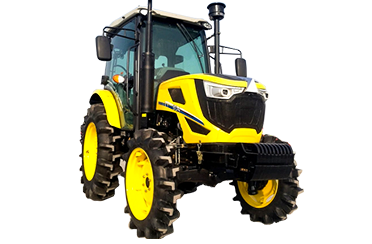
Chinese wheel tractor product lines cover a broad horsepower spectrum starting from compact 25‑40HP models for orchards and small‑size plots, mid‑range 40‑100HP 4WD units for general farm tillage, up to heavy‑duty 120‑220HP wheel tractor designed for large‑scale commercial farming operationsMade-in-Ch.... Two‑wheel‑drive variants remain popular for light transport jobs, yet 4‑wheel‑drive configurations occupy the fastest‑growing export category, because enhanced traction performance enables reliable work on muddy paddy fields, sloping farmland and loose soil conditions common across tropical zones.
Key technical specifications for mainstream exported mid‑size 80HP‑100HP wheel tractor include multi‑speed shuttle‑shift transmission systems (8F+8R or12F+12R), dual‑stage clutch assemblies, adjustable rear wheel tread, three‑point rear hitch and dual‑speed PTO output at 540 rpm /1000 rpm. The hydraulic lifting system provides sufficient lifting force to match different farming implements including ploughs, rotary tillers, seed drills and farm trailers, so a single wheel tractor can fulfil multiple farming workflows throughout the whole crop cycle.
Modern Manufacturing Workflow and Quality Control
Modern production of export‑oriented wheel tractor adopts modular assembly flow on automated production lines. The whole manufacturing procedure can be divided into core component incoming inspection, powertrain assembly (engine mated to gearbox), front‑rear axle installation, hydraulic pipeline layout, electrical wiring integration, cab installation and final offline testing. Critical offline testing procedures include cold‑run power testing, PTO speed calibration, hydraulic lifting cycle testing and road simulation running inspection before packing.
Many export‑focused Chinese tractor makers maintain dual‑track product development. On the one hand, they supply completely built units (CBU) for direct container shipment; on the other hand, they provide SKD semi‑knocked‑down kits for local overseas assembly. The SKD solution helps regional importers reduce overall logistics costs, shorten delivery cycles and support local employment in target markets. During production, factories also perform targeted modification for different regional requirements: upgrading engine emission systems for EU Stage V markets, reinforcing dust‑proof seals for dusty African farm environments and optimising cooling systems for tropical high‑temperature working conditions.
International Buyers’ Procurement Preferences and Existing Market Pain Points
What Global Importers and Farm Operators Look for When Sourcing Wheel Tractor
Analysis of purchasing behaviour among B2B buyers in the global farm machinery market reveals several clear preference trends. First, total‑cost‑of‑ownership weighs heavily in decision‑making. While buyers still care about initial purchase price, they now pay equal or even greater attention to fuel consumption performance, service intervals and spare‑part availability in local markets. Second, multi‑function adaptability is highly valued. Distributors favour a wheel tractor that can work with a broad portfolio of farm implements; this characteristic helps dealers expand sales revenue from matching attachments. Third, certification compliance has become a hard threshold. Buyers must confirm CE, EAC or other local certification documents before placing bulk import orders, to avoid customs detention and registration failures after the goods arrive at destination ports.
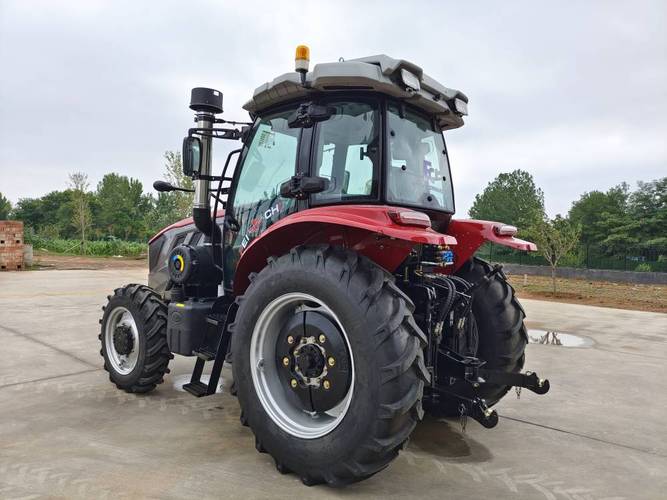
Regional preference divergence is also notable. Smallholder farmers across Africa and Southeast Asia show stronger demand for compact and medium‑power 4WD wheel tractor. Large commercial farming clients in South America and Central Asia tend to select higher‑horsepower units equipped with comfortable enclosed cabs, ROPS roll‑over protection and optional GPS‑assisted farming kits.
Key Pain Points Faced by Overseas Buyers
Even with fast‑rising export volumes, the export of wheel tractor still faces well‑recognised industry bottlenecks. The most frequently‑mentioned problem reported by overseas distributors concerns after‑sales support. In many remote agricultural regions, local service networks are underdeveloped; delayed spare‑part shipments can leave valuable wheel tractor units idle for weeks or months, directly hurting farmers and machinery dealers’ profits.
A second major pain point is product standard inconsistency across different Chinese suppliers. There is a wide quality gap between top‑tier professional manufacturers and small workshop‑style producers. Some importers without sufficient technical experience risk purchasing machines with poor component durability, which damages the overall market reputation for Chinese wheel tractor products. Thirdly, emission certification requirements keep getting stricter in European and some high‑income markets. Upgrading engine systems to satisfy advanced emission rules raises research and production costs, creating entry barriers for Chinese wheel tractor suppliers targeting mature western markets.
Future Market Trends for Chinese Wheel Tractor in Global Markets
Looking forward to the coming several years, the global farm machinery market will continue to offer solid growth opportunities for Chinese wheel tractor exporters. Mechanization penetration rates remain relatively low across many emerging agricultural economies. National government policies supporting local agricultural development will continuously stimulate procurement demand for farm machinery.
Product‑level evolution will move in three clear directions. Firstly, further optimisation of fuel‑saving diesel powertrains will remain a core competitive focus for mid‑range wheel tractor products. Secondly, intelligent functions including basic farm data recording, working‑hour monitoring and optional precision‑farming guidance modules will gradually spread from premium high‑horsepower models down into medium‑power product lines. Thirdly, manufacturers will invest more resources into building overseas spare‑part warehouses and regional technical training centres, to resolve long‑standing after‑sales service weak points and consolidate market share.
Competition within the export market will also intensify. In addition to rivalry between domestic Chinese factories, Chinese wheel tractor brands face fierce competition from Indian tractor exporters and established western original equipment manufacturers. To sustain overseas market momentum, Chinese suppliers cannot only rely on price advantages. Long‑term market success must be built on stable machine quality, customised product development for local working conditions and systematic after‑sales service networks.
Frequently Asked Questions (FAQ)
Q1: What horsepower ranges of Chinese wheel tractor are most popular for export markets?
A: Currently, 40‑100 horsepower 4WD wheel tractor remains the mainstream export segment. Compact models below 40HP suit small orchards and hilly farmland, while units above 120HP are growing quickly for large commercial farm clients in Central Asia and South America.
Q2: Can Chinese wheel tractor support different local certification requirements such as CE and EAC?
A: Yes. Reputable Chinese wheel tractor manufacturers develop dedicated product versions targeting different regional certification rules. Buyers must specify required certification standards at the early inquiry stage to ensure correct engine and safety configuration before production.
Q3: Is it possible to order SKD kits instead of fully built wheel tractor units for local assembly?
A: Many manufacturers support SKD semi‑knocked‑down supply solutions. This option is favourable for importers who have local assembly capacity and intend to lower overall import tariffs and logistics expenditure.
Q4: How can overseas buyers guarantee reliable after‑sales spare‑part supply for imported wheel tractor?
A: Buyers are recommended to confirm spare‑part delivery lead‑times and warranty terms in formal sales contracts. Prioritise suppliers that have built regional spare‑part warehouses within your continent, rather than relying entirely on urgent air freight shipments from China after machine breakdowns.
Closing Call to Action
The sustained growth of Chinese wheel tractor in international markets reflects comprehensive improvement of China’s agricultural machinery industry. Whether you are an overseas machinery distributor, farm cooperative procurement manager or large‑scale commercial farm operator seeking reliable wheel tractor solutions, you may submit an inquiry to obtain detailed technical specification sheets, certification documentation, quotation information and reference case materials for export‑grade wheel tractor models. Early technical communication will help you select the most suitable configuration matching local farm conditions and import regulatory requirements.