
Cost‑Effective Wheel Tractor for Farm Work
Global Market Background for Wheel Tractor Adoption
The global agricultural machinery sector keeps stable expansion amid rising food security pressure and rural labor shortages. According to industry statistics, the global wheel tractor market maintains steady compound annual growth, with developing markets in Southeast Asia, Africa and Latin America becoming major growth engines for wheel tractor sales. Many local small‑to‑medium‑scale farms and agricultural cooperatives face tight capital budgets. They are searching for an affordable wheel tractor that balances reliable performance and reasonable investment rather than over‑priced premium models.
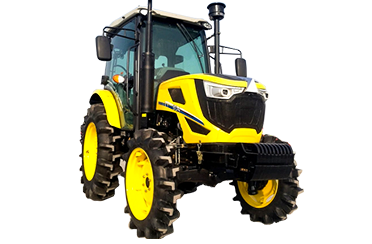
A wheel tractor for farm work undertakes core daily assignments including ploughing, tilling, sowing, harvesting auxiliary operations and farmland transportation. It occupies more than 80% share of total farm tractor deployment worldwide, proving its irreplaceable position in ordinary agricultural production. In emerging agricultural zones, government‑sponsored mechanization policies further push local dealers and importers to source cost‑effective wheel tractor units that fit regional farmland conditions and operating budgets.
Buyers no longer simply chase maximum horsepower. Total‑cost‑of‑ownership becomes the core evaluation standard: purchase price, fuel consumption, maintenance expense and spare‑part availability jointly decide whether a wheel tractor brings real economic benefits for farm operators. This market shift creates huge business opportunities for manufacturers focusing on practical, cost‑optimized agricultural equipment.
Key Trends Shaping Demand for Cost‑Effective Farm‑Grade Wheel Tractor
Shift toward practical‑oriented procurement among international B2B buyers
Traditional high‑end tractors integrate numerous intelligent modules, which raise purchase cost and increase repair difficulty for remote farming areas. More importers now prioritize stable core performance over excessive fancy configurations when selecting a wheel tractor for farm work. An affordable wheel tractor with simplified but mature structures reduces failure risk and lowers later‑stage operating expenditure.
Diversified working scenarios raise adaptability requirements
Farms across different regions have varied land conditions: dry cropland, hilly plots, paddy fields and mixed‑use farmland. A qualified cost‑effective wheel tractor must support quick connection with multiple attachments such as ploughs, rotary tillers, seeders and trailers, so one machine can finish multiple farm‑work missions and improve asset utilization rateMade-in-Ch.... Compact and medium‑power wheel tractor models (40‑90 HP) represent the largest‑volume segment in current global orders, matching the actual need of most small‑and‑medium holdings.
Supply‑chain optimization supports competitive pricing
Advanced modular manufacturing processes help qualified manufacturers control production expenses without sacrificing core durability. By mass‑producing standardized core assemblies and reserving optional upgrade modules, factories deliver a cost‑effective wheel tractor to global dealers and end‑users, avoiding extra cost brought by over‑customization.
Technical Highlights & Manufacturing Logic of Cost‑Effective Wheel Tractor for Farm Work
Cost‑effective does not mean low‑quality. The design philosophy of this wheel tractor for farm work focuses on practical farm‑oriented performance. Core assemblies adopt proven mature diesel engines featuring stable output and moderate fuel consumption, cutting per‑hectare operating cost for farm operators. The transmission system uses well‑tested mechanical gear sets to realize smooth speed shifting, easy learning curve for local operators and low failure probability in continuous field operation.
The chassis and frame go through reinforced welding and stress‑relief treatment during manufacturing. Key load‑bearing components strictly follow industrial production standards. After assembly, every unit undergoes multi‑round bench testing and simulated farm‑work running‑in inspection before leaving the factory, verifying hydraulic lifting capacity, PTO output, braking performance and whole‑machine stability. Unqualified products will be screened out to guarantee consistent batch quality.
This affordable wheel tractor reserves standard 3‑point hitch and power‑take‑off interface, compatible with mainstream agricultural implements from global suppliers. Buyers can expand machine functions according to local planting patterns without purchasing brand‑new equipment. Operators get user‑friendly control layout, clear instrument panel and comfortable seating, improving long‑hour working experience in farm fields.
In real‑world application, the cost‑effective wheel tractor can complete ploughing and soil preparation before sowing, support inter‑row cultivation during crop growth, and undertake material hauling inside farm zones. Whether for independent family farms or large agricultural cooperatives, it effectively reduces manual labor input and shortens operation cycles during peak farming seasons.

Core Advantages for B2B Importers & Distributors
For international dealers and importers, sourcing a cost‑effective wheel tractor for farm work brings multiple commercial merits. First, reasonable unit price lowers threshold for bulk purchasing and expands target customer groups covering smallholder farmers and medium‑scale plantations. Second, mature technical architecture means convenient spare‑part supply and simple local maintenance work, decreasing after‑sales service pressure for distributors. Third, standardized specifications support container loading and convenient cross‑border logistics arrangement, suitable for large‑volume export shipments.
Many overseas partners prefer this affordable wheel tractor for regional market promotion. It fills the market gap between ultra‑low‑end unreliable machinery and high‑priced western‑brand tractors. As agricultural mechanization keeps advancing in emerging economies, this product category will maintain steady market demand in the long run.
FAQ for Global Wheel Tractor B2B Buyers
Q1: What farm‑work tasks can a cost‑effective wheel tractor handle?
A: This wheel tractor for farm work supports ploughing, tillage, sowing, spraying, harvesting auxiliary work and farm‑site transportation. By connecting matched attachments, it fulfills most daily operations of ordinary crop planting. It suits dry land, gentle‑slope farmland and partial paddy‑field conditions.
Q2: Is an affordable wheel tractor reliable for long‑time continuous field operation?
A: Cost‑effective positioning focuses on controlling unnecessary premium configurations, while core power, chassis and hydraulic parts adopt mature industrial‑grade components. Each unit passes factory running‑in tests. With regular daily maintenance, it can sustain heavy‑duty farm‑cycle work. Buyers should select models from formal manufacturers with complete quality control systems.
Q3: Can I get supporting attachments and spare‑parts supply after ordering this wheel tractor?
A: Qualified manufacturers can supply matched agricultural attachments and original spare‑parts. For bulk‑order B2B clients, spare‑part kits can be delivered together with main machines. Importers are suggested to confirm spare‑part lead‑time and supply terms at the early negotiation stage.
Q4: What certifications are available for export‑oriented cost‑effective wheel tractor?
A: Normally qualified export wheel tractor can provide ISO quality certification, CE certification and related documentation for customs clearance. Different target countries add extra emission or safety requirements. Buyers need to inform suppliers of destination‑market regulatory standards before confirming model selection.
Closing Outlook
Global agriculture faces persistent pressure to lift production efficiency. A cost‑effective wheel tractor for farm work offers a balanced solution between performance and investment. For B2B importers, distributors and farm cooperatives, selecting a trustworthy affordable wheel tractor source will help capture growing mechanization market demand across multiple regions. As manufacturers continuously optimize product details according to overseas field feedback, this type of wheel tractor will keep playing an important role in modern small‑and‑medium farm production worldwide.