

Fuel-Efficient Wheel Loader Cuts Long-Term Expense
2026/08/11 09:20
Global Wheel Loader Market Trends and Industry Challenges
The global construction machinery industry continues steady growth amid evolving energy and environmental policies. Latest 2026 industry statistics show that the global wheel loader market maintains a stable annual growth rate, with medium and large loaders accounting for the largest market share in engineering and mining scenarios. However, the industry faces a universal operational challenge: traditional wheel loaders feature outdated fixed-displacement hydraulic systems and unreasonable power matching, resulting in severe invalid energy consumption.
Field operation data indicates that fuel expenditure accounts for more than 60% of the total operating cost of construction machinery. For enterprises with long-term and high-intensity construction tasks, the high fuel consumption of ordinary wheel loaders seriously compresses project profit margins. Meanwhile, global emission regulations including EU Stage V and EPA Tier 4 further eliminate high-consumption, high-emission equipment, forcing the market to accelerate the iteration of energy-saving, low-carbon hydraulic loader products.
Current B2B procurement trends show that international buyers no longer only focus on the initial purchase price of wheel loaders. Instead, full-lifecycle costs, operational stability and environmental compliance have become core evaluation indicators, making the fuel-efficient wheel loader increasingly popular in global market procurement.
Core Energy-Saving Technology of Fuel-Efficient Wheel Loader
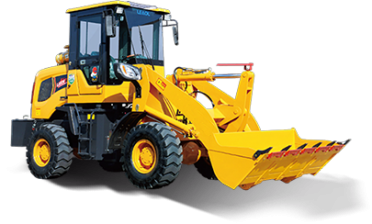
The outstanding cost-saving capability of the new-generationfuel-efficient wheel loader comes from systematic upgrades in powertrain, hydraulic control and intelligent energy management, rather than simplified configuration adjustments. The optimized hydraulic system serves as the core technology to reduce energy loss for the hydraulic loader.
Optimized Powertrain Matching Design
Different from traditional wheel loaders with fixed power output, the energy-saving model adopts an electronically controlled high-torque diesel engine matched with a lock-up torque converter. The intelligent power adjustment system monitors real-time working load, automatically adjusting engine speed and power output according to shoveling, lifting and traveling conditions. It effectively avoids idle speed and overspeed energy waste, reducing overall fuel consumption by 10% to 15% under conventional working conditions.
Load-Sensing Hydraulic System Upgrade
As the main energy-consuming component of a wheel loader, the hydraulic system determines the overall energy utilization efficiency. The upgraded hydraulic loader adopts a load-sensing variable displacement hydraulic pump and positive flow control valve group. The system intelligently matches oil pressure and flow according to actual operation demands, eliminating the constant-pressure energy waste of traditional hydraulic circuits.
When the equipment is in no-load traveling or standby state, the hydraulic pump automatically reduces displacement to cut invalid power consumption. Equipped with an energy recovery device, the system recycles gravitational potential energy generated during boom descending and braking, converting it into reusable hydraulic power. This core upgrade improves hydraulic energy utilization rate by more than 18% and greatly reduces long-term fuel consumption.
Lightweight Structure and Intelligent Operation Assistance
The new fuel-efficient wheel loader adopts high-strength lightweight alloy materials for key structural parts, reducing the machine’s own weight without reducing structural rigidity and load-bearing performance. The optimized body structure reduces traveling resistance and engine load, realizing passive fuel saving. In addition, intelligent working modes and standardized operation reminders help operators avoid aggressive operation that causes excessive fuel loss, further stabilizing energy-saving effects in long-term operation.
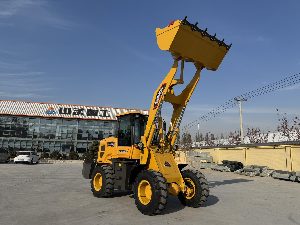
Full-Lifecycle Cost Reduction Advantages
The core value of the fuel-efficient wheel loader is reflected in continuous cost optimization throughout the equipment service cycle, helping users cut multiple long-term expenses.
In terms of direct fuel cost, compared with ordinary wheel loaders, the optimized hydraulic loader saves 2.5 to 3.5 liters of diesel per hour under the same working intensity. For enterprises with 8-hour daily operation and 260 working days a year, the annual fuel cost saving is considerable. For fleet users with multiple devices, the cumulative cost reduction forms a significant competitive advantage.
In terms of maintenance costs, the stable and efficient hydraulic system reduces frequent pressure impact and component wear. Key parts such as hydraulic pumps, valve groups and sealing kits have a longer service life, effectively reducing the frequency of spare parts replacement and equipment failure downtime. It avoids economic losses caused by construction suspension and reduces long-term after-sales maintenance expenses.
In terms of market value and compliance, low-consumption and low-emission wheel loader products meet international environmental protection standards, adapting to bidding and construction requirements in Europe, North America and other regulated regions. Meanwhile, energy-saving equipment maintains a higher residual value after long-term use, bringing better asset appreciation benefits for users.
Wide Industry Application Scenarios
With balanced power performance and energy-saving advantages, thefuel-efficient wheel loader and its upgraded hydraulic loader system are widely applicable to diversified complex working scenarios. It can meet heavy-load operation demands in quarries, mines and large construction sites, and also adapt to fine operation requirements in municipal engineering, farmland renovation, port logistics and environmental sanitation cleaning. The versatile design enables one machine to serve multiple purposes, further improving the return on investment for global buyers.
FAQ
Q1: Is the initial purchase cost of a fuel-efficient wheel loader much higher than a regular wheel loader?
A: The upfront price difference is limited and controllable. Although the energy-saving model adopts upgraded hydraulic and power systems, the increased cost can be fully offset by saved fuel and maintenance expenses within 1 to 2 years of normal operation. In the 8–10 year full service cycle, the overall cost performance of the fuel-efficient wheel loader is far higher than that of ordinary models.
Q2: Will energy-saving transformation reduce the working power and efficiency of the hydraulic loader?
A: No. The energy-saving upgrade focuses on optimizing energy transmission efficiency and reducing invalid loss, rather than reducing power output. The maximum breakout force, loading capacity and working efficiency of the wheel loader remain unchanged during heavy-load operations, ensuring stable construction capacity while saving energy.
Q3: Can the fuel-efficient hydraulic loader adapt to harsh working environments?
A: All upgraded fuel-efficient wheel loader products are equipped with enhanced heat dissipation systems, dust-proof hydraulic systems and wear-resistant structural parts. They have passed long-term durability tests under high temperature, heavy dust and muddy road conditions, and can operate stably in various harsh global working scenarios.
Q4: What after-sales support is available for overseas buyers?
A: We provide complete overseas after-sales services, including global logistics delivery, multilingual technical documents, remote video guidance, overseas warehouse spare parts supply and professional equipment operation training, ensuring long-term stable operation of each hydraulic loader for global clients.
Conclusion
Against the background of global energy conservation, emission reduction and tightening construction profits, the fuel-efficient wheel loader with advanced hydraulic system technology has become an essential cost-saving equipment for modern construction fleets. By optimizing power output, reducing energy waste and lowering full-lifecycle maintenance and operating costs, the upgraded hydraulic loader effectively cuts long-term expenses for global users and improves overall project profitability. For international contractors, machinery lessors and distributors, choosing energy-saving wheel loader products is a reliable long-term strategic investment.