
Global Demand for Wheel Tractors Continues to Grow
2026/08/03 10:43
Industry Overview: Global Wheel Tractor Market Maintains Steady Growth Momentum
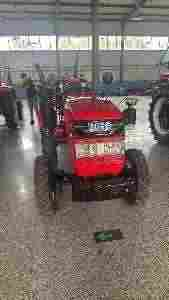
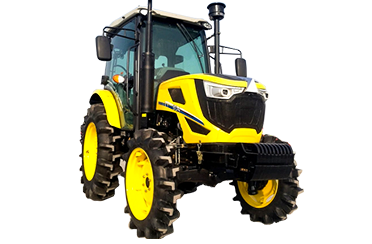
Driven by accelerating global agricultural modernization, shrinking rural labor resources, and rising demands for efficient farm production, the market demand for Wheel Tractor products has achieved continuous and stable growth worldwide. As one of the core pieces of agricultural equipment, the versatile Farm Wheel Tractor has become a priority procurement choice for global farmers, agricultural cooperatives, and machinery importers. Equipped with diversified Wheel Tractor implements, modern wheel tractors can complete full-cycle farm operations, effectively solving the pain points of low manual farming efficiency and high labor costs.
Latest professional industry market research data verifies that the global wheel tractor market will maintain a compound annual growth rate of over 4.8% from 2026 to 2034. The market growth is mainly concentrated in emerging agricultural regions including Southeast Asia, Central Asia, South America, and East Africa. These regions feature vast arable land, low agricultural mechanization penetration, and huge equipment renewal and market increment space. Different from single-functional agricultural machinery, the highly adaptable Wheel Tractor with supporting Wheel Tractor implements can meet diversified farming needs, bringing high cost performance and operational flexibility to end users.
Key Drivers Fueling Rising Demand for Farm Wheel Tractor
1. Global Rural Labor Shortage Spurs Mechanization Upgrading
The universal outflow of rural labor has become a key factor promoting the popularization of agricultural machinery across the globe. Traditional manual tillage, sowing, fertilization and harvesting rely heavily on manpower, with low efficiency and unstable operation cycles. In contrast, a standard Farm Wheel Tractor can replace dozens of manual workers when matched with professional Wheel Tractor implements, greatly improving overall farm production efficiency. For large-scale planting bases and small and medium-sized farms, investing in high-quality Wheel Tractor equipment is an effective way to reduce long-term operating costs and stabilize seasonal farming schedules.
2. Multi-Scenario Compatibility Improves Equipment Utilization Rate
Versatility is the core competitive advantage of modern Wheel Tractor. All mainstream models are equipped with standard three-point suspension and PTO power output interfaces, which can be quickly connected with a full set of Wheel Tractor implements such as rotary tillers, disc ploughs, seed drills, sprayers, front loaders, and balers. A single Farm Wheel Tractor can realize multiple operational functions including land preparation, sowing, field management, harvesting and short-distance transportation, covering the whole growth cycle of crops. This multi-functional integration avoids repeated purchase of single equipment, significantly improves equipment utilization rate, and is widely favored by global B2B buyers.
3. National Agricultural Support Policies Boost Market Consumption
To ensure global food security, major agricultural countries have successively introduced favorable policies such as agricultural machinery purchase subsidies, tax reductions and low-interest financing. These policies greatly reduce the procurement cost of Wheel Tractor and supporting Wheel Tractor implements for farmers and agricultural enterprises. At the same time, preferential tariff policies for cross-border agricultural machinery trade have further stimulated bulk export orders, driving the continuous expansion of the global Farm Wheel Tractor market scale.
Technological Upgrading Optimizes Wheel Tractor Performance and Applicability
With the continuous progress of agricultural machinery manufacturing technology, the overall performance of the new generationWheel Tractor has been comprehensively upgraded. Formal manufacturers adopt high-efficiency and fuel-saving diesel engines, optimized transmission systems and reinforced thickened chassis, which effectively enhance the traction performance and durability of the equipment while reducing fuel consumption and operating costs. 4WD high-performance models adapt to complex terrain such as muddy farmland, sloped land and rugged fields, solving the problem of insufficient traction of traditional 2WD Farm Wheel Tractor in harsh working environments.
Intelligent configuration has gradually become a new industry trend. Mid-to-high-end Wheel Tractor products are optional with GPS automatic steering, real-time operation data monitoring and intelligent fault diagnosis systems, helping users realize precision agricultural production. In terms of manufacturing standards, all conventional models follow unified international interface specifications, ensuring good compatibility between the main machine and different types of Wheel Tractor implements. Strict factory quality inspection and standardized production processes guarantee stable and reliable product quality, which is the core reason why Chinese-manufactured wheel tractors occupy an important position in the global market.
Future Development Trends of the Global Wheel Tractor Industry
In the next five to ten years, the global Wheel Tractor market will show three obvious development trends. First, market segmentation will be further refined. Emerging markets will continue to maintain strong demand for economical medium and low horsepower Farm Wheel Tractor and basic supporting Wheel Tractor implements, suitable for small and scattered farmland operations. Developed markets in Europe and America will focus on high-power, intelligent, low-emission wheel tractor products to meet large-scale and intensive farming needs.
Second, one-stop complete set procurement will become mainstream. More and more international importers tend to purchase Wheel Tractor and supporting Wheel Tractor implements from a single supplier, which simplifies cross-border procurement procedures, unifies equipment compatibility standards, and reduces after-sales communication costs. Third, environmental protection and certification standards will be increasingly stringent. Euro IV, Stage V emission standards and CE certification will become the basic threshold for equipment to enter mainstream overseas markets, forcing manufacturers to continuously optimize product performance and environmental protection indicators.
FAQ: Common Questions for Global Wheel Tractor Bulk Buyers
Q1: What horsepower Farm Wheel Tractor is most suitable for small and medium-sized farms?
A: For small farmland below 50 hectares, 30HP to 80HP Wheel Tractor is the most cost-effective choice, with flexible operation and full compatibility with conventional Wheel Tractor implements. For medium and large farms over 80 hectares, 90HP to 160HP 4WD models are recommended to meet long-term and high-load continuous farming operations.
Q2: Can a single Wheel Tractor match multiple types of Wheel Tractor implements?
A: Yes. Standard Farm Wheel Tractor reserves universal suspension and power output interfaces. As long as the parameters match, one main unit can be adapted to dozens of Wheel Tractor implements to complete different farming tasks in different seasons, realizing multi-machine integration and improving economic benefits.
Q3: What certifications are required for exporting Wheel Tractors to European markets?
A: CE certification is a mandatory qualification for entry into the European market. Meanwhile, the engine must meet local Euro IV or Stage V emission standards. Buyers need to verify complete certification documents for both Wheel Tractor and supporting Wheel Tractor implements before bulk procurement.
Q4: What core factors should be considered when choosing a Wheel Tractor manufacturer?
A: Global buyers should focus on chassis quality, engine brand, power performance, implement compatibility, official certification qualifications, spare parts supply capacity and overseas after-sales service. Professional manufacturers can provide customized Farm Wheel Tractor supporting solutions according to local farming conditions.
Conclusion
Benefiting from the continuous advancement of global agricultural mechanization and the rigid demand for efficient farm production, the market demand for Wheel Tractor will maintain a long-term upward trend. The multi-functional Farm Wheel Tractor matched with complete Wheel Tractor implements will continue to be the mainstream equipment for global agricultural production. For international agricultural machinery importers and distributors, cooperating with professional and qualified manufacturers will help seize the growing global agricultural machinery market dividend and achieve long-term stable business development.