
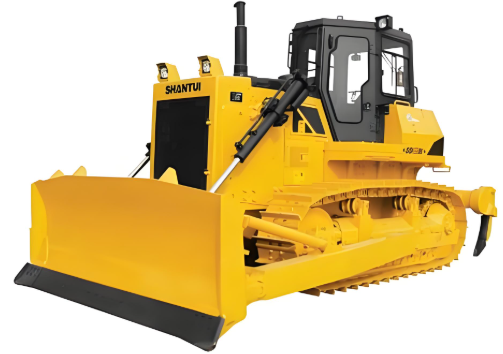
Bruder bulldozer
In addition to the previously mentioned advantages and limitations, crawler bulldozers have the following characteristics:
Strong Power
Equipped with high-power engines, they deliver robust power to meet operational needs in various complex working conditions. They can easily handle hard soil and large-scale earthwork projects.
Precise Control
With advanced control systems, they enable precise manipulation of the bulldozer blade, allowing accurate control over earth-moving volume, depth, and direction—thereby improving work quality and precision.
High Adaptability
They can operate normally in diverse climatic conditions, from cold northern regions to hot southern areas. Meanwhile, they perform well on different soil types, such as clay, sand, and gravel soil.
Durability
Built with a sturdy structure and high-strength materials for key components, they can withstand heavy workloads and impact forces, ensuring long service life and reliable performance under prolonged high-intensity operations.
Multifunctionality
By replacing working attachments (e.g., rippers, loader buckets), they can achieve multiple functions, enhancing equipment utilization and cost-effectiveness.
Product Details
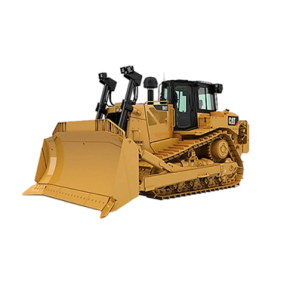
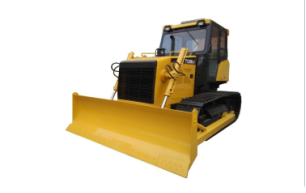
Here’s a detailed introduction to crawler bulldozers, key construction machines in earthwork projects:
Structural Components
- Engine: Provides power, typically a high-power diesel engine to meet dynamic demands across various working conditions.
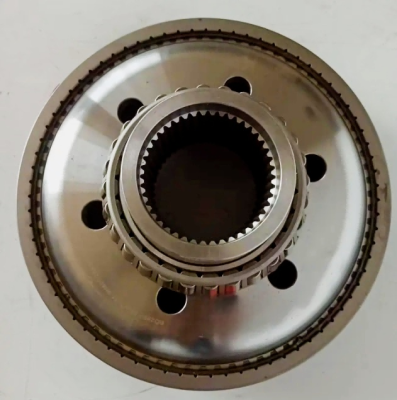
- Transmission System: Transmits engine power to the running gear and working equipment, including components like clutches, transmissions, drive shafts, and final drives.
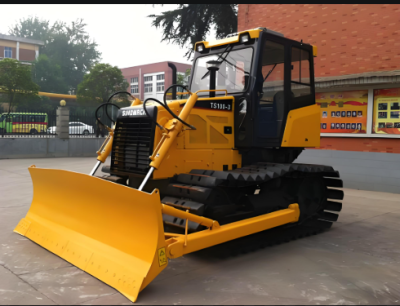
- Running Gear: Features a crawler design with drive wheels, guide wheels, carrier rollers, idler wheels, and tracks, enabling adaptability to complex terrains.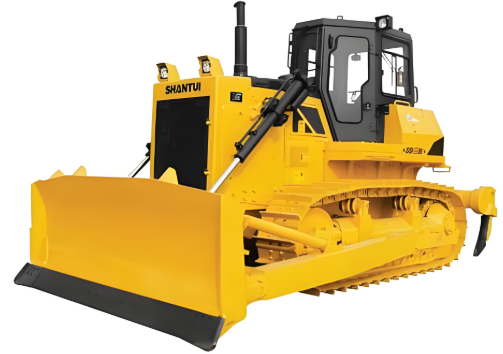
- Working Equipment: Mainly the bulldozer blade, usually made of high-strength wear-resistant steel, controlled by a hydraulic system for lifting, tilting, and flipping to complete earth-moving tasks. Some models can be equipped with attachments like rippers.
- Control System: Includes cab-mounted levers, pedals, and instrument panels, allowing operators to control driving direction, speed, and working equipment movements.
Working Principle
Power from the engine drives the drive wheels via the transmission system, moving the tracks to enable travel. Meanwhile, the hydraulic system precisely adjusts the blade’s position and angle based on operator commands. The blade’s cutting edge切入 (cuts into) soil, which is then pushed to designated locations as the bulldozer advances.
Application Fields
- Construction: Used for site leveling, foundation excavation, and debris clearance after building demolitions.
- Road Building: Performs subgrade treatment, pavement base laying, and road slope trimming.
- Mining: Conducts topsoil stripping, ore/rock hauling, and mine road construction in open-pit mines.
- Hydraulic Engineering: Applies to dam construction, river dredging, and canal excavation.
Performance Features
- High Traction: Large track-ground contact area generates strong friction, enabling heavy pushing in harsh terrains like mud or slopes.
- Low Ground Pressure: Weight distribution via tracks reduces sinking risk, suitable for soft ground like wetlands or sand.
- Stability: Low center of gravity and wide track support ensure balance, minimizing rollover risks during operation.
- Off-Road Capability: Adapts to rugged mountains and potholed surfaces, accessing challenging work environments.
- Strong Adhesion: Tracks provide reliable grip on slippery or sloped surfaces, preventing slippage during tasks.
Additional Features: Robust power, precise control, climatic/soil adaptability, durability, and multifunctionality (via attachment changes).
Limitations: Slow travel speed, difficult site relocation, and high maintenance costs.
Leave your messages