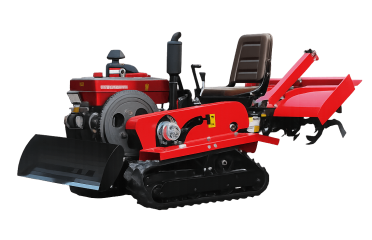
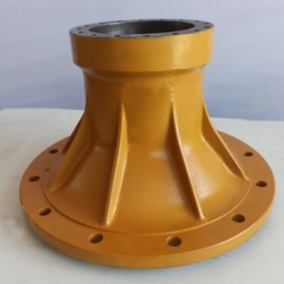

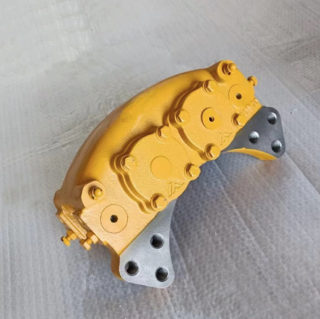
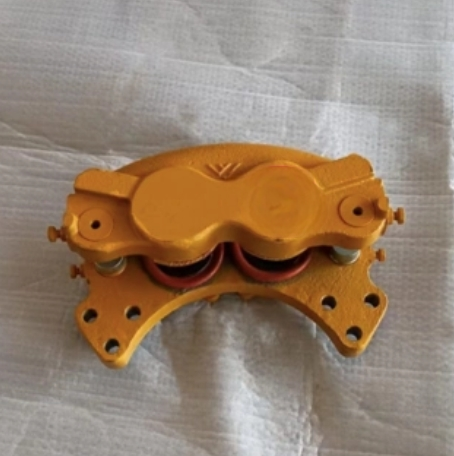
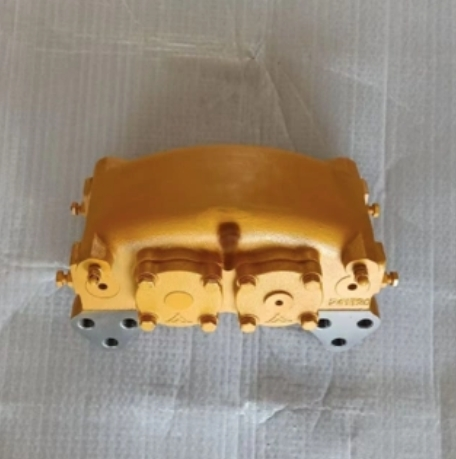
Loader Caliper
1. Original quality parts, host supporting products.
2. Adopting high quality steel, wear-resisting and anti-manufacturing, prolonging the use of time.
3. Smooth running, low noise, high reliability.
4. Factory shop, support processing customization.
5. Affordable price, quality assurance.
6. Factory storage, delivery, transport, convenient and quick.
Product Details
1. Clamp Disc Brake
Structure and Working Principle
The clamp disc brake, also known as a caliper disc brake, represents one of the most widely adopted braking solutions in modern loading equipment. Its fundamental architecture comprises three core components: brake calipers, brake discs (rotors), and friction plates (pads). The brake caliper houses one or more hydraulic pistons that act as the primary force-transmission elements within the system.
When the operator depresses the brake pedal, hydraulic pressure is generated within the master cylinder and transmitted through brake lines to the caliper assembly. This pressurized brake fluid acts upon the piston(s), forcing them outward. As the pistons extend, they push the inner friction plate toward the brake disc. Simultaneously, the reaction force causes the caliper body to slide inward on its mounting pins, drawing the outer friction plate into contact with the opposite face of the disc. The resulting symmetric clamping force creates friction between the pads and the rotating disc, converting kinetic energy into thermal energy and thereby decelerating or halting the vehicle.
In heavy-duty loader applications, clamp disc brakes are typically configured as fixed-caliper or floating-caliper designs. Fixed-caliper systems employ pistons on both sides of the disc, delivering more uniform pressure distribution and superior braking consistency under high-load conditions. Floating-caliper designs, while simpler and more cost-effective, rely on a single piston and caliper sliding mechanism, making them suitable for medium-duty loading operations.
Key Characteristics
Stable Braking Torque
The braking force in a clamp disc brake system is generated through direct, face-to-face contact between the friction plate and the brake disc. This contact mechanism ensures that braking torque remains stable and predictable across a wide range of operating speeds and loads. Unlike drum brakes, which can experience self-energizing effects that lead to unpredictable torque fluctuations, disc brakes exhibit a nearly linear relationship between hydraulic pressure and braking force. This linearity is particularly valuable in loader operations, where precise speed control during loading, hauling, and dumping cycles directly impacts productivity and safety.
Furthermore, the flat contact geometry of disc brakes minimizes the risk of brake fade caused by thermal expansion distortion. The brake disc, when heated, expands uniformly in the axial direction, maintaining consistent pad-to-disc contact pressure. This thermal stability translates into reliable braking performance even during extended work shifts with frequent stop-and-go cycles.
Good Heat Dissipation Performance
One of the most significant advantages of clamp disc brakes is their inherent thermal management capability. The brake disc is fully exposed to the ambient air, allowing convective heat dissipation to occur continuously during operation. As the disc rotates, its surfaces act as natural heat exchangers, transferring thermal energy to the surrounding airflow. Many heavy-duty loader brake discs are further engineered with internal ventilation channels — vaned or drilled designs that create a pumping effect, drawing cool air through the disc's center and expelling hot air at the periphery. This ventilated construction can reduce operating temperatures by 20–30% compared to solid discs under equivalent braking conditions.
This superior heat dissipation makes clamp disc brakes particularly well-suited for loading operations involving frequent braking, such as load-and-carry cycles in quarries, construction sites, and material handling yards. In these environments, brakes are applied repeatedly within short intervals, and the ability to dissipate heat rapidly prevents thermal fade — a condition where elevated temperatures reduce the coefficient of friction between pads and disc, diminishing braking effectiveness.
Easy Maintenance
From a maintenance and total-cost-of-ownership perspective, clamp disc brakes offer notable advantages. The friction plates are designed as consumable components that can be replaced independently without disassembling the entire brake assembly. In most loader configurations, pad replacement involves simply removing the caliper mounting bolts, withdrawing the worn pads, inserting new ones, and retracting the piston to accommodate the increased pad thickness. This procedure typically requires 30–60 minutes per wheel, significantly less labor-intensive than servicing drum brakes or wet multi-disc systems.
Additionally, the exposed nature of disc brakes allows for visual inspection of pad wear, disc condition, and caliper operation without disassembly. Maintenance technicians can quickly assess remaining pad thickness, check for disc scoring or cracking, and verify that caliper slide pins are free of corrosion — all critical preventive maintenance tasks that contribute to lower long-term operating costs.
2. Wet Multi-Disc Brake
Structure and Working Principle
The wet multi-disc brake represents a more advanced, fully enclosed braking system designed for the most demanding heavy-duty loader applications. Unlike the open architecture of clamp disc brakes, wet multi-disc systems operate within a sealed housing, with the entire friction assembly immersed in cooling and lubricating oil.
The core friction pair consists of multiple alternating sets of dynamic friction discs (rotating discs) and static friction discs (stationary discs). The dynamic discs are splined to the rotating hub or axle shaft, rotating with the wheel, while the static discs are splined to the stationary brake housing, preventing rotation. This interleaved configuration creates multiple friction interfaces — typically 5–10 pairs in loader applications — multiplying the total friction surface area available for braking.
When braking is initiated, hydraulic pressure or mechanical force acts upon a pressure plate (actuator piston), which compresses the entire stack of alternating dynamic and static discs. As the discs are forced together, friction is generated at each interface, converting rotational energy into heat. The cumulative effect of multiple friction surfaces produces substantially greater braking torque than a single-disc clamp brake of equivalent diameter.
The oil within the sealed housing serves dual purposes: it continuously cools the friction discs by absorbing and carrying away heat, and it lubricates the sliding interfaces, reducing wear and preventing material transfer between disc surfaces. In many modern loader designs, the oil is circulated through an external cooler, further enhancing thermal management capacity.
Key Characteristics
Large Braking Capacity
The most defining characteristic of wet multi-disc brakes is their exceptional braking torque capacity. By employing multiple friction disc pairs operating in parallel, these systems can generate braking forces that far exceed those of clamp disc brakes with similar packaging dimensions. Each additional disc pair contributes incrementally to the total torque output, allowing engineers to tailor braking capacity to specific loader weight classes and duty cycles without proportionally increasing the brake's physical footprint.
This large braking capacity makes wet multi-disc brakes the preferred choice for heavy-duty loaders operating in severe conditions — underground mining, large-scale earthmoving, port container handling, and timber harvesting. In these applications, the combination of high machine weight, steep grades, and heavy payloads demands braking systems that can reliably bring the vehicle to a controlled stop under maximum load conditions.
Good Thermal Stability
Wet multi-disc brakes demonstrate superior thermal stability compared to dry braking systems, primarily due to the oil-cooling mechanism. The oil continuously absorbs heat generated at the friction interfaces and transfers it away from the disc stack. In systems with external oil coolers, this heat is then dissipated to the ambient environment through a radiator-style exchanger, maintaining oil temperature within an optimal operating range.
This effective heat management virtually eliminates brake fade — the degradation of braking performance caused by elevated friction surface temperatures. In dry disc brakes, prolonged or repeated braking can raise disc surface temperatures above 300–400°C, at which point the friction material's coefficient of friction begins to decline, and in extreme cases, brake fluid can vaporize, leading to complete brake failure. Wet multi-disc systems, by contrast, typically maintain friction surface temperatures below 150°C even under continuous heavy braking, ensuring consistent braking performance throughout the work shift.
This thermal stability is particularly critical for loaders engaged in continuous hauling operations on downhill grades, where brakes must be applied for extended periods to control descent speed. The wet multi-disc design provides the sustained braking capacity needed for these demanding conditions without performance degradation.
Strong Anti-Pollution Ability
The fully sealed housing of wet multi-disc brakes provides robust protection against environmental contaminants. Dust, dirt, mud, water, and chemical debris — all commonly encountered in construction, mining, and agricultural environments — are prevented from entering the brake assembly. This contamination resistance directly translates into extended service life and reduced maintenance requirements.
In open clamp disc brake systems, abrasive dust and grit can become embedded in friction pad surfaces, causing accelerated disc wear and scoring. Water ingress can temporarily reduce friction coefficients, leading to unpredictable braking response, particularly in wet or muddy conditions. Wet multi-disc brakes, operating within a sealed, oil-filled environment, are immune to these external factors. The oil itself acts as a barrier, and any contaminants that might enter through seal degradation are typically suspended in the oil and filtered out during routine oil changes.
This sealed construction also contributes to quieter braking operation, as the oil dampens the vibration and noise that can occur in dry disc brake systems, particularly during light brake applications.
3. Maintenance and Upkeep of Brake Calipers
Proper maintenance of brake calipers — whether clamp disc or wet multi-disc configurations — is essential for ensuring optimal braking performance, extending component service life, and maintaining operational safety. The following maintenance practices should be integrated into every loader's preventive maintenance schedule.
Regularly Check Friction Pad Wear
Friction pads are the primary consumable component in any braking system, and their condition directly determines braking effectiveness. Operators and maintenance technicians should inspect pad thickness at regular intervals — typically every 250–500 operating hours, depending on application severity. Most loader brake pads are equipped with wear indicators or minimum thickness markings; pads should be replaced before reaching these limits.
Severely worn pads not only reduce braking force but also expose the metal backing plate, which can score or groove the brake disc surface. A scored disc requires resurfacing or replacement, significantly increasing repair costs. In wet multi-disc systems, friction disc wear should be assessed by measuring the total stack thickness or through oil analysis, which can detect elevated levels of friction material particles indicating accelerated wear.
Keep the Braking System Clean
Maintaining cleanliness around brake caliper assemblies is critical for preventing contamination-related performance issues. For clamp disc brakes, regular cleaning of caliper housings, slide pins, and mounting brackets removes accumulated dust, mud, and road grime that could impede caliper movement or accelerate component wear. Pressure washing should be performed cautiously, avoiding direct high-pressure streams at caliper seals to prevent water ingress into the hydraulic system.
For wet multi-disc brakes, while the sealed housing provides internal protection, the external surfaces should be kept clean to facilitate heat dissipation from the housing and to allow for visual inspection of potential oil leaks. Accumulated mud or debris on the brake housing can act as insulation, reducing the housing's ability to transfer heat to the ambient air.
Regularly Replace Brake Fluid
Brake fluid is a hygroscopic fluid — it absorbs moisture from the atmosphere over time. Moisture contamination lowers the fluid's boiling point, increasing the risk of vapor lock under high-temperature braking conditions. Additionally, moisture can cause internal corrosion of caliper pistons, cylinders, and brake lines, leading to seal degradation and fluid leaks.
For loader applications, brake fluid should typically be replaced every 1–2 years or every 2,000 operating hours, whichever comes first. In wet multi-disc systems, the cooling/lubricating oil should be changed according to the manufacturer's specifications — commonly every 3,000–6,000 hours — and the oil filter replaced simultaneously. Always use the brake fluid or oil grade specified by the equipment manufacturer, as incompatible fluids can cause seal swelling, degradation, or catastrophic brake failure.
Check Caliper Sealing Integrity
Seal inspection is a critical maintenance task for both brake types. For clamp disc brakes, piston seals and dust boots should be examined for cracks, tears, or signs of fluid leakage. A compromised dust boot allows moisture and contaminants to reach the piston bore, causing corrosion and piston sticking. A leaking piston seal results in gradual fluid loss, reduced hydraulic pressure, and ultimately, diminished braking performance.
For wet multi-disc brakes, the external housing seals and O-rings should be inspected for oil leakage. Any signs of oil seepage around the brake housing indicate seal degradation and require prompt attention to prevent oil loss, which could lead to inadequate cooling and lubrication of the friction disc stack. Internal seal components should be inspected during scheduled brake overhauls, typically at 10,000–15,000 operating hour intervals.
Conclusion
The choice between clamp disc brakes and wet multi-disc brakes for loader applications depends on a careful assessment of operational requirements, load capacity, duty cycle severity, environmental conditions, and total cost of ownership. Clamp disc brakes offer an excellent balance of performance, heat dissipation, and maintainability for medium-duty loading operations, while wet multi-disc brakes provide unmatched braking capacity, thermal stability, and contamination resistance for the most demanding heavy-duty applications. Regardless of the system selected, diligent adherence to preventive maintenance practices — including regular pad inspection, system cleanliness, fluid replacement, and seal integrity checks — is essential for maximizing brake service life, ensuring reliable performance, and safeguarding operational safety on every job site.
Leave your messages