
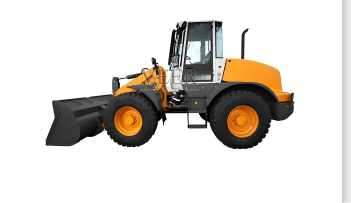
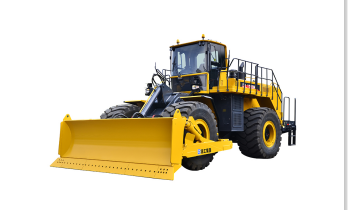
Bulldozer
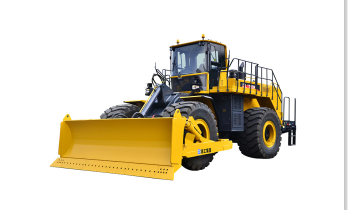
The advantages of wheel - type bulldozers are as follows:
- High travel speed: Wheel - type bulldozers are equipped with tire - type running gear. Compared with crawler - type bulldozers, their travel speed is usually faster, generally reaching 30 - 50 kilometers per hour. This can effectively reduce the transfer time between work sites and improve work efficiency.
- Good mobility: Wheel - type bulldozers have flexible steering and a small turning radius, enabling them to complete steering and U - turns in a relatively small space. They are especially suitable for working in relatively narrow working environments such as urban construction and road maintenance.
- Strong road adaptability: Wheel - type bulldozers have good adaptability to road surfaces. When driving on hard road surfaces, the adhesion between the tires and the ground is moderate, which is less likely to cause excessive damage to the road surface and can also maintain good driving stability.
- Low maintenance cost: The tire structure of wheel - type bulldozers is relatively simple, and maintenance and replacement are convenient. In addition, the service life of tires is relatively long. Compared with the crawlers of crawler - type bulldozers, the replacement frequency is lower, which can reduce certain maintenance costs and downtime.
- Good fuel economy: Due to the low driving resistance of wheel - type bulldozers, their fuel consumption is relatively low under the same working conditions, which can save fuel costs for users.
Product Details
Here is the detailed information about wheel - type bulldozers:
General Introduction
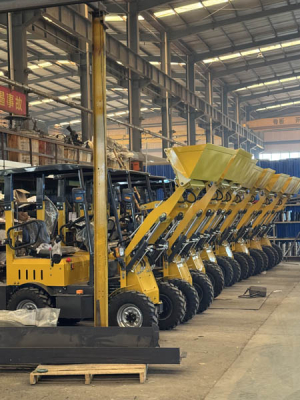
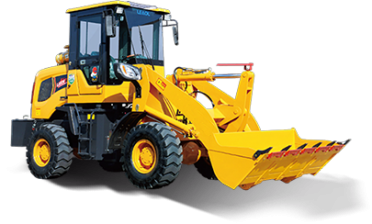
Wheel - type bulldozers are construction machinery mainly used for earth - moving, grading, and pushing operations. They are characterized by their wheel - based running gear, which provides them with certain advantages over crawler - type bulldozers in terms of speed, mobility, and road adaptability.
Structural Components
- Power System: Usually equipped with a diesel engine to provide the necessary power. The engine has high power and torque output to ensure the normal operation of the bulldozer under various working conditions.
- Running Gear: Consists of wheels and axles. The wheels are made of special rubber materials, which have good shock - absorption performance and traction. The axle system is designed to bear the weight of the vehicle and transmit power.
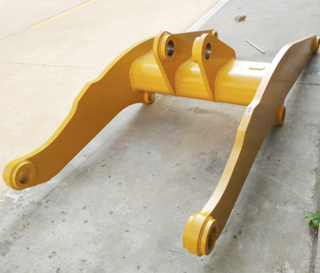
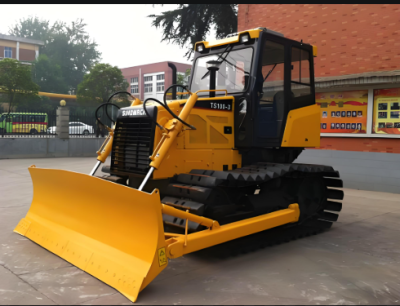
- Working Device: Includes a blade and a ripper. The blade is used for pushing and leveling soil, and its angle and height can be adjusted according to different working requirements. The ripper is used to break up hard - packed soil or rock layers.
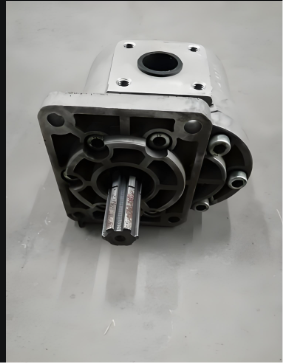
- Hydraulic System: Controls the movement of the working device and the steering of the vehicle. It consists of hydraulic pumps, valves, cylinders, and other components, which ensure the precise operation of the bulldozer.
Working Principles
The power generated by the engine is transmitted to the wheels through the transmission system, enabling the bulldozer to move forward or backward. The hydraulic system controls the lifting and tilting of the blade and the operation of the ripper. When the bulldozer is working, the blade is lowered to contact the ground, and then the vehicle moves forward to push the soil. The ripper is used when it is necessary to break up hard materials before pushing.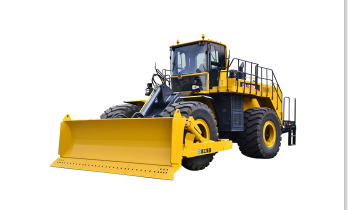
Applications
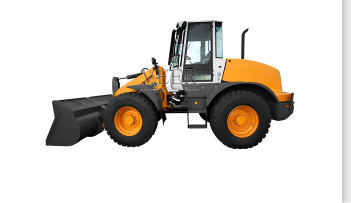
Wheel - type bulldozers are widely used in various construction projects, such as urban infrastructure construction, road construction, and site preparation. They are suitable for working in environments with relatively good road conditions and require high work efficiency and mobility.
Advantages
As mentioned before, wheel - type bulldozers have the advantages of high travel speed, good mobility, strong road adaptability, low maintenance cost, and good fuel economy. These advantages make them an important choice in many construction scenarios.
Disadvantages
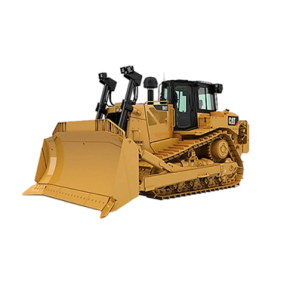
However, wheel - type bulldozers also have some limitations. For example, their traction is relatively lower than that of crawler - type bulldozers, which may affect their performance in soft soil or rough terrain. In addition, their stability may be worse when working on slopes or uneven ground.
Leave your messages