
Global Walk‑behind Weeder Market Expands as Farm Mechanization Spreads
2026/08/28 13:51
1. Industry Background: Farm Mechanization Drives Fundamental Market Upgrade
In the past decade, global agriculture has completed a critical transformation from labor-intensive to mechanized and intelligent production. Rising rural labor costs, shrinking agricultural labor populations, and growing demands for standardized crop planting have forced farming entities of all sizes to optimize production efficiency and reduce manual operating costs. Traditional manual weeding relies on a large amount of labor, with low operating efficiency and unstable weeding quality, which can no longer adapt to the large-scale and standardized development of modern agriculture.
As a flexible and versatile small agricultural machine, the walk-behind weeder perfectly matches the production characteristics of small and medium-sized farmland, mountainous orchards, vegetable bases, and urban horticultural greening. Unlike large-scale automated weeding equipment that is limited by site conditions and high procurement costs, walk-behind weeders feature flexible operation, low failure rate, and low overall use cost, making them suitable for popularization and application in both developed agricultural regions and emerging agricultural markets. The continuous popularization of global farm mechanization has laid a solid foundation for the sustained expansion of the global walk-behind weeder market.
2. Global Walk-behind Weeder Market Size and Core Growth Data
The walk-behind weeder market maintains a stable compound growth trend, benefiting from the continuous upgrading of agricultural mechanization levels in Asia-Pacific, Europe, North America, and Latin America. Combined with the latest global agricultural machinery market research data, the global walk-behind weeder market size reached approximately USD 1.52 billion in 2024, and is projected to grow at a CAGR of 6.1% from 2025 to 2033, exceeding USD 2.58 billion by the end of the forecast period.
From a segmented growth perspective, the market growth momentum varies across regions. The Asia-Pacific region dominates the global walk-behind weeder market share, accounting for more than 48% of the total market volume, driven by the large number of small-scale farmlands in China, India, Southeast Asia, and South Korea, as well as strong government subsidies for agricultural mechanization. The European and North American markets grow steadily, with demand mainly concentrated in high-precision horticultural planting, organic crop cultivation, and urban landscape maintenance scenarios, focusing on high-efficiency and low-emission electric walk-behind weeders. The Latin American and African markets are emerging growth points, with rising mechanization penetration driving rapid growth in demand for cost-effective fuel-powered walk-behind weeders.
In terms of product segmentation, fuel-powered walk-behind weeders still occupy the mainstream market share due to their strong power and unrestricted operation range, while electric and lithium battery-powered walk-behind weeders are growing at a faster rate, with a year-on-year growth rate of over 8% in the past two years, thanks to global environmental protection policies and low-carbon agricultural development trends.
3. Core Development Trends of the Global Walk-behind Weeder Market
3.1 Intelligent and Lightweight Product Upgrading
With the iterative upgrading of agricultural machinery manufacturing technology, modernwalk-behind weeder products are gradually moving towards lightweight, intelligent, and humanized design. Traditional heavy-duty weeders have problems such as high operating labor intensity and inflexible steering. New-generation walk-behind weeders adopt high-strength lightweight alloy materials, which effectively reduce the overall weight of the equipment while ensuring structural stability. At the same time, equipped with adjustable weeding depth, self-propelled walking, and anti-tilt protection functions, the equipment operation threshold is greatly reduced, adapting to long-hour continuous farming operations.
3.2 Low-Carbon and Environment-Friendly Technology Popularization
Global agricultural green development policies have promoted the technological transformation of the walk-behind weeder market. More and more manufacturers are focusing on the research and development of low-emission fuel models and pure electric drive models. Electric walk-behind weeders have the advantages of zero emissions, low noise, and low use cost, which meet the green planting standards of organic farms and high-standard ecological agricultural bases, and are widely recognized by European and American high-end buyers. Low-carbon environmental protection has become an important competitive dimension of global walk-behind weeder products.
3.3 Scenario Diversification and Customized Demand Growth
The application scenarios of walk-behind weeder equipment are no longer limited to traditional farmland weeding. With the development of diversified agriculture and urban landscaping, the equipment is widely used in orchard inter-row weeding, vegetable field seedling protection weeding, flower nursery maintenance, urban green belt trimming, and greenhouse fine farming. Different scenarios have put forward customized requirements for equipment width, power, weeding tool types, and chassis height, prompting manufacturers to launch multi-specification and multi-functional customized products to meet segmented market demand.
4. Product Manufacturing and Application Process Introduction
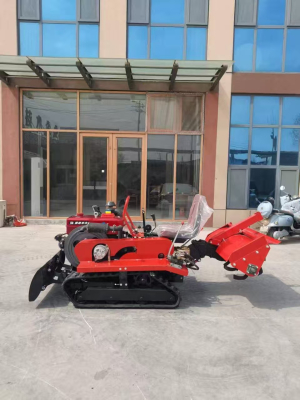
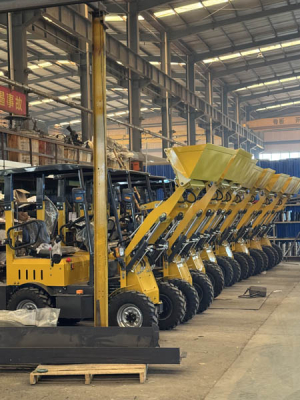
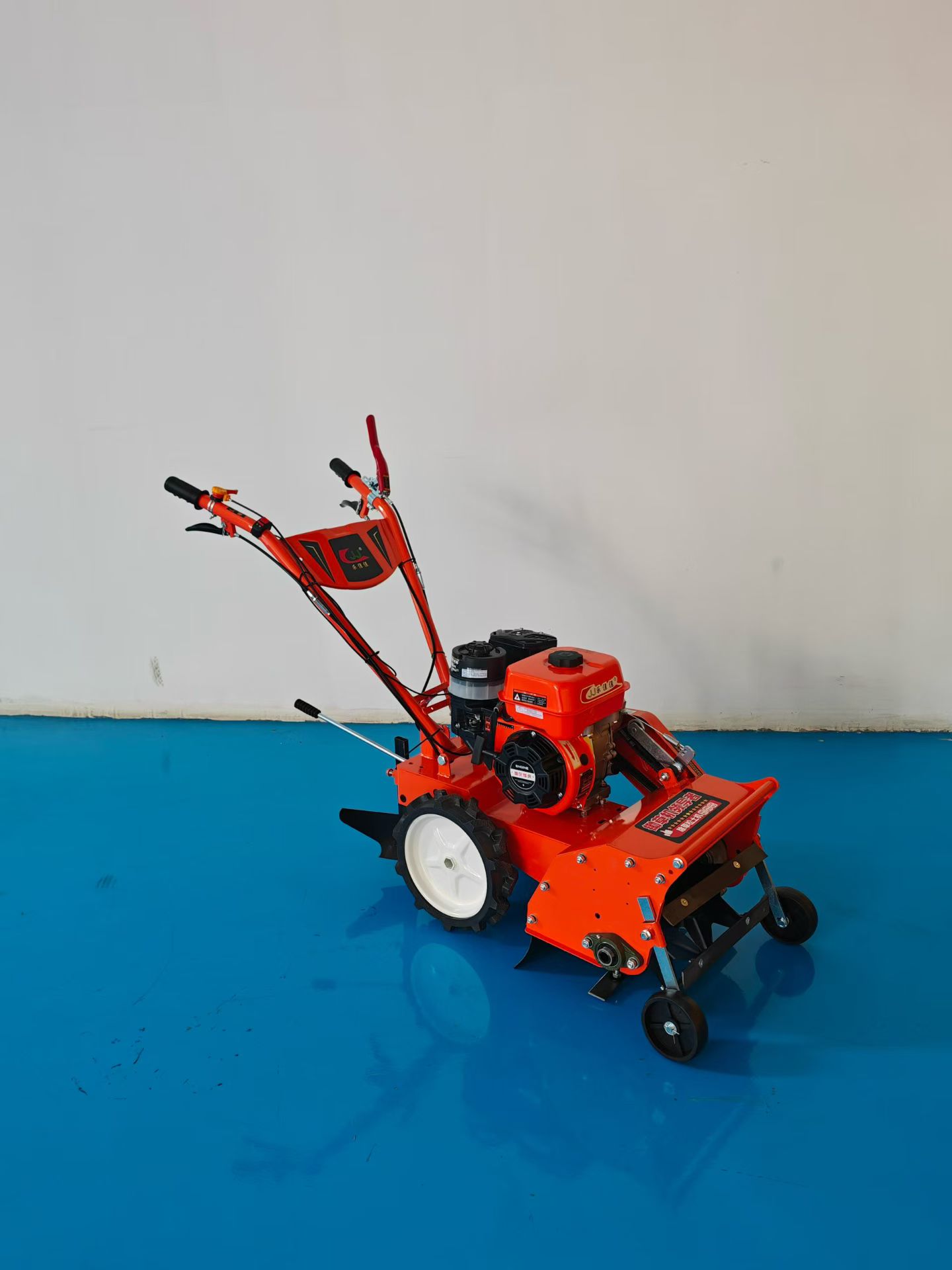
The manufacturing process of high-quality walk-behind weeder follows standardized industrial production procedures, covering precision parts processing, power system assembly, functional debugging, and quality testing. The core components include engine/motor power system, rotary tillage weeding blade, adjustable chassis, anti-vibration handrail, and safety protection device. Formal manufacturers adopt automated production lines for stamping, welding, and assembly of parts, and conduct strict tests on equipment power stability, blade wear resistance, and operation safety to ensure that the products adapt to complex farmland working conditions.
In actual agricultural application, the operation process of walk-behind weeder is simple and efficient. Before operation, adjust the chassis height and weeding depth according to crop seedling height and soil hardness to avoid damaging crop roots. During operation, the self-propelled equipment moves forward stably, and the rotary blade efficiently removes surface weeds and loosens the soil at the same time, realizing integrated operations of weeding and soil loosening. After operation, clean the blade residue and maintain the power system, which can effectively extend the service life of the equipment. Compared with manual weeding, a single walk-behind weeder can improve farming efficiency by more than 8 times, greatly saving labor time and production costs.
5. FAQ: Common Questions for Global B2B Buyers
Q1: What are the core advantages of walk-behind weeder compared with large automatic weeding equipment?
Walk-behind weeder features low procurement cost, flexible operation, and strong site adaptability. Large automatic weeding machines are suitable for large-area flat farmland, with high purchase and maintenance costs, while walk-behind weeders can adapt to mountainous land, sloping land, greenhouses, and small scattered farmland. They have low failure rates, simple maintenance, and low transportation costs, which are more suitable for small and medium-sized farms, distributors, and retail buyers in emerging markets.
Q2: Which regions have the largest market demand for walk-behind weeder?
At present, the Asia-Pacific region is the largest demand market for the global walk-behind weeder market, benefiting from the huge number of small-scale farmlands and continuous policy support for agricultural mechanization. European and North American markets have stable demand for high-end electric walk-behind weeders, focusing on green and low-carbon farming. Latin America, Southeast Asia, and Africa are high-growth potential markets, with rapidly rising demand for cost-effective fuel-powered walk-behind weeders as local farm mechanization levels improve.
Q3: What factors should be prioritized when purchasing walk-behind weeder in bulk?
B2B buyers should focus on three core factors: first, equipment power matching, select fuel or electric models according to local farmland soil conditions and operation scenarios; second, product quality certification, prioritize products with CE, ISO and other international certifications to meet local market access standards; third, after-sales service and spare parts supply, choose manufacturers with complete after-sales systems and sufficient spare parts reserves to ensure long-term stable sales and user use.
Q4: What is the future price trend of the global walk-behind weeder market?
With the continuous improvement of manufacturing maturity and large-scale production of core components, the overall manufacturing cost of walk-behind weeder will remain stable. Conventional standard models will maintain stable and competitive prices, while high-end intelligent and low-carbon electric models will have a slight premium due to technical iteration. In the long run, the walk-behind weeder market will maintain a pattern of stable prices and optimized product quality, with high cost performance becoming the core competitive advantage of mainstream products.
6. Market Outlook
As global farm mechanization continues to penetrate in emerging agricultural regions and green and fine farming becomes the mainstream development direction of the agricultural industry, the global walk-behind weeder market will maintain sustained and stable growth. Technological upgrading of lightweight intelligence, low-carbon environmental protection, and scenario customization will become the core driving force for market development. For global B2B buyers and distributors, grasping the market demand for high-cost-performance, multi-functional, and certified walk-behind weeder products will help seize the development dividends of the global agricultural mechanization wave.