1. Global Agricultural Machinery Market Overview & Development Trends
The global agricultural industry is undergoing comprehensive mechanization and intelligent upgrading, driving steady growth in demand for high-performance, cost-effective farm equipment. According to authoritative industry market data, the global farm tractor market was valued at approximately USD 87.6 billion in 2026, with a compound annual growth rate (CAGR) of 5.7% projected for the next decade, and is expected to exceed USD 152 billion by 2036. As core agricultural equipment, the
wheel tractor occupies a dominant market share in global farm cultivation scenarios, relying on its flexible operation, wide applicability and low maintenance costs.
In recent years, two major trends have reshaped the development direction of the
farm wheel tractor industry. First, the global shortage of agricultural labor has accelerated farm mechanization penetration, with more than 60% of global cultivated land adopting mechanized farming modes, and the replacement demand for old
tractors continues to rise. Second, low-carbon agriculture and precision farming have become mainstream development directions, pushing manufacturers to upgrade traditional equipment in terms of energy saving, intelligence and operational stability. Against this market backdrop, the upgraded
wheel tractor series has officially launched, targeting global small, medium and large-scale farm cultivation scenarios to fill the market gap of high-efficiency and durable agricultural wheel tractors.
Regional market demand shows obvious differentiation: Southeast Asia, Africa and Central Asia have strong demand for medium-power, fuel-saving and easy-to-maintain wheel tractors, suitable for large-scale grain planting and land reclamation; European and American markets tend to favor intelligent, low-emission wheel tractor models to meet strict environmental protection standards and refined farming needs. The newly upgraded wheel tractor series fully covers the differentiated needs of global markets and provides standardized and customized farming equipment solutions for overseas B2B buyers.
2. Core Advantages & Technical Upgrades of the New Wheel Tractor Series
Focusing on the pain points of traditional farm wheel tractors such as high fuel consumption, single function, poor adaptability and frequent failures, the manufacturer has completed all-round technical iteration and performance optimization for the newwheel tractor series. This upgraded wheel tractor abandons the outdated structural design of traditional models and realizes comprehensive upgrades in power performance, hydraulic system, operating experience and environmental protection energy efficiency, fully adapting to complex global farm cultivation environments.
2.1 Optimized Power System for Efficient Farm Operation
The new
farm wheel tractor is equipped with an upgraded high-torque engine, which effectively improves power output efficiency while reducing invalid fuel consumption. Compared with ordinary wheel tractors on the market, the comprehensive fuel saving rate of this series of equipment reaches 8%-12%. It can maintain stable power output in heavy-load operations such as deep plowing, harrowing, sowing and land leveling, and effectively solve the problem of insufficient power of traditional wheel tractors in sticky soil, hilly land and dry land operation scenarios. Whether it is daily farm cultivation or large-scale intensive farming, the wheel tractor can maintain efficient and continuous operation.
2.2 Diversified Function Expansion & Strong Adaptability
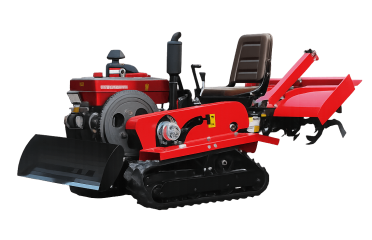
The upgraded wheel tractor series supports the matching of multiple agricultural attachments, including plows, harrows, rotary tillers, seeders and fertilizer spreaders, realizing multi-functional integrated operation of one machine. It breaks the limitation of single function of traditional farm wheel tractors, and can switch different working modes according to seasonal farming needs, covering the whole process of spring sowing, summer field management, autumn harvesting and winter land renovation. This multi-scenario application capability greatly improves the equipment utilization rate and comprehensive return on investment for global farmers and agricultural contractors.
2.3 Reinforced Structure & Low Maintenance Design
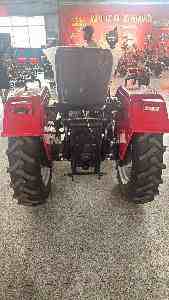
Aiming at the harsh working conditions of long-term outdoor farm cultivation, the new wheel tractor adopts an enhanced thickened chassis and anti-corrosion and wear-resistant body materials, which greatly extends the service life of the equipment. The overall structural design is simplified, with standardized and universal accessories, reducing the difficulty and cost of daily maintenance and after-sales repair. Different from traditional wheel tractors with complex structures and frequent faults, this upgraded series realizes low failure rate and easy maintenance, perfectly matching the use needs of overseas users who lack professional maintenance teams.
2.4 Humanized & Intelligent Operation Upgrade
The new
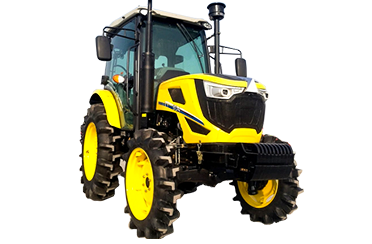
farm wheel tractor is equipped with an upgraded fully enclosed comfortable cab, with shock absorption and noise reduction design, which reduces the operation fatigue of drivers during long-hour farm work. At the same time, it is equipped with an intelligent monitoring system, which can real-time monitor equipment operating status, fuel consumption and fault information, helping users realize predictive maintenance and avoid production shutdown losses caused by sudden equipment faults. Part of the high-end models support optional GPS precision farming modules, which is in line with the global precision agriculture development trend.
3. Manufacturing Process & Global Application Scenarios
The new
wheel tractor series adopts standardized industrial production processes, from raw material screening, precision welding, power assembly debugging to finished vehicle performance testing, all links implement strict quality control standards. All wheel tractor products have passed CE certification and international agricultural machinery safety certification, meeting the access standards of most countries and regions in the world. The manufacturer relies on mature automated production lines and perfect quality inspection systems to ensure that each batch of wheel tractor has stable performance and consistent quality.
In terms of market application, this upgraded wheel tractor is widely applicable to global commercial farm cultivation, family farm planting, land reclamation, orchard management and agricultural auxiliary transportation scenarios. In Southeast Asian rice planting areas, the fuel-saving and high-efficiency wheel tractor improves the efficiency of paddy field plowing and sowing; in African dry land farming areas, the durable and anti-dust structure adapts to local harsh working environments; in European and American refined farm scenarios, the intelligent and low-emission wheel tractor meets green farming standards. With strong regional adaptability, the wheel tractor series has become a preferred equipment choice for global agricultural mechanization upgrading.

4. FAQ: Common Questions from Global Wheel Tractor Buyers
Q1: What power specifications are covered by the new upgraded wheel tractor series?
The new wheel tractor series covers multiple power ranges from 25HP to 180HP, including low-power compact models for small orchards and hilly lands, medium-power mainstream models for conventional farm cultivation, and high-power heavy-duty models for large-scale intensive farms. It can fully meet the equipment needs of different scale farms and agricultural engineering projects worldwide.
Q2: Is the upgraded farm wheel tractor suitable for different regional climatic and soil conditions?
Yes. This series of farm wheel tractor has been optimized for multiple complex working conditions. It can adapt to high-temperature and dusty environments in Africa, humid paddy field environments in Southeast Asia, cold low-temperature environments in Central Asia, and hard soil and hilly terrain in Europe and America. The adjustable ground clearance and enhanced traction system ensure stable operation in various complex farm cultivation scenarios.
Q3: What are the advantages of this wheel tractor compared with other brands of similar products?
Compared with peer products, the upgraded wheel tractor series has three core advantages: first, lower comprehensive fuel consumption, which reduces long-term operating costs; second, simpler maintenance and higher part versatility, reducing after-sales costs; third, higher cost performance, with stable quality and more competitive prices under the same performance parameters, bringing higher ROI for global B2B buyers.
Q4: What after-sales service and customization support can be provided?
We provide global standardized after-sales support, including overseas warehouse spare parts supply, remote technical guidance and professional maintenance training. At the same time, we support personalized customization of wheel tractor according to customer needs, such as matching special attachments, adjusting power parameters, and optimizing body configuration, to meet the personalized farm cultivation needs of different regional markets.
5. Conclusion
With the continuous advancement of global agricultural modernization and mechanization, high-efficiency, energy-saving and intelligent
wheel tractor will continue to dominate the global farm equipment market. The newly upgraded
wheel tractor series relies on comprehensive technical upgrades, reliable product quality and multi-scenario application capabilities, breaking through the performance bottlenecks of traditional
farm wheel tractor. It not only caters to the current global low-carbon and precision farming development trend, but also creates greater economic benefits for global farmers, agricultural contractors and machinery leasing enterprises. In the future, the manufacturer will continue to iterate and upgrade agricultural machinery products, provide more professional and reliable farm cultivation equipment solutions for global customers, and empower the high-quality development of global agriculture.