
How to Select the Right Wheel Loader for Construction, Mining and Farm Operations
2026/08/04 14:22
Diverse Application Scenarios Put Forward Differentiated Requirements for Wheel Loaders
Construction, mining and agricultural industries are the three core application markets for wheel loaders. The differences in working intensity, material properties and site environment make the performance configuration of applicable wheel loaders vary greatly. Blindly purchasing general-purpose equipment will lead to insufficient power, excessive wear or wasted equipment performance, which cannot meet professional operation needs.
1. Construction Industry: Focus on Flexibility and Comprehensive Adaptability
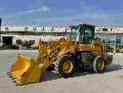
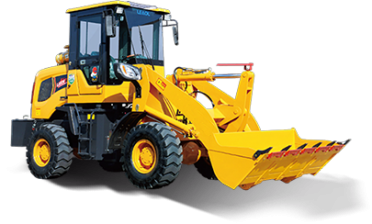
Construction sites cover urban residential construction, road renovation, bridge engineering and municipal infrastructure projects. The main operations include site cleaning, aggregate transportation, foundation backfilling and short-distance material transfer, which puts forward high requirements for the flexibility and multi-scenario adaptability of wheel loaders. Medium-sized wheel loaders are the mainstream choice in the construction field. Such equipment features flexible steering, compact body and strong compatibility with various attachments, which can efficiently complete diversifiedwheel loader for material handling work. In addition, urban construction scenarios have strict requirements on equipment noise and emission standards, and low-energy and environmentally friendly wheel loaders have become the mainstream procurement trend in recent years.
2. Mining Industry: Rely on High-Performance Heavy-Duty Wheel Loaders
Open-pit mines and quarries belong to high-intensity and harsh working scenarios, with abrasive materials such as ore and gravel, long continuous working hours and large load capacity, which test the durability and stability of equipment most. Different from ordinary construction wheel loaders, heavy-duty wheel loader is specially designed for mining working conditions. It adopts thickened wear-resistant steel frame, reinforced axle structure and high-torque hydraulic system, which can resist frequent impact and material abrasion. Industry data shows that more than 55% of global open-pit mining operations rely onheavy-duty wheel loader to complete ore loading, waste residue cleaning and stockpile sorting, and its operation efficiency directly determines the overall production capacity of the mine.
3. Agricultural Operations: Prioritize Energy Saving, Light Weight and Versatility
Modern large-scale farms need wheel loaders to complete silage transportation, fertilizer stacking, manure cleaning and crop handling operations. Farm working scenarios have low requirements for equipment load capacity, but pay more attention to light body, low ground pressure, energy saving and easy maintenance. Compact wheel loaders are widely used in agricultural scenarios. They can effectively avoid crushing farmland soil, support quick replacement of multiple attachments, and meet the diversified wheel loader for material handling needs of daily farm operations, with lower fuel consumption and maintenance costs, which is more in line with the long-term operation needs of agricultural enterprises.
Core Technical Criteria for Selecting a Qualified Wheel Loader
To select a suitable wheel loader, B2B buyers need to comprehensively evaluate multiple core indicators such as load capacity, power system, hydraulic performance and structural configuration based on their main application scenarios, so as to realize the perfect matching of equipment and working conditions.
1. Rated Load and Bucket Capacity Matching
Rated load is the core parameter to distinguish wheel loader models. Buyers need to select equipment according to the density and handling volume of on-site materials. For heavy materials such as ore and gravel, it is necessary to match a heavy-duty wheel loader with appropriate load and a wear-resistant rock bucket to avoid equipment overload damage. For light materials such as sand, soil and agricultural silage, a large-capacity ordinary bucket can be equipped to improve single handling efficiency and optimize the overall wheel loader for material handling effect.
2. Engine Power and Emission Compliance
The engine determines the power performance and environmental adaptability of the wheel loader. Mining and remote construction sites need high-torque diesel engines with strong power and poor fuel adaptability to cope with long-term high-intensity operation. Urban construction and farm scenarios need to meet local emission standards such as EPA and CE Stage V to ensure smooth customs clearance and compliant operation. High-quality wheel loaders can balance power output and energy-saving performance, reducing the overall operating cost of enterprises.
3. Hydraulic System and Attachment Compatibility
The hydraulic system is the core working component of the wheel loader, which directly affects the operating cycle and work efficiency. Excellent hydraulic systems feature stable output, low failure rate and sensitive operation. At the same time, for enterprises with multi-scenario operation needs, it is necessary to confirm that the wheel loader supports quick-coupling attachments, including general buckets, grapples, pallet forks and snow removal accessories, to maximize equipment utilization and realize multi-functional wheel loader for material handling.
4. Structural Durability and Site Adaptability
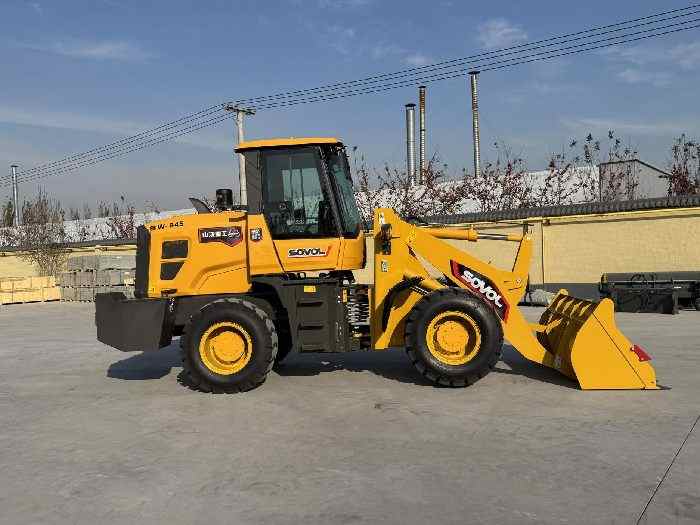
The structural configuration of the wheel loader needs to adapt to the site environment. The heavy-duty wheel loader for mining is equipped with reinforced body, dust-proof cooling system and anti-wear tires to adapt to harsh working conditions. Construction wheel loaders adopt all-terrain tires to adapt to gravel and asphalt mixed roads. Agricultural wheel loaders are designed with low-pressure wide tires to protect farmland soil, ensuring stable operation in corresponding scenarios.
FAQ: Common Procurement Questions for Global Wheel Loader Buyers
Q1: Can a single wheel loader adapt to construction, mining and farm scenarios at the same time?
A: General medium-sized wheel loaders can meet light construction and daily agricultural operation needs, but cannot adapt to high-intensity mining work. Professional heavy-duty wheel loader is specially customized for mining harsh conditions. Long-term overload operation of ordinary equipment will easily cause structural damage and shorten service life. It is recommended to select targeted models according to the main working scenarios.
Q2: How to configure the bucket size to optimize wheel loader for material handling efficiency?
A: The bucket size should be matched with the material density and equipment rated load. Heavy materials such as ore are suitable for small-capacity wear-resistant buckets to avoid overload; light bulk materials such as sand and silage can use large-capacity buckets to improve single handling volume and overall operation efficiency.
Q3: What is the core difference between ordinary wheel loaders and heavy-duty wheel loaders?
A: The heavy-duty wheel loader has been comprehensively strengthened in frame structure, axle load capacity, hydraulic system and wear-resistant accessories. It is suitable for 24-hour continuous high-intensity operation in mining and quarry scenarios, while ordinary wheel loaders are only applicable to medium and low-load construction and agricultural scenarios.
Q4: Is emission certification necessary for imported wheel loaders?
A: Absolutely necessary. Different countries and regions have strict mechanical emission standards. Equipment without compliant certification will face customs detention and cannot be put into operation. Buyers need to confirm local regulatory requirements in advance and configure emission-compliant wheel loader models.
Conclusion
As a versatile core construction machinery, the wheel loader plays an irreplaceable role in global construction, mining and agricultural fields. For international B2B buyers, scientific equipment selection is an important part of project cost control and efficiency improvement. Clear positioning of core operation scenarios, reasonable matching of load capacity, power system and accessory configuration, and selection of professional heavy-duty wheel loader or general-purpose models can maximize the efficiency of wheel loader for material handling, reduce equipment failure rate and comprehensive operating costs, and bring stable and long-term economic benefits for enterprise projects.
About Us
We are a professional manufacturer of engineering machinery integrating R&D, production and export, focusing on the R&D and production of high-quality wheel loaders, heavy-duty construction equipment and supporting accessories. The company’s products cover compact, medium and heavy-duty wheel loaders, which are widely sold in more than 100 countries and regions around the world. We support customized equipment configuration, provide complete certification documents and one-stop after-sales service, and strive to provide reliable material handling machinery solutions for global engineering and agricultural enterprises.