
New Walk-behind Weeder Reduces Farm Labor in Orchard & Row Crop Fields
2026/08/15 08:15
1. Current Industry Background: Labor Shortage Drives Agricultural Mechanization Upgrade
Global small and medium-sized agricultural production is currently facing a prominent pain point: severe farm labor shortages and rising manual operation costs. In traditional orchard and row crop planting scenarios such as vegetables, cotton, and corn, manual weeding has long relied on intensive human labor, featuring low efficiency, high time consumption, and uncontrollable operating quality. With the continuous advancement of global agricultural modernization, the demand for lightweight, efficient, and low-cost weeding equipment has surged, becoming a core driving force for the upgrading of agricultural supporting machinery.
According to 2026 global agricultural equipment market data, the worldwide weeding tools market reached USD 1905.76 million in 2025, and is expected to grow at a CAGR of 5.25% from 2025 to 2032, with the market size projected to hit USD 2726.61 million. Among all types of weeding equipment, walk-behind weeder and small walk-behind tillage and weeding equipment occupy a dominant market share of over 45%, becoming the preferred mechanical solution for smallholder farms and commercial planting bases worldwide. As large-scale riding agricultural machinery is unable to adapt to narrow orchard spacing and row crop inter-row operation scenarios, the lightweightwalk-behind weeding machine has filled the market gap and effectively helped farmers reduce farm labor input, realizing efficient substitution for manual weeding.
2. Market Development Trends of Walk-behind Weeding Equipment
In recent years, the global agricultural machinery market has shown an obvious development trend of "precision operation and lightweight intelligence". Traditional manual weeding and large mechanical weeding have their respective limitations, making multi-functional, flexible walk-behind weeding equipment increasingly popular among global agricultural practitioners. On the one hand, the continuous rise of global labor costs has forced planting enterprises and individual farmers to accelerate mechanical replacement of labor, and the demand to reduce farm labor has become rigid in agricultural production.
On the other hand, diversified planting modes such as ecological orchards and standardized row crops have put forward higher requirements for the flexibility and precision of weeding equipment. Industry data shows that the global walk-behind cultivators and weeder market will maintain a steady growth rate of over 6% from 2026 to 2033. The market demand for energy-saving, high-efficiency, and durable walk-behind weeder products is growing rapidly in emerging agricultural regions such as Southeast Asia, Africa, and South America. In addition, with the popularization of green agriculture concepts, low fuel consumption, low-noise, and environmentally friendly walk-behind weeding machines have become the mainstream development direction of the industry, eliminating the environmental pollution problems of traditional chemical weeding while improving operation efficiency.
3. Technical Advantages and Product Features of the New Walk-behind Weeder
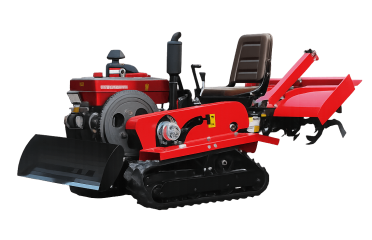
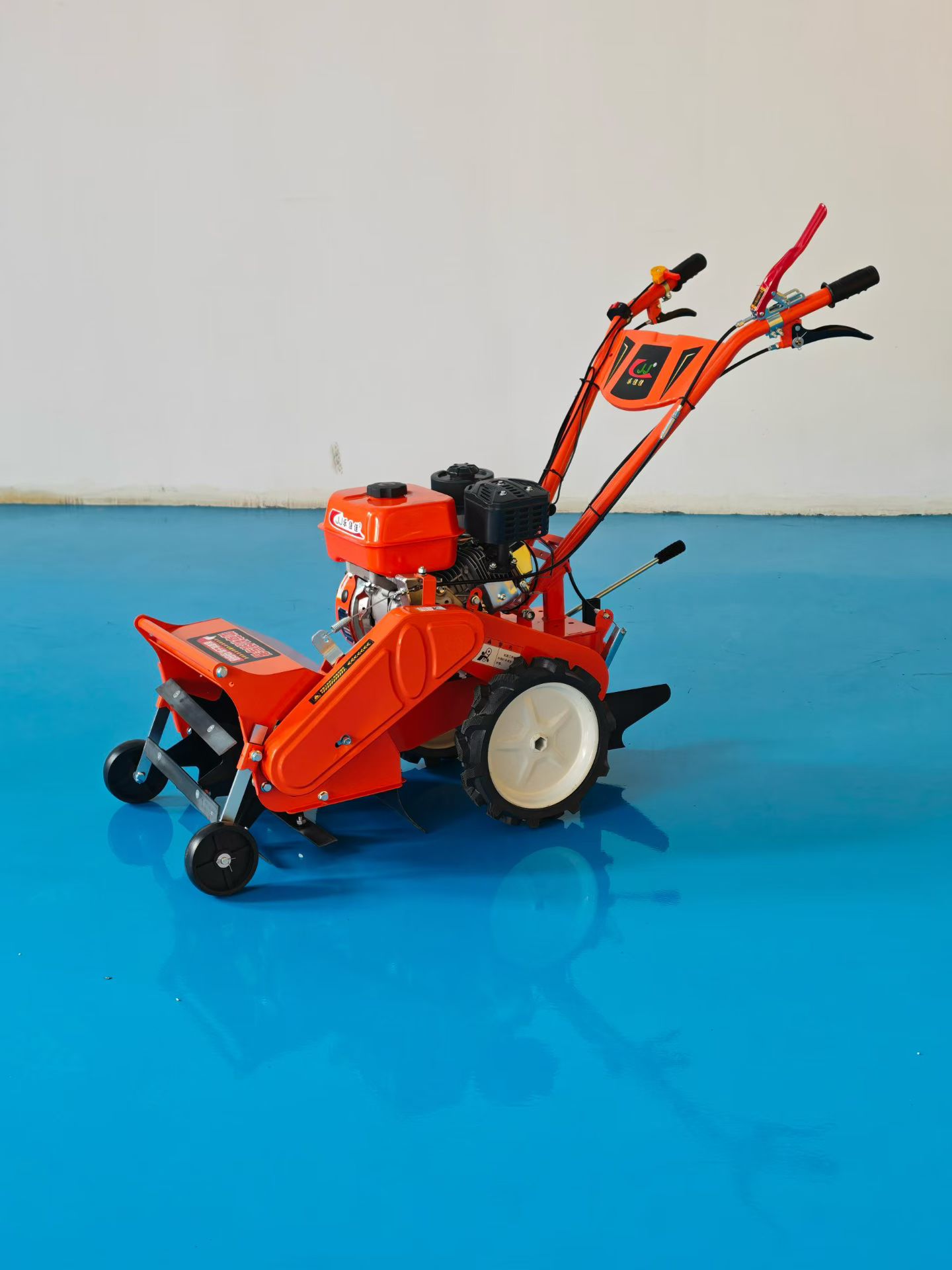
The newly upgraded walk-behind weeder is independently optimized and developed for orchard and row crop operation scenarios, targeting the pain points of traditional weeding equipment such as single function, poor flexibility, high labor dependence, and low efficiency. As a high-performance walk-behind weeding machine tailored for small and medium-sized farmlands, it realizes efficient and precise weeding operations and thoroughly solves the problem of excessive labor investment in farm weeding, helping users significantly reduce farm labor costs and time costs.
3.1 Flexible and Adaptable Operation Scenarios
Different from large-scale agricultural machinery that is limited by site conditions, this new walk-behind weeder features a compact body and flexible steering performance. It can freely shuttle through narrow orchard spacing, vegetable fields, cotton fields, and other row crop planting areas, and is suitable for complex terrain such as hilly lands and small scattered plots. It perfectly adapts to the diversified planting modes of global smallholder farms and commercial planting bases, making up for the operational blind spots of large weeding equipment.
3.2 Efficient Weeding and Labor-saving Design
The product is equipped with high-hardness alloy weeding blades and an optimized power transmission system, with a weeding rate of over 98%. It can efficiently remove surface weeds and shallow root weeds without damaging crop roots and soil structure. Compared with manual weeding, a single walk-behind weeder can replace 3-5 manual workers, greatly improving daily operation efficiency. While ensuring weeding quality, it greatly reduces the labor intensity of farmers and effectively helps farms reduce farm labor input and long-term labor costs.
3.3 Durable and Energy-saving Manufacturing Process
In terms of manufacturing, this walk-behind weeding machine adopts thickened steel body and anti-corrosion and wear-resistant process, which can adapt to harsh working environments such as hard soil, sandy soil, and humid farmland. The upgraded power system realizes low fuel consumption and high power output, with lower operating energy consumption than traditional equipment. The whole machine adopts a modular disassembly design, which is convenient for daily maintenance, blade replacement, and later after-sales maintenance, reducing the overall use cost for users and improving product service life and cost performance.
4. Core Application Values in Orchard and Row Crop Fields
Orchard and row crop planting have always been the core scenarios with the highest weeding frequency and the largest labor demand in agricultural production. Traditional manual weeding is not only inefficient but also easy to cause crop damage and soil compaction. The new walk-behind weeder is specially optimized for these two scenarios, bringing multiple core values to agricultural production.
In orchard planting scenarios, the flexible body of the walk-behind weeding machine can avoid tree trunks and fruit tree branches, realizing precise inter-row and intra-row weeding, effectively solving the weeding difficulty of dense orchards. In row crop fields such as vegetables, peanuts, and cotton, the equipment can complete weeding, shallow soil loosening, and soil moisture conservation in one operation, which not only removes weeds competing for crop nutrients but also improves soil air permeability and promotes crop growth.
More importantly, the popularization and application of this equipment fundamentally changes the backward mode of relying on a large number of manual weeding. It helps planting enterprises and farmers effectively reduce farm labor dependence, solves the production dilemma caused by labor shortage, and provides a reliable mechanical guarantee for standardized and large-scale production of orchards and row crops.
5. FAQ: Common Purchasing and Use Questions for Global Buyers
Q1: What crops and scenarios is the new walk-behind weeder mainly suitable for?
This walk-behind weeder is specially designed for orchards and row crop fields, covering fruits, vegetables, cotton, peanuts, corn and other row-planted crops. It is applicable to flat farmlands, hilly plots, and narrow spaced planting areas, and is the optimal weeding equipment for small and medium-sized farms and family planting bases.
Q2: How much labor cost can the walk-behind weeding machine save for farms?
According to actual user feedback, one set of walk-behind weeding machine can complete the daily weeding workload of 3-5 manual workers. It can effectively reduce farm labor input, cut down long-term labor salary and management costs, and the equipment investment cost can be recovered in one weeding season, with extremely high cost performance.
Q3: Is the equipment easy to operate and maintain for novice users?
The product adopts humanized hand-held push operation design, with simple operation steps and no professional operation skills required. The modular structure is convenient for daily cleaning, blade replacement and fault maintenance. We provide complete English operation manuals and after-sales technical guidance to ensure global users can use the equipment smoothly.
Q4: What are the advantages compared with traditional manual weeding and large mechanical weeding?
Compared with manual weeding, it has higher efficiency, lower labor dependence and more stable weeding quality; compared with large agricultural machinery, it has stronger flexibility, can adapt to narrow and complex plots, and has lower purchase and use costs. It perfectly balances efficiency, cost and applicability, and is the most cost-effective weeding solution for global small and medium-sized agricultural producers.
6. Conclusion
Against the backdrop of global agricultural labor shortage and accelerated mechanization upgrading, the new walk-behind weeder has broken through the limitations of traditional weeding methods with its flexible operation, high efficiency and labor-saving, wide applicability and low use cost. As a high-quality walk-behind weeding machine for orchards and row crop fields, it effectively helps global agricultural users reduce farm labor costs, improve production efficiency, and boost standardized agricultural production.
With the continuous growth of the global lightweight agricultural machinery market, this upgraded walk-behind weeder will become a mainstream agricultural equipment for small and medium-sized farm weeding, bringing stable and efficient production solutions for global farmers and planting enterprises, and promoting the high-quality development of global modern precision agriculture.