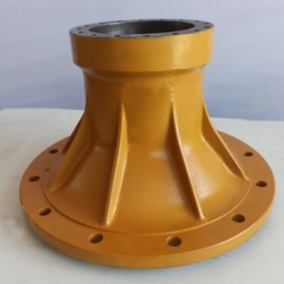

Riding Crawler Rotary Tiller: Durability Meets Precision
Market Data and Growth Trends
Global Agricultural Mechanization on the Rise
The global agricultural machinery market continues its upward trajectory, driven by labor shortages, the consolidation of smallholder farms into larger operations, and government subsidies aimed at modernizing rural economies. According to industry analyses, the Asia-Pacific region accounts for the largest share of farm tilling equipment demand, with Southeast Asia, South Asia, and Sub-Saharan Africa representing the fastest-growing adoption zones. In these regions, small to medium-sized farms are transitioning from animal-drawn plows to mechanized tillage, creating strong demand for affordable yet robust machinery.
Rice-producing economies, in particular, are fueling demand for the riding crawler rotary tiller. Paddy fields require machines that can operate in saturated, muddy conditions without sinking or losing traction—a challenge that wheeled tractors often fail to meet. Crawler-track systems distribute the machine's weight over a much larger contact area, reducing ground pressure to as little as one-third of a comparable wheeled tractor. This capability has made the riding crawler rotary tiller the preferred choice for rice-wheat rotation systems across South and Southeast Asia.
Regional Demand Shifts and Export Opportunities
For exporters and OEMs, the market dynamics are clear: buyers in emerging economies are no longer satisfied with low-cost, low-durability machines. They seek heavy-duty tiller solutions that offer multi-season reliability, lower maintenance costs, and higher resale value. This shift has created an opportunity for manufacturers who can demonstrate engineering quality through rigorous testing, certified components, and transparent after-sales support networks.
Why Riding Crawler Rotary Tillers Stand Out
Crawler vs. Wheel Design: The Traction Advantage
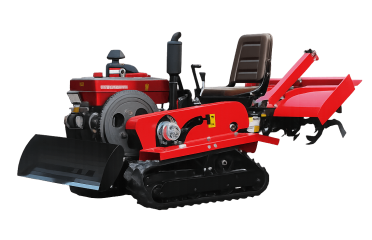
The most defining feature of a riding crawler rotary tiller is its rubber or steel track system. Unlike wheels, which concentrate force at four contact points and can spin freely in wet soil, crawler tracks maintain continuous ground contact. This translates to superior traction, reduced slippage, and more efficient power transfer from the engine to the tilling rotor. In practical terms, a riding crawler rotary tiller can complete the same area in less time and with less fuel than a wheeled tractor of equivalent horsepower operating under similar conditions.
Durability Engineering: Built for Harsh Conditions
Durability is not an afterthought in a well-engineered riding crawler rotary tiller. Key structural components—including the gearbox, transmission housing, and tilling blade assembly—are manufactured from high-strength cast iron and alloy steel. The rotor shaft, which bears the brunt of impact from rocks, roots, and compacted soil, is typically forged and heat-treated to resist bending and fatigue. Sealed bearings and waterproof electrical systems ensure reliable operation even when the machine is partially submerged during paddy field work.
Manufacturers committed to quality subject each heavy-duty tiller to accelerated life testing, simulating hundreds of hours of continuous operation under maximum load. This testing regimen helps identify weak points before production, ensuring that the final product can withstand the demands of commercial farming across multiple seasons.
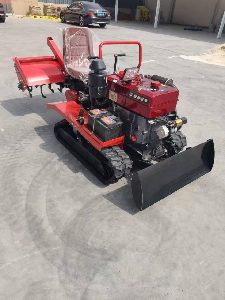
Precision Tilling Technology: Uniform Seedbeds for Higher Yields
Precision in tilling directly affects crop establishment and yield. A riding crawler rotary tiller achieves uniform soil pulverization through a precisely calibrated rotor speed and blade spacing. The operator can adjust tilling depth—typically ranging from 10 to 20 centimeters—via a hydraulic or mechanical control system, ensuring consistent depth across the entire field. This uniformity creates an ideal seedbed, improving seed-to-soil contact and germination rates.
Advanced models incorporate features such as automatic depth control, cruise-speed throttling, and even GPS-guided steering for large-scale operations. These technologies reduce operator dependency and ensure that every pass meets the same quality standard, a critical factor for farm tilling equipment deployed across hundreds of hectares.
Manufacturing and Application Process
From Raw Materials to Field-Ready Machine
The manufacturing process of a riding crawler rotary tiller begins with precision machining of the transmission and gearbox components. High-grade steel is cut, forged, and machined to tight tolerances, then assembled into a sealed drivetrain that transfers engine power to both the tracks and the tilling rotor. The chassis is fabricated from structural steel, welded by certified technicians, and treated with corrosion-resistant coatings to extend service life.
Once assembled, each machine undergoes a comprehensive quality inspection, including pressure testing of hydraulic systems, alignment verification of the rotor, and a full operational test run. Only after passing these checks is the riding crawler rotary tiller packaged for export, typically with a comprehensive spare parts kit and multilingual operation manual.
In-Field Application: How It Works
In operation, the riding crawler rotary tiller moves forward under its own power while the rear-mounted rotor spins, cutting and pulverizing soil. The operator sits in an ergonomic seat with clear visibility of the tilling zone, controlling speed, direction, and depth through intuitive levers and pedals. For paddy field preparation, the machine first puddles the soil to create a smooth, level surface suitable for transplanting rice seedlings. In upland applications, it prepares a fine, crumbly seedbed ideal for direct seeding of grains, vegetables, and cash crops.
Selecting the Right Heavy-Duty Tiller for Your Operation
When evaluating a riding crawler rotary tiller for procurement, B2B buyers should consider several factors beyond sticker price. Engine horsepower should match the typical field size and soil type—larger, heavier soils require more power. Track width and material (rubber vs. steel) influence both flotation and pavement damage, an important consideration for farms that need to travel between fields on public roads. Tilling width determines productivity, while blade count and configuration affect soil finish quality.
Equally important is the availability of after-sales support. A heavy-duty tiller is a long-term investment, and buyers should prioritize suppliers who offer readily available spare parts, technical training, and warranty coverage that extends beyond the first season.
Frequently Asked Questions (FAQ)
Q1: What is the typical lifespan of a riding crawler rotary tiller?
A well-maintained **riding crawler rotary tiller** can operate reliably for 8 to 10 years or more, depending on usage intensity, soil conditions, and adherence to the manufacturer's maintenance schedule. Key wear parts—such as tilling blades, track pads, and drive belts—are designed for periodic replacement and are widely available as spare parts.
Q2: Can a riding crawler rotary tiller be used in both paddy and dry fields?
Yes. The crawler track system provides excellent flotation in muddy paddy conditions, while the adjustable tilling depth and rotor speed make the same machine suitable for dry-land seedbed preparation. This versatility is a primary reason the riding crawler rotary tiller is favored in mixed-cropping farming systems.
Q3: How does the fuel consumption of a riding crawler rotary tiller compare to a wheeled tractor?
Due to reduced wheel slippage and more efficient power transfer, a riding crawler rotary tiller typically consumes 15% to 25% less fuel per hectare than a wheeled tractor performing equivalent tillage work, especially in wet or soft soil conditions. Actual consumption varies by engine size, soil type, and operating speed.
Q4: What maintenance is required between seasons?
Routine seasonal maintenance includes changing engine oil and filters, inspecting and adjusting track tension, greasing all pivot points and bearings, sharpening or replacing worn tilling blades, and checking hydraulic fluid levels. Following the manufacturer's maintenance guide ensures optimal performance and extends the service life of your **farm tilling equipment**.
Conclusion
The riding crawler rotary tiller represents a compelling combination of durability and precision that addresses the real-world challenges of modern commercial farming. As global demand for efficient, reliable farm tilled equipment continues to grow—particularly in rice-producing and emerging agricultural markets—this machine category is positioned for sustained adoption. For B2B buyers seeking a heavy-duty tiller that delivers consistent performance across paddy and dry land, reduces operational costs, and offers long-term value, the riding crawler rotary tiller is an investment worth evaluating seriously.