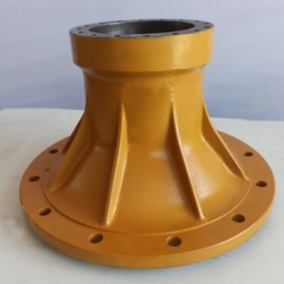

Wheel Tractor for Coffee Plantations
Industry Background and Market Overview
Global Coffee Production and Mechanization
The global coffee industry was valued at approximately USD 460 billion in 2025, with over 125 million people worldwide depending on coffee cultivation for their livelihoods. Brazil, Vietnam, Colombia, Indonesia, and Ethiopia remain the top five coffee-producing nations, collectively accounting for over 70% of global output. Despite the industry's economic significance, a large portion of coffee farming—particularly in smallholder regions—still relies on manual labor and rudimentary tools, creating substantial demand for mechanized solutions such as the Coffee Plantation Tractor.
The Drive Toward Mechanization
Several factors are accelerating the adoption of mechanized coffee farm machinery wheel tractor solutions. Rising rural labor costs and labor shortages in major coffee-producing regions make manual cultivation increasingly expensive and unreliable. Additionally, aging farmer populations in countries like Colombia and Brazil have created an urgent need for labor-saving equipment. Governments in coffee-producing nations are increasingly offering subsidies and low-interest financing for agricultural machinery, further lowering the barrier to entry for small and medium-sized coffee farms.
Market Data and Growth Trends
Regional Demand Analysis
Latin America, led by Brazil and Colombia, represents the largest market for Wheel Tractor equipment in coffee production. Brazil alone accounts for over 40% of global coffee machinery demand, driven by large-scale commercial farms and aggressive mechanization programs. Southeast Asia, particularly Vietnam and Indonesia, is the fastest-growing region, with government initiatives promoting agricultural modernization. Africa, home to some of the world's highest-quality Arabica coffee, presents significant untapped potential as infrastructure improves and financing becomes more accessible.
Market Growth Projections
The global agricultural tractor market for specialty crops—including coffee—is projected to grow at a CAGR of 6.2% through 2030, outpacing the general agricultural machinery sector. This growth is fueled by increasing farm sizes, rising labor costs, and growing awareness of the yield and quality benefits of mechanized cultivation. The Coffee Plantation Tractor segment, in particular, is expected to see strong demand as more coffee farms transition from manual to mechanized field operations.
Technological Requirements for Coffee Plantations
Terrain and Slope Capability
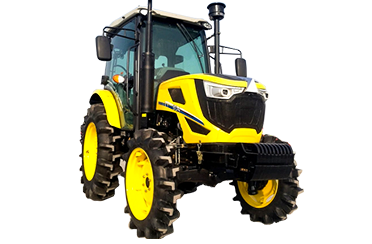
Coffee is predominantly cultivated on hilly or mountainous terrain, with many plantations located on slopes ranging from 10 to 30 degrees. This presents unique challenges for Wheel Tractor design. A suitable Coffee Plantation Tractor must feature a low center of gravity to minimize rollover risk on steep slopes. Four-wheel drive (4WD) is essential for providing sufficient traction on wet, muddy, or uneven terrain common in coffee-growing regions. Some advanced models incorporate differential locks and specialized tire tread patterns to further enhance grip on challenging slopes.
Compact Design and Maneuverability
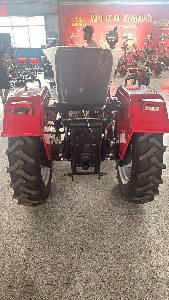
Coffee plantations typically feature narrow row spacings, often ranging from 1.5 to 3 meters between rows, to maximize planting density and facilitate shade management. A Wheel Tractor for Coffee Plantations must therefore have a compact width and a tight turning radius to navigate between coffee rows without damaging plants or root systems. Narrow-profile models, sometimes referred to as "vineyard" or "orchard" tractors adapted for coffee, are specifically designed with reduced overall width, lower profile, and protected fenders to minimize the risk of contact with coffee bushes during operation.
Powertrain and Engine Specifications
The ideal coffee farm machinery wheel tractor for coffee plantations typically ranges from 25 to 75 horsepower, depending on farm size and operational requirements. Smaller farms with steep terrain and narrow rows often require 25–45 horsepower compact models, while larger, flatter plantations may utilize 50–75 horsepower units for higher productivity. Diesel engines remain the dominant choice due to their fuel efficiency, torque characteristics, and durability. Water-cooled engines are preferred in tropical coffee-growing regions where high ambient temperatures can challenge air-cooled systems. Many manufacturers now offer engines compliant with Tier 3 or Tier 4 emission standards, balancing environmental performance with operational reliability.
Manufacturing Process and Quality Considerations
Production Workflow
The manufacturing of a Wheel Tractor for Coffee Plantations follows a structured production process. It begins with chassis fabrication, where high-strength steel is cut, formed, and welded into the main frame, with particular attention to low-center-of-gravity design for slope stability. The engine and transmission are then mounted and aligned, followed by installation of the 4WD transfer case and front and rear axles. The hydraulic system—including the pump, control valves, and three-point hitch—is installed and pressure-tested. Operator cabin or platform assembly follows, incorporating ROPS (Roll-Over Protective Structure) certification critical for slope safety. Final steps include wiring, tire mounting, painting, and comprehensive operational testing under simulated load conditions.
Quality Assurance Standards
Reputable manufacturers of Coffee Plantation Tractor equipment adhere to ISO 9001 quality management systems and hold CE certification for European export markets. Critical quality checks include frame weld integrity inspection, 4WD system engagement testing, hydraulic pressure verification, and slope stability testing. Each unit undergoes a minimum 4–8 hour runtime test before packaging. Buyers should verify component sourcing—premium manufacturers often use branded engines (such as Changchai, YTO, or Cummins), reliable gearboxes, and certified ROPS structures to ensure operator safety and long service life in demanding coffee plantation environments.
Applications and Use Cases
Inter-Row Cultivation and Weed Control
One of the primary applications of a Wheel Tractor in coffee plantations is inter-row cultivation and weed management. Equipped with a rotary tiller or cultivating attachment, the tractor tills the soil between coffee rows to control weeds, improve water infiltration, and incorporate organic matter. This reduces competition for nutrients and water, promoting healthier coffee trees and higher yields. The compact design of a dedicated Coffee Plantation Tractor allows it to operate close to coffee rows without damaging the shallow root systems of the coffee plants.
Fertilizer Application and Soil Management
Coffee trees require regular fertilization to maintain productivity and bean quality. A Wheel Tractor for Coffee Plantations can be equipped with fertilizer spreaders or sprayers to efficiently apply nutrients across the plantation. Some farmers use the tractor's three-point hitch to mount a subsoiler or ripper for deep soil loosening, which improves root penetration and water drainage in the often-compacted soils of sloped coffee farms. Proper soil management, facilitated by mechanized equipment, directly impacts coffee yield and cup quality.
Transport and Material Handling
Beyond field cultivation, a coffee farm machinery wheel tractor serves as a versatile platform for transport and material handling. With a trailer attachment, it can haul harvested coffee cherries from remote field locations to processing facilities—a critical function on large, hilly plantations where road access may be limited. Front-end loaders can be fitted for moving mulch, compost, or equipment. This multi-functionality makes the tractor a high-return investment for coffee farms, replacing multiple specialized machines with a single versatile platform.
Sourcing Considerations for B2B Buyers
When evaluating suppliers of Wheel Tractor for Coffee Plantations, international buyers should consider several critical factors. First, verify the manufacturer's experience with specialty crop tractors and whether their models are specifically designed for slope and narrow-row operation, rather than general-purpose tractors being repurposed for coffee use. Second, assess the availability of spare parts in coffee-producing regions—consumable items such as filters, belts, tires, and hydraulic seals should be obtainable through local dealers or efficient direct shipping. Third, evaluate warranty terms, typically 12 months for the complete machine, and confirm that the manufacturer provides technical documentation in the buyer's language. Finally, consider total cost of ownership, including fuel consumption, maintenance frequency, and expected tire and clutch replacement intervals in steep-terrain operation, rather than focusing solely on the initial purchase price.
FAQ
Q1: What horsepower wheel tractor is best for coffee plantations?
A: The ideal horsepower depends on farm size, terrain, and intended applications. For small to medium coffee farms with steep slopes and narrow rows, a 25–45 horsepower Coffee Plantation Tractor is typically sufficient for inter-row cultivation, spraying, and light transport. Larger plantations with flatter terrain and higher productivity demands may require 50–75 horsepower models. It is important to match horsepower to actual needs—overpowered tractors can be too heavy and wide for delicate coffee rows, while underpowered units may struggle on steep slopes or with heavy implements.
Q2: Can a standard wheel tractor be used in coffee plantations?
A: While a standard Wheel Tractor can perform basic tasks in coffee plantations, it is often not ideal. Standard tractors tend to be wider, have higher centers of gravity, and lack the slope-specific safety features required for hilly coffee terrain. They may damage coffee bushes during inter-row operation and pose a greater rollover risk on steep slopes. A purpose-built Coffee Plantation Tractor features narrow width, low profile, 4WD, ROPS certification, and optimized weight distribution—all critical for safe and efficient coffee farm operation. The investment in a specialized tractor typically pays for itself through reduced crop damage, lower accident risk, and higher operational efficiency.
Q3: What are the most important attachments for a coffee plantation tractor?
A: The essential attachments for a coffee farm machinery wheel tractor include a rotary tiller for inter-row soil preparation and weed control, a sprayer for pesticide and fertilizer application, a fertilizer spreader for nutrient distribution, and a trailer for transporting harvested coffee cherries and supplies. Optional but highly useful attachments include a front-end loader for material handling, a mower for vegetation management, and a subsoiler for deep soil loosening. When purchasing a tractor, confirm that it has a standard three-point hitch, rear PTO (power take-off), and sufficient hydraulic capacity to operate the attachments you plan to use.
Q4: How does terrain affect the choice of wheel tractor for coffee farms?
A: Terrain is perhaps the single most important factor in selecting a Wheel Tractor for Coffee Plantations. On steep slopes (exceeding 15 degrees), a low-center-of-gravity design, 4WD, and ROPS certification are non-negotiable safety requirements. Wide, heavy tractors should be avoided on steep terrain as they increase rollover risk and soil compaction. On flatter plantations, larger and more powerful tractors can be used for higher productivity. Wet, muddy conditions common in tropical coffee regions require aggressive tire treads and reliable 4WD engagement. Buyers should carefully assess their specific terrain conditions—including average slope, soil type, and rainfall patterns—before selecting a tractor model, and when in doubt, consult with the manufacturer for a tailored recommendation.