
Wheel Tractor: Global Market Grows Steady
2026/09/09 09:54
1. Global Industry Background and Latest Market Data
The global agricultural industry is accelerating large-scale, standardized and mechanized transformation. With the continuous reduction of rural labor resources and the continuous upgrading of farming efficiency requirements, traditional manual farming and scattered small machinery can no longer meet modern agricultural production needs. Wheel tractors, as multi-functional and high-efficiency agricultural machinery, have become the core equipment for global farmland renovation, tillage, seeding, harvesting and transportation, driving the steady expansion of the overall market for agricultural machinery.
Industry authoritative monitoring data shows that the global wheel tractor market scale reached USD 68.4 billion in 2025. Benefiting from the double growth of equipment renewal demand in mature markets and mechanization popularization in emerging markets, the market is expected to maintain a compound annual growth rate of 4.9% from 2026 to 2034, with the total market value exceeding USD 105 billion in the next decade.
In terms of regional market layout, the Asia-Pacific region occupies the largest market share, contributing 41.3% of the global revenue, followed by North America and Europe with stable replacement demand. In the segmented market, 40HP to 100HP mid-power wheel tractors are the most mainstream products, accounting for 44.8% of the global sales volume, and are widely applicable to most grain and cash crop planting scenarios.
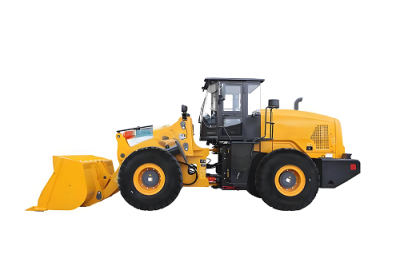
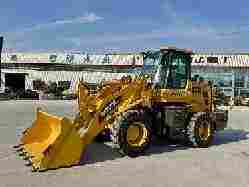
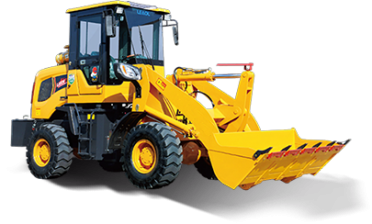
Global market demand presents obvious regional differentiation characteristics. South Asia, Southeast Asia and African markets focus on cost-effective, easy-to-maintain low and medium-power wheel tractors suitable for small and scattered farmland. Large plantations in Latin America prefer high-power 4WD wheel tractors for long-term heavy-duty operations. European and American markets put forward higher requirements for equipment emission standards and intelligent configuration. In addition to agricultural scenarios, wheel tractors matched with engineering accessories can replace partial functions of construction wheel loaders to complete small-scale land leveling and site renovation, further expanding the market application boundary.
2. In-depth Analysis of Global Wheel Tractor Market Trends
2.1 Core Development Trends of the Industry
With the continuous iteration of global agricultural production modes, the wheel tractor industry has formed three clear development trends. Firstly, multi-functional integration has become the core competitive advantage. Modern buyers no longer pursue single tillage function, but pay more attention to the comprehensive matching ability of wheel tractors with rotary tillers, seeders, sprayers, trailers and engineering accessories to realize one machine for multiple purposes and reduce the overall equipment investment of farms.
Secondly, market competition has shifted from low-price competition to full-life-cycle cost performance competition. Global bulk buyers and leasing enterprises pay more attention to equipment fuel economy, operational stability, wear resistance and after-sales spare parts supply capacity. Products with unstable quality and high failure rate are gradually eliminated from the mainstream market, while high-quality wheel tractors with reliable performance gain long-term market recognition.
Thirdly, intelligence and environmental protection have become rigid industrial thresholds. Developed regions such as Europe and North America have strictly implemented non-road mobile machinery emission standards, and popularized precision farming functions such as automatic steering and data monitoring. Emerging markets focus on equipment robustness and low maintenance difficulty, forming a differentiated product iteration system for different regional markets.
2.2 Regional Market Differentiation Characteristics
There are significant differences in product demand between mature agricultural markets and emerging markets. European and American buyers tend to choose high-end wheel tractors with comfortable closed cabins, vibration reduction optimization, intelligent monitoring and low-emission engines, adapting to large-scale, refined and intelligent modern agriculture. Emerging markets in Asia, Africa and Latin America prioritize simple mechanical structure, strong environmental adaptability, low failure rate and affordable after-sales cost, requiring equipment to operate stably in high temperature, dust and poor fuel working environments. This market differentiation promotes manufacturers to continuously optimize product lines to meet the personalized needs of global market demand.
3. Core Technical Parameters and Standard Product Structure
3.1 Mainstream Technical Parameters of Wheel Tractors
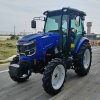
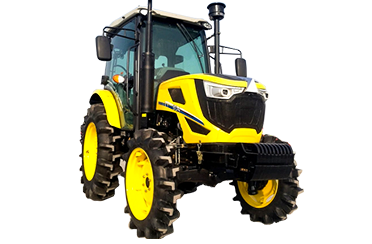
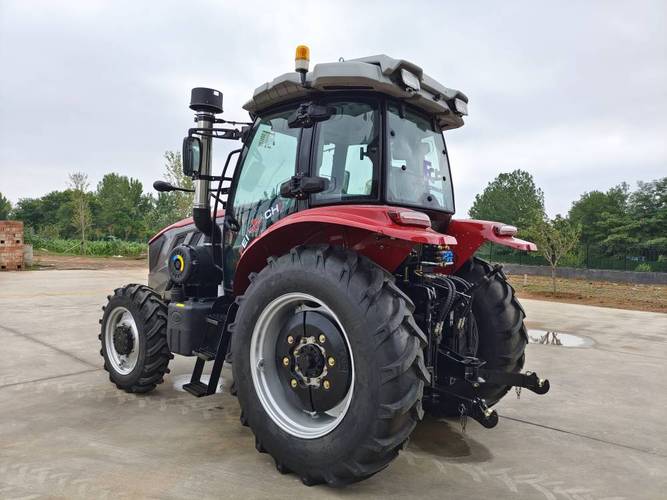
Global wheel tractor products cover a complete power spectrum, ranging from 12HP compact models suitable for orchards and greenhouses to 200HP+ heavy-duty models for large-scale commercial farms. Among them, 40–100HP 4WD wheel tractors are the most popular mainstream models in the global market. The mainstream configuration adopts hydraulic power steering system, with 8F+2R or 12F+4R multi-speed transmission gears, realizing flexible speed switching to adapt to different farming and transportation scenarios.
The minimum ground clearance of mainstream models is 300mm to 480mm, with a flexible turning radius of 3.5 to 5 meters, which can adapt to terraced fields, narrow rows and complex terrain operations. The hydraulic three-point suspension system, as the core functional component, has a lifting capacity of 1000kg to 4500kg, which can stably match various agricultural tools. The rated engine speed is stabilized at 2200–2400rpm, with excellent power output and fuel economy. Equipped with deep-groove anti-skid tires, the equipment effectively improves field traction and avoids soil compaction, ensuring efficient and stable operation in paddy fields, dry land and sloped farmland.
3.2 Standard Product Structural Composition
The standard wheel tractor is composed of five core structural systems, with rigorous design and strong overall compatibility. The first is the frame chassis system, which adopts high-strength welded steel structure to bear the weight of the whole machine and long-term working load, with strong deformation resistance. The second is the power system, which is composed of a high-quality diesel engine, matching professional heat dissipation, air filtration and exhaust devices to meet different regional emission standards.
The third is the transmission system, including clutch, gearbox, differential and drive axle. The 4WD structure effectively improves the equipment's passing performance in wet and muddy fields. The fourth is the hydraulic control system, which realizes the lifting, lowering and remote output of agricultural implements through hydraulic pumps and control valves, ensuring flexible operation. The fifth is the operation auxiliary system, including the operating console, braking system, instrument monitoring and electrical components, which realizes humanized and intelligent control of the whole machine.
4. Standard Manufacturing Process and Field Application Scenarios
4.1 Industrial Standard Manufacturing Process
Formal wheel tractor manufacturers implement standardized and refined full-process production and quality control. The whole manufacturing process includes raw material incoming inspection, precision machining, welding forming, heat treatment, assembly debugging and factory performance testing. All raw materials such as steel plates, engine bodies and gear forgings are strictly screened to ensure compliance with international agricultural machinery manufacturing standards.
Key load-bearing and wear-resistant components such as transmission gears and suspension parts adopt forging and quenching and tempering heat treatment processes to improve overall hardness and wear resistance. Each sub-assembly such as engine and gearbox undergoes independent bench test to eliminate hidden dangers of noise, oil leakage and insufficient power. In the final assembly stage, all bolts are tightened with standard torque, and anti-loosening and sealing treatments are carried out for vibration-prone parts. All finished wheel tractors pass no-load operation and simulated load detection before leaving the factory to ensure stable and consistent product quality.
4.2 Practical Field Application Process
Wheel tractors run through the whole process of agricultural production. Before field operation, operators need to check engine oil, cooling water, tire pressure and hydraulic suspension connection status to ensure normal equipment operation. After matching with different agricultural implements, wheel tractors can complete multiple operations such as ploughing, rotary tillage, seeding, fertilizing, pesticide spraying and farmland transportation in one stop.
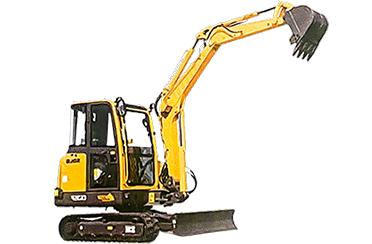
The 4WD wheel tractor has outstanding adaptability in complex terrain, which can effectively avoid slipping and sinking in sloped farmland, paddy fields and heavy clay soil. In rural infrastructure construction scenarios, wheel tractors equipped with dozer blades and backhoe accessories can replace construction wheel loaders to complete small-scale land leveling, trench digging and site renovation, with high cost performance and flexible operation, becoming a multi-functional equipment widely recognized by global users.
5. International Buyers’ Procurement Preferences and Core Pain Points
5.1 Global Buyer Procurement Preferences
International B2B buyers have formed clear and unified selection standards when purchasing wheel tractors. Agricultural machinery distributors pay attention to standardized product series, stable batch quality, complete certification documents and flexible container loading schemes, which facilitate regional market sales and after-sales operation. Large farm contractors and plantation operators focus on equipment fuel saving, operational stability and low maintenance cost, and prioritize products with complete local spare parts supply channels.
Buyers in hilly, wetland and complex terrain areas prefer 4WD wheel tractors with strong traction and trafficability. At the same time, professional global purchasers will take complete technical documents, parameter sheets, spare parts catalogs and field operation cases as important evaluation bases, and verify equipment adaptability according to local soil and climate characteristics before bulk procurement.
5.2 Core Procurement Pain Points in Global Sourcing
In the global procurement process of wheel tractors, international buyers mainly face four major pain points. First, the batch quality of products is unstable. Some low-cost products have common problems such as engine power attenuation, gearbox oil leakage and fast component wear, which are prone to failure in the critical farming season and cause serious economic losses.
Second, the after-sales spare parts supply cycle is long. Most suppliers lack overseas local warehousing layout, and the replacement of wearing parts requires long-distance transportation, resulting in long-term shutdown of equipment and affecting farm production progress. Third, the product parameters are universal and cannot be customized according to local working conditions. General standard models often fail to adapt to special environments such as heavy clay, rocky land and high temperature, resulting in poor operation effect.
Fourth, the compliance documents are incomplete. Different countries and regions have strict requirements on machinery emission certification and customs declaration documents. Incomplete qualification certificates will lead to customs detention and order delay, bringing procurement risks to buyers.
6. Professional FAQ for Global Wheel Tractor Sourcing
Q1: What are the core differences between 2WD and 4WD wheel tractors?
A: 2WD wheel tractors adopt rear-wheel drive, which are suitable for flat and dry conventional farmland with low purchase cost. 4WD wheel tractors realize full-wheel drive, with stronger traction and passing performance, and can adapt to sloped land, paddy fields and wet clay soil, which is more suitable for complex working condition scenarios.
Q2: Can wheel tractors replace construction wheel loaders for engineering operations?
A: Equipped with auxiliary engineering accessories, wheel tractors can complete light operations such as small-area land leveling and trench digging, which can replace part of the functions of construction wheel loaders. However, for heavy-load, high-frequency and large-scale earthmoving projects, professional construction wheel loaders are still required.
Q3: What materials and certificates are required for bulk wheel tractor procurement?
A: Bulk procurement requires complete technical specification sheets, equipment dimension drawings, material test reports, regional emission certification documents, spare parts catalogs and official operation and maintenance manuals.
Q4: How to effectively reduce the long-term operation and maintenance cost of wheel tractors?
A: It is recommended to select products with heat-treated high-strength components and stable power systems, strictly implement regular maintenance cycles, establish local spare parts reserves, and cooperate with formal manufacturers with perfect after-sales service systems.
7. Call to Action
Whether you are a global agricultural machinery distributor, professional farm contractor or large-scale plantation operator, if you are looking for high-quality, stable and cost-effective wheel tractors, please contact our professional team. We provide complete official technical data sheets, personalized targeted quotations, complete spare parts supporting packages and professional container shipping solutions. We can also adjust product specifications according to local soil, climate and farming habits. Inquire now to obtain exclusive industry procurement guidance and customized equipment solutions.