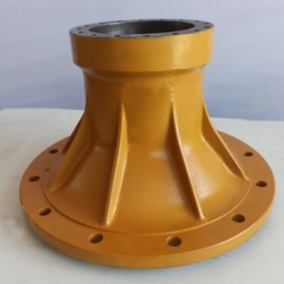

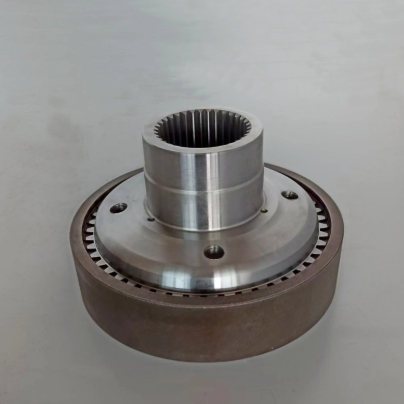
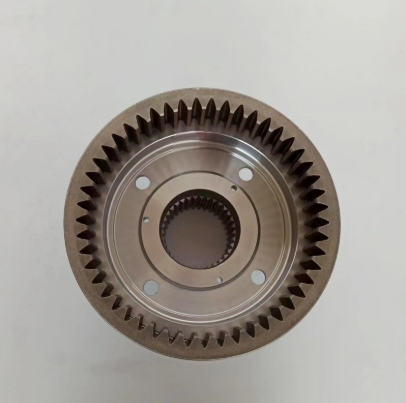
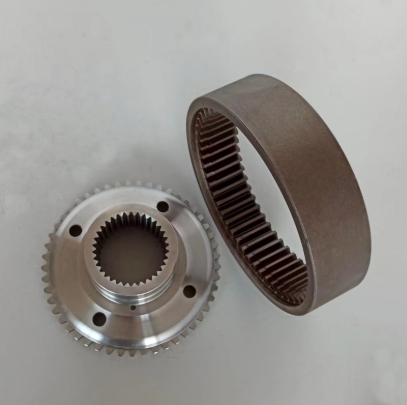
Ring Gear Assembly
1. Original quality parts, host supporting products.
2. Adopting high quality steel, wear-resisting and anti-manufacturing, prolonging the use of time.
3. Smooth running, low noise, high reliability.
4. Factory shop, support processing customization.
5. Affordable price, quality assurance.
6. Factory storage, delivery, transport, convenient and quick.
Product Details
Product Overview
The ring gear assembly consists of a precision-machined internal ring gear integrated with a supporting carrier structure, forming a compact yet robust unit that houses the planetary gear set of the wheel reducer. In a typical 3-ton loader, the ring gear assembly works in tandem with the sun gear, planetary gears, and carrier to reduce rotational speed while amplifying output torque at the wheel hub.
Key characteristics of our ring gear assembly include:
- High-strength alloy steel construction for superior fatigue resistance
- Precision-carburized and quenched gear teeth with optimized surface hardness
- Tight dimensional tolerances ensuring smooth meshing and minimal noise
- Corrosion-resistant surface treatment for extended service life in harsh environments
- Compatibility with a wide range of OEM axle parts and wheel reducer components
As one of the most stressed wheel reducer components, the ring gear must maintain its geometric integrity under repeated high-torque loading. Our manufacturing process addresses this challenge through controlled forging, precision machining, and multi-stage heat treatment, resulting in a product that consistently exceeds industry performance benchmarks.
Technical Specifications and Engineering Features
Material and Heat Treatment
The ring gear is forged from 20CrMnTi or equivalent high-grade carburizing alloy steel, a material widely recognized in the heavy-equipment industry for its excellent hardenability, toughness, and wear resistance. Following precision forging and rough machining, the gear teeth undergo a controlled carburizing process that achieves a surface hardness of 58–62 HRC while maintaining a tough, ductile core. This dual-property structure ensures that the gear teeth resist abrasive wear and pitting, while the core absorbs impact loads without cracking.
Subsequent quenching and tempering operations are performed in a controlled-atmosphere furnace to minimize distortion, followed by shot peening to introduce compressive residual stresses at the tooth surface—a critical enhancement that significantly extends fatigue life under high-cycle loading.
Gear Geometry and Precision
The internal gear teeth are cut using state-of-the-art CNC gear shaping and grinding equipment, achieving a gear accuracy grade of GB/T 10095 Level 7 (equivalent to ISO 1328 Class 7). This level of precision ensures:
- Smooth, quiet operation with minimal transmission error
- Uniform load distribution across all meshing teeth
- Reduced vibration and extended bearing life within the wheel reducer
- Consistent interchangeability with mating planetary and sun gears
The tooth profile is optimized through micro-geometry modifications, including tip relief and lead crowning, which compensate for elastic deformation under load and misalignment arising from manufacturing tolerances. These refinements are particularly important in 3-ton loader applications where the drivetrain is subjected to frequent direction changes and sudden torque spikes.
Structural Design
The ring gear assembly features an integrally forged flange that provides a rigid mounting interface to the axle housing, eliminating the need for separate fasteners that could loosen under vibration. The internal spline or bolt-circle configuration is engineered to match OEM specifications, ensuring direct interchangeability with existing axle parts.
The assembly's wall thickness and rib geometry are optimized through finite element analysis (FEA) to achieve an ideal balance between structural rigidity and weight. This optimization reduces unsprung mass at the wheel end, improving vehicle responsiveness and reducing stress on suspension and steering components.
Application in 3-Ton Loader Systems
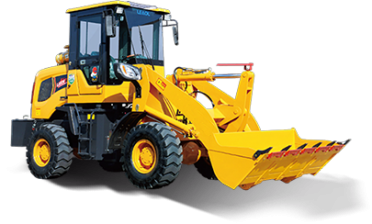
The 3-ton loader represents one of the most widely used equipment classes in construction, landscaping, agriculture, and material handling. In this class of machine, the wheel reducer—also known as the final drive—plays a pivotal role in converting the high-speed, low-torque output of the axle differential into the low-speed, high-torque rotation required at the wheels.
The ring gear assembly is the stationary or reaction member of this planetary reduction system. As the sun gear drives the planetary gears, the ring gear provides the fixed reaction point that forces the planetary carrier—and the attached wheel hub—to rotate at a reduced speed. The torque multiplication ratio, typically ranging from 3:1 to 5:1 in 3-ton loader applications, is directly determined by the tooth count relationship between the ring gear and the sun gear.
Because the ring gear absorbs the full reaction torque of the reduction stage, it is subjected to continuous tangential and radial stresses. A poorly manufactured ring gear can lead to:
- Premature tooth wear and pitting
- Excessive noise and vibration
- Catastrophic gear failure resulting in costly downtime
- Damage to adjacent axle parts, including bearings, seals, and the planetary carrier
Our ring gear assembly is engineered to eliminate these failure modes, providing equipment operators and fleet managers with a reliable, long-lasting solution that minimizes total cost of ownership.
Compatibility with Wheel Reducer Components and Axle Parts
Interchangeability is a critical consideration for B2B buyers sourcing replacement components. Our ring gear assembly is designed to be fully compatible with a comprehensive range of wheel reducer components and axle parts, including:
Planetary gear sets with matching tooth profiles and module specifications
- Sun gears and input shafts from leading OEM and aftermarket manufacturers
- Tapered roller bearings and cylindrical bearings used in wheel hub assemblies
- Axle housings and spindle assemblies across multiple 3-ton loader models
- Wheel hubs, brake discs, and rim mounting components
- Seals, gaskets, and retaining hardware required for complete assembly
Each ring gear assembly is supplied with full dimensional documentation, including tooth data (module, number of teeth, pressure angle, helix angle), mounting bolt-circle dimensions, and overall envelope specifications. This documentation enables procurement engineers and maintenance technicians to verify compatibility before installation, reducing the risk of returns and downtime.
For buyers seeking complete wheel reducer rebuild kits, we can supply the ring gear assembly as part of a comprehensive package that includes all mating gears, bearings, seals, and fasteners. This kit approach simplifies procurement, ensures component compatibility, and reduces the labor time required for axle overhaul.
Quality Assurance and Testing
Quality is embedded at every stage of our manufacturing process. From raw material inspection to final product validation, each ring gear assembly undergoes a comprehensive quality assurance program that includes:
Incoming Material Inspection
Every batch of alloy steel is verified by spectrometer analysis to confirm chemical composition compliance with specified grades. Material certificates are retained and traceable to each production lot, providing full supply-chain transparency for our B2B customers.
In-Process Quality Control
During machining and heat treatment, critical dimensions are monitored at defined checkpoints using coordinate measuring machines (CMM), gear analyzers, and hardness testers. Gear tooth profile, lead, pitch, and runout are measured and documented to ensure conformance to specified accuracy grades.
Finished Product Testing
Each completed ring gear assembly undergoes:
- Dimensional verification of all critical features, including bore diameter, bolt-circle pattern, and gear tooth parameters
- Hardness testing at multiple points to confirm uniform case depth and core hardness
- Magnetic particle inspection (MPI) to detect surface and sub-surface cracks
- Runout and concentricity checks to ensure rotational balance
- Assembly fit verification with mating planetary and sun gears
Only products that pass all inspection criteria are released for shipment. Each unit is accompanied by a quality certificate and is individually preserved with anti-rust coating and protective packaging suitable for long-distance ocean freight.
Market Trends and Industry Demand
The global market for construction equipment axle parts and wheel reducer components continues to expand, driven by sustained infrastructure investment, urbanization, and the growing mechanization of agriculture and mining operations. The 3-ton loader segment, in particular, has seen robust demand due to its versatility across small-to-medium construction projects, agricultural operations, and industrial material handling.
Key market trends influencing demand for ring gear assemblies include:
- Growing aftermarket demand: As the global installed base of loaders ages, the replacement parts market is expanding faster than new equipment sales in many regions. Fleet operators are increasingly prioritizing high-quality aftermarket axle parts to extend equipment service life and reduce total cost of ownership.
- Emphasis on durability and uptime: Construction and mining operations are under increasing pressure to maximize equipment utilization. Premium wheel reducer components that deliver extended service intervals and reduce unplanned downtime are gaining preference over lower-cost alternatives.
- Regional market growth: Emerging markets in Southeast Asia, the Middle East, Africa, and Latin America are witnessing significant infrastructure development, driving demand for reliable, cost-effective loader components. These markets represent key growth opportunities for suppliers of quality ring gear assemblies and related axle parts.
- Technical evolution: Equipment manufacturers are continuously increasing the power density and torque output of loaders, placing greater demands on wheel reducer components. This trend favors suppliers capable of delivering precision-engineered, high-strength ring gear assemblies that can meet evolving performance requirements.
For B2B buyers, selecting a ring gear assembly supplier with proven engineering capability, consistent quality, and reliable delivery is essential to maintaining competitive advantage in these growing markets.
Installation and Maintenance Guidelines
Proper installation and maintenance are essential to maximizing the service life of the ring gear assembly and ensuring optimal performance of the wheel reducer system.
Installation Best Practices
1. Thoroughly clean the axle housing, mounting surfaces, and all associated components before assembly. Any contamination, including metal particles, dirt, or old lubricant, can accelerate wear and cause premature failure.
2. Inspect mating components—including the sun gear, planetary gears, carrier, and bearings—for wear, pitting, or damage. Replace any components that show signs of excessive wear to ensure optimal meshing with the new ring gear assembly.
3. Apply the specified lubricant to gear teeth and bearing surfaces during assembly. Use only the lubricant grade and viscosity recommended by the equipment manufacturer for the wheel reducer application.
4. Verify gear backlash after assembly using a dial indicator. Backlash should fall within the manufacturer's specified range—typically0.20–0.40 mm for loader wheel reducers. Excessive backlash can cause impact loading and noise, while insufficient backlash can lead to overheating and gear seizure.
5. Torque mounting fasteners to the manufacturer's specified values in a crisscross pattern to ensure uniform clamping force and prevent distortion of the ring gear.
Maintenance Recommendations
- Check lubricant level and condition at the intervals specified by the equipment manufacturer. Contaminated or degraded lubricant is a leading cause of premature gear and bearing failure.
- Inspect for oil leaks around the axle seals and housing joints. Lubricant loss can lead to catastrophic failure of wheel reducer components if not addressed promptly.
- Listen for abnormal noise during operation, including grinding, whining, or knocking sounds, which may indicate gear wear, bearing damage, or improper backlash adjustment.
- Monitor operating temperature of the wheel hub. Excessive heat can indicate insufficient lubrication, excessive preload, or gear misalignment.
Following these guidelines will help ensure that the ring gear assembly delivers its full designed service life, typically ranging from 5,000 to 10,000 operating hours under normal working conditions.
Frequently Asked Questions
Q1: What is the primary function of a ring gear assembly in a 3-ton loader?
The ring gear assembly serves as the fixed reaction member in the planetary wheel reducer system. It works with the sun gear and planetary gears to reduce rotational speed and multiply torque delivered to the wheels, enabling the loader to generate the high tractive force required for heavy material-handling operations.
Q2: How do I determine the correct ring gear assembly for my equipment?
To identify the correct replacement, you will need the equipment make and model, the axle part number (if available), and the key gear parameters including module, number of teeth, and pressure angle. Our technical support team can assist with cross-referencing OEM part numbers and verifying dimensional compatibility.
Q3: What is the typical service life of a ring gear assembly?
Under normal operating conditions with proper installation and maintenance, a high-quality ring gear assembly can deliver 5,000 to 10,000 operating hours. Actual service life varies depending on load severity, operating environment, lubrication quality, and maintenance practices.
Q4: Can the ring gear assembly be replaced independently, or must the entire wheel reducer be rebuilt?
The ring gear assembly can typically be replaced as an individual component. However, it is recommended to inspect all mating components—including planetary gears, sun gear, bearings, and seals—during the repair. If significant wear is present on multiple components, a complete rebuild kit may be the most cost-effective solution.
Q5: What materials are used in your ring gear assemblies?
Our ring gear assemblies are forged from high-grade carburizing alloy steel (typically 20CrMnTi or equivalent), which provides an excellent combination of surface hardness, core toughness, and fatigue resistance. The gear teeth are carburized, quenched, and tempered to achieve a surface hardness of 58–62 HRC with a controlled case depth.
Q6: Do you offer OEM customization for ring gear assemblies?
Yes, we offer full OEM and ODM customization services. Based on customer-provided drawings, samples, or specifications, we can manufacture ring gear assemblies with custom tooth profiles, dimensions, mounting configurations, and material specifications to meet specific equipment requirements. Minimum order quantities and lead times for custom orders are quoted on a case-by-case basis.
Q7: What is the standard lead time and packaging for export orders?
Standard production lead time for catalog items is typically 15–30 working days depending on order quantity. Custom orders may require 30–45 working days. Each ring gear assembly is individually coated with anti-rust preservative, wrapped in protective material, and packed in wooden crates or cartons suitable for ocean freight and long-term storage.
Conclusion
The Ring Gear Assembly is an indispensable component among wheel reducer components and axle parts for 3-ton loader equipment. Its role in torque multiplication and power transmission makes it a critical determinant of equipment performance, reliability, and total cost of ownership. By combining premium alloy steel materials, precision gear manufacturing, rigorous heat treatment, and comprehensive quality testing, our ring gear assembly delivers the durability and performance that B2B buyers, fleet operators, and equipment manufacturers require.
Whether you are sourcing replacement parts for maintenance and repair, building complete axle assemblies for new equipment, or seeking a reliable OEM partner for custom wheel reducer components, our ring gear assembly represents a proven, cost-effective solution backed by engineering expertise and a commitment to quality. Contact our sales team today to request technical specifications, OEM cross-referencing, or a competitive quotation tailored to your specific procurement needs.
Leave your messages