
Amphibious Riding Crawler Rotary Tiller Solves Paddy‑Field Tillage Pain Points
Amphibious Riding Crawler Rotary Tiller Solves Paddy‑Field Tillage Pain Points
Global Market Background for Wet‑Field Farm Cultivation Equipment
Worldwide demand for compact tracked tillage machinery continues its steady upward trajectory, as rice‑producing regions search for reliable muddy land tilling solutions to upgrade traditional farming workflows. According to 2026 industry statistics, the global crawler‑type tiller market reached USD 680.62 million in 2025, with a compound annual growth rate of 6.22% projected through 2032, when market value is expected to exceed USD 1.04 billion. Paddy‑field applications account for 49.8 percent of total market revenue, confirming that wet rice farming remains the largest single end‑use segment for this category of agricultural machinery.
Asia‑Pacific is still the dominant consumption region, driven by millions of small‑scale rice farms in Vietnam, Thailand, Indonesia, Philippines and southern China. Meanwhile, Latin America and parts of Africa are emerging growth markets, as local governments push agricultural mechanization policies to reduce heavy manual labour in rice paddies and swampy farmland. Conventional wheeled tractors have long struggled on these sites: they sink into saturated mud, slip severely on soft ground, and often cannot complete consistent farm soil preparation before the planting window closes. This persistent operational gap has created strong market demand for the Riding Crawler Rotary Tiller, specifically engineered to overcome difficult wet‑terrain working conditions.
Many regional distributors and farm cooperatives report that old‑style hand‑held tillers require extended working hours and intensive physical effort, limiting seasonal output during the short tillage period before rice transplanting. As a result, end‑users are increasingly shifting their procurement focus from simple hand‑operated tools to seated, self‑propelled amphibious models of the Riding Crawler Rotary Tiller. This shift defines one of the most notable trends within the small agricultural equipment sector in 2026.
Current Industry Trends & International Buyer Procurement Pain Points
Evolving Global Procurement Preferences for Compact Farm Machinery
International B2B buyers, ranging from regional machinery importers to farm cooperatives, have formed clear purchasing preferences for modern wet‑field tilling machines. For Southeast Asian dealers, core priorities include compact overall dimensions, low‑consumption diesel power, multi‑functional attachment compatibility and easy local maintenance with accessible spare‑part inventories. Buyers in Latin America impose stricter requirements on product certifications, structural durability and long‑term after‑sales service support, even as they also seek suitable muddy land tilling solutions for seasonal rice cultivation projects.
Key Pain Points Faced by Rice Growers Worldwide
Before the wide adoption of the Riding Crawler Rotary Tiller, farmers and equipment rental businesses faced four major operational headaches in paddy‑field work. First, standard wheel tractors easily sink in deep muddy paddies, frequently halting field operations and damaging the soft soil bed. Second, traditional handheld power tillers bring heavy physical burden for operators, limiting daily working acreage and delaying tight planting schedules. Third, many general‑purpose tilling machines cannot switch smoothly between water‑filled paddy plots and adjacent dry upland farmland. Fourth, narrow terraced paddies in hilly zones cannot accommodate large farm machines at all, leaving hillside rice production heavily dependent on manual labour.
These real‑world field challenges explain why the amphibious variant of the Riding Crawler Rotary Tiller has rapidly gained market traction across rice‑growing territories. Rather than only delivering basic rotary tillage performance, this machine is designed from the ground up to address the practical limitations of older tillage equipment and deliver stable farm soil preparation across variable wet‑dry farm environments.
Technical Design, Core Structure and Manufacturing Workflow of Amphibious Riding Crawler Rotary Tiller
Main Technical Parameters
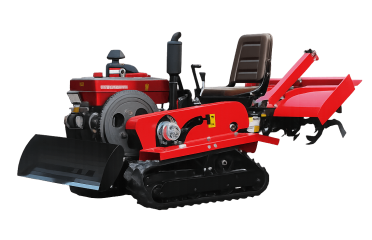
Typical commercial‑grade units of the Riding Crawler Rotary Tiller are produced in 25 HP to 35 HP diesel configurations, the most popular power bracket for international export orders. Standard overall dimensions are approximately 2450 mm‑2700 mm in length, 950 mm‑1100 mm in width, and 1000 mm‑1300 mm in height; operating machine weight ranges from 650 kg to 800 kg. The rubber crawler track distributes machine weight to realise low ground‑pressure performance, preventing sinking within soft muddy paddy soil. Working tillage depth can be adjusted between 10 cm and 22 cm, with typical field working efficiency at 1‑3 mu per hour according to soil moisture conditions. Optional quick‑change working attachments include ditching blades, bulldozer plates and weeding wheels to expand functionality beyond primary farm soil preparation work.
Product Structure Design Highlights
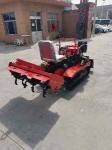
The core mechanical assembly of the amphibious Riding Crawler Rotary Tiller consists of four major modules: rubber tracked undercarriage, diesel power engine assembly, seated operator control station, and rear rotary tillage rotor group. The widened rubber track chassis is the foundational feature enabling amphibious operation; compared with steel tracks, high‑strength rubber tracks reduce damage to paddy field mud beds while maintaining sufficient traction on slippery ground. Operator seating and simplified lever‑based controls lower operator fatigue during long‑duration field shifts, a critical upgrade versus walking‑behind tillers. The rear rotary tillage rotor with heavy‑duty alloy blades breaks, stirs and levels saturated paddy soil in one continuous pass.
Key Stages within the Manufacturing Process
Production of export‑grade Riding Crawler Rotary Tiller units follows a structured multi‑stage manufacturing workflow. The process begins with metal plate cutting, bending and welding for the main chassis frame. After frame fabrication, rubber track assemblies, diesel engine, gear‑reduction transmission box and operator seat framework are sequentially installed on the main chassis. Next, rotary tillage rotors and hardened tiller blades are mounted and aligned, followed by full mechanical testing of transmission, steering and tillage rotation performance. Every finished machine runs through a complete wet‑simulation test inside the factory workshop before painting and final packaging for export shipment. This factory testing procedure helps minimise field breakdown risks for overseas end‑users and improves overall equipment reliability for muddy land tilling solution deployments.
Practical Field Applications across Multiple Farm Environments
The amphibious Riding Crawler Rotary Tiller demonstrates strong adaptability across diversified farm scenarios. In water‑filled rice paddies, its low‑pressure rubber tracks keep the machine afloat on soft mud while completing puddling and soil levelling work ready for rice transplanting. On hilly terraced farmland, the compact body and powerful tracked traction allow stable operation on sloped ground where conventional wheel tractors cannot safely travel. The same machine can also complete farm soil preparation work for dry‑land orchards, tea plantations and greenhouse vegetable plots once operators swap the rear working attachments. This multi‑terrain capability means a single Riding Crawler Rotary Tiller can serve mixed farming operations that include both rice paddies and upland cash‑crop fields, delivering tangible return‑on‑investment benefits for farm owners and agricultural rental businesses.
For machinery distributors, this multi‑scenario performance also expands local sales potential. A single product model can satisfy purchasing needs from rice farmers, orchard managers and greenhouse operators alike, reducing inventory complexity for regional dealers. As more smallholder farms invest in mechanisation, the market prospect for this muddy land tilling solution remains very positive in both existing and emerging agricultural markets.
Frequently Asked B2B Buyer Questions (FAQ)
Q1: What working terrain is the amphibious Riding Crawler Rotary Tiller most suitable for?
A: It is optimised for water‑filled muddy rice paddies, hilly terraced farmland, wet low‑lying plots, as well as dry orchard and greenhouse land. It is built as a versatile muddy land tilling solution to complete farm soil preparation across wet‑dry transitional farm zones.
Q2: Can customers select different horsepower configurations and working attachments for export orders?
A: Yes. Standard export series covers 25 HP and 35 HP diesel engine options. Multiple interchangeable attachments including ditching, bulldozing and weeding implements are available for selection according to local farm operation requirements. Customisation requests on machine colour and partial specification adjustments can be discussed for bulk purchase orders.
Q3: What warranty and spare‑part support is available for overseas buyers?
A: Standard factory warranty covers main engine and core transmission components for 12‑24 months. We supply spare‑part kits together with container shipments. Distributors can also order separate spare‑part batches to maintain local stock and deliver fast maintenance support for end‑user farmers.
Q4: Which international markets currently show the highest demand for this tracked tiller model?
A: Current major markets are Southeast Asian rice‑growing nations, followed by Latin‑American rice regions and certain parts of Africa. Market enquiries are also gradually rising from hill‑farm operators across South Asia.
Closing & Call‑to‑Action
As global agriculture continues to pursue higher mechanisation levels on difficult wet and hilly farmland, the amphibious Riding Crawler Rotary Tiller remains a proven muddy land tilling solution to resolve long‑standing paddy‑field tillage pain points for rice growers worldwide. Whether you represent an agricultural machinery importer, regional distributor, large farm cooperative or equipment‑rental enterprise, you may contact our sales team today to request detailed technical specification documents, quotation information, and further consultation regarding sample testing arrangements.