
Choose Proper Wheel Tractor for Different Farmland
Choose Proper Wheel Tractor for Different Farmland
Global Market Background & Current Trends for Wheel Tractor
The worldwide market for the wheel tractor remains one of the most critical segments within agricultural farm machinery, supporting food security for both smallholder operators and large‑scale commercial farming businesses across continents. Latest industry data shows the global wheel‑type tractor market reached approximately USD 89.4 billion in 2025, with a projected compound annual growth rate of 4.8 % up to the year 2032, driven by continuous farm mechanization in emerging economies and equipment replacement cycles in mature agricultural markets.
Regional demand presents clear differences. The Asia‑Pacific region occupies the largest market share, as millions of small‑to‑medium farms accelerate the transition from manual labour to mechanized work. Latin America witnesses strong uptake of medium‑to‑high‑horsepower wheel tractor units for extensive grain and soybean plantations. Meanwhile, Western Europe and North America keep updating their fleets, prioritizing emission‑compliant models integrated with precision farming accessories such as GPS auto‑steering systems.
One notable market trend is the rising preference for flexible, multi‑purpose farmland operation equipment. Instead of purchasing separate machines for ploughing, harrowing and planting, modern farmers expect a single wheel tractor to work with a full lineup of interchangeable implements. Another shift concerns power segmentation: statistics confirm the 40‑100 HP wheel tractor segment still holds the dominant market share globally, serving the broadest group of farm operators, while high‑horsepower products above 120 HP grow steadily for large, contiguous farmland blocks. Hybrid power solutions and smart diagnostic modules are gradually finding their way into mid‑range models, no longer limited only to premium high‑end agricultural farm machinery from western brands.
Despite positive overall market growth, industry analysts point out a widespread practical problem: many overseas buyers select a wheel tractor purely based on advertised horsepower or unit price, without adequate evaluation of local farmland conditions. Wrong machine selection directly results in wheel slip in muddy soil, insufficient torque for deep tillage, poor manoeuvrability inside narrow orchard rows, excessive fuel consumption, and shortened service life of the whole machine. This common mistake leads to poor return on capital investment for farm owners, and it also creates complaints for machinery distributors and resellers worldwide.
Key Technical & Structural Factors When Matching Wheel Tractor to Farmland
Horsepower, Torque Reserve and Drive Configuration
Horsepower rating is not the sole decisive specification, yet it forms the starting point for equipment selection of your wheel tractor. When assessing suitable power levels, operators need to link power output with actual field workload, soil hardness, and the total weight of mounted farm implements.
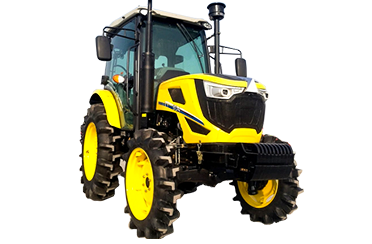
For small‑scale fragmented farmland, hilly plots and dense orchards, compact wheel tractor units ranging from 25 HP‑60 HP are the preferred farmland operation equipment. These machines usually adopt short wheelbase frames and tight turning circles to navigate narrow alleyways between fruit trees. For medium‑size grain farmland with moderately heavy soil, 70‑110 HP 4‑wheel‑drive wheel tractor products deliver balanced performance for rotary tillage, sowing and light transportation jobs. On large, flat farmland blocks with heavy clay soil, high‑torque 120‑180 HP wheel tractor models become necessary, because sufficient torque reserve (typically above 32 %) prevents engine stalling under sudden heavy‑load conditions during deep ploughing work.
Drive type selection creates significant performance gaps between different farm environments. Two‑wheel‑drive wheel tractor offers lower manufacturing and purchasing costs, suitable mainly for dry, firm flat farmland with relatively light tillage work. Four‑wheel‑drive wheel tractor delivers superior traction performance; it effectively reduces wheel slipping on wet paddy land, sloped hilly farmland, and loose sandy soil. For buyers operating across mixed field conditions, most professional dealers will recommend 4WD versions as the safer long‑term investment choice.
Chassis, Tyre Specification and Operator Cabin
The chassis structure of the wheel tractor directly defines its adaptability to farmland. Standard wide‑track chassis suits open grain farmland. Special narrow‑track orchard chassis features reduced overall width, which is a critical structural modification for fruit‑growing farmland. Many international buyers overlook chassis width and later discover the tractor cannot travel inside tree rows after delivery.
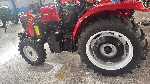
Tyre selection deserves equal attention. General agricultural lug tyres work well on ordinary dry farmland. For seasonal wet fields and rice paddies, users need larger‑diameter, low‑ground‑pressure flotation tyres to lower ground pressure and avoid sinking into muddy ground. Heavy‑duty reinforced tyres are recommended if the wheel tractor frequently pulls heavy trailed implements on stony farmland.
Operator cabins constitute another essential component within modern agricultural farm machinery. Basic open‑platform configurations remain popular in hot tropical regions to cut costs. Enclosed cabins with air‑conditioning and noise reduction become increasingly requested in temperate and high‑latitude markets, improving comfort for operators during all‑day farmland operation work. Optional add‑ons include rear hydraulic output, multi‑speed PTO shafts, front‑end loader brackets and weight counterbalance sets; these auxiliary structures expand the working scope of one single wheel tractor substantially.
International B2B Buyers’ Real‑World Pain Points & Procurement Preferences
Interviews with global agricultural farm machinery importers, regional distributors and end‑user farmers reveal consistent purchasing pain points surrounding wheel tractor procurement.
First, a large number of small‑and‑medium farm operators face budget constraints. They hope to acquire durable wheel tractor farmland operation equipment with reasonable capital expenditure, but they lack professional technical consulting support before placing orders. Without adequate guidance, they tend to compare only unit price, and occasionally end up ordering under‑powered or over‑sized wheel tractor units unsuitable for their local farmland.
Second, spare‑parts availability ranks very high on the priority list for B2B buyers. Even a robust wheel tractor will require regular wear‑part replacement after seasonal heavy farmland operation. Many importers report that delayed spare‑part shipments lead to idle machinery during the short planting window, causing direct economic losses for end‑user farms. Therefore, responsible manufacturers must maintain transparent spare‑part catalogues and reliable logistics arrangements for overseas clients.
Third, regional regulatory certification requirements create extra hurdles. Buyers from European and North‑American territories need wheel tractor products with Euro 5 or EPA engine emission certification, while customers in Africa and Southeast Asia are less restricted by emission standards and focus more on basic mechanical reliability and fuel adaptability for local diesel quality.
When reviewing overall procurement preferences among global B2B purchasers, buyers no longer simply chase maximum horsepower. Increasingly, they evaluate the complete solution: machine performance matched to local farmland, flexible implement compatibility, after‑sales spare‑part support, and compliance with local certification rules. Professional distributors, in particular, expect manufacturers to provide technical consultation service to help end users choose the proper wheel tractor before order confirmation, rather than merely supplying standard product catalogues.
Practical Guidance: Matching Wheel Tractor Solutions to Typical Farmland Conditions
Every type of farmland brings its own set of operating challenges, and selecting proper wheel tractor equipment should start from site assessment.
For flat dry grain farmland: These large, open plots are widespread across Eastern Europe, North America and parts of Central Asia. The recommended wheel tractor range is 90‑180 HP 4WD. Such agricultural farm machinery supports heavy ploughing, seeding and haulage tasks. Users may fit optional precision‑farming kits including GPS guidance to raise working efficiency for large‑area farmland operation.
For hilly, sloped farmland: Traction and vehicle stability become the primary concerns. A 50‑90 HP four‑wheel‑drive wheel tractor with counterweight assemblies is suitable. Operators should avoid excessively heavy high‑power units, as greater overall weight raises roll‑over risks on steep slopes.
For orchard and vineyard farmland: Compact narrow‑track wheel tractor in the 25‑65 HP power bracket represents the ideal farmland operation equipment. Short wheelbase and small turning radius allow manoeuvring between tree rows for soil preparation, spraying and fruit‑farm transportation. Extra‑narrow chassis variants are available for high‑density modern orchards.
For seasonal wet paddy farmland: Low‑ground‑pressure flotation tyres are non‑negotiable. The wheel tractor should feature enhanced rear axle sealing structures to prevent muddy water ingress during wet‑field work. 60‑100 HP 4‑wheel‑drive wheel tractor is widely adopted for rice‑growing regions across Southeast Asia.
Frequently Asked Questions (FAQ)
Q1: Should I select 2WD or 4WD wheel tractor for mixed‑condition farmland?
A: For locations where farmland alternates between dry ground and seasonal muddy or sloped terrain, the 4WD wheel tractor is strongly recommended. Though initial purchasing cost is slightly higher, better traction reduces wheel‑slip losses during farmland operation and extends the overall working lifespan of your agricultural farm machinery.
Q2: Is higher horsepower always equivalent to better performance for farm work?
A: Not necessarily. If farmland consists of fragmented small plots, an excessively high‑horsepower wheel tractor will suffer poor manoeuvrability, higher fuel consumption and unnecessary investment costs. Always match horsepower with field size, soil condition and the implements you intend to mount.
Q3: What documents should I confirm before placing bulk B2B orders for wheel tractor?
A: Buyers need to verify engine certification documents matching local emission regulations, official technical specification sheets, spare‑part supply agreements, and warranty terms. Request the manufacturer to confirm chassis and tyre configurations tailored to your target farmland environment.
Q4: Can one wheel tractor work with multiple different farm implements?
A: Most modern wheel tractor units support a variety of attachments via standard PTO and rear three‑point hitch systems, including rotary tillers, ploughs, seeders, sprayers and front loaders. When ordering, you should communicate your implement list in advance so the factory can adjust hydraulic output and rear lifting capacity accordingly.
Closing & Call‑to‑Action
Selecting the proper wheel tractor for different farmland is a core strategic decision for any farming business. Wrong equipment selection will reduce productivity and waste capital, while a well‑specified wheel tractor as your primary farmland operation equipment maximizes returns across planting, tilling and harvesting cycles. Whether you are an end‑user farm manager or an agricultural farm machinery distributor, it is advisable to share detailed information about your local farmland, soil types, required implements and regional certification rules before confirming any purchase. Contact our team today to request detailed technical data sheets, official quotation documents, and reference case materials for wheel‑tractor solutions adapted to your operating environment.