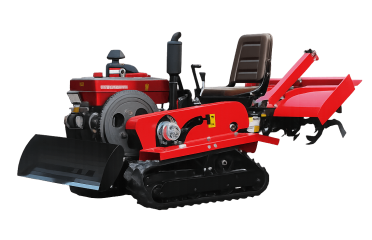

Compact Riding Crawler Tiller for Farms
Industry Background and Market Overview
Global Agricultural Machinery Market
The global agricultural machinery market was valued at approximately USD 165 billion in 2025 and is projected to reach USD 215 billion by 2030, growing at a CAGR of 5.4%. Within this sector, soil preparation equipment—including rotary tillers—accounts for a significant and expanding share. The rising adoption of mechanized farming in developing regions, coupled with growing smallholder farm consolidation, is driving demand for versatile, affordable tillage solutions.
The Rise of Compact Riding Models
Traditionally, rotary tilling was dominated by walk-behind models for small plots and large tractor-mounted implements for commercial farms. The Riding Crawler Rotary Tiller fills a critical middle ground, offering the comfort and productivity of a ride-on machine with the maneuverability and affordability suited to smaller operations. This category has seen particularly strong growth in Southeast Asia, Africa, and Latin America, where smallholder farms dominate the agricultural landscape.
Market Data and Growth Drivers
Demand by Region
Asia-Pacific remains the largest market for Small Farm Rotary Tiller equipment, driven by millions of smallholder farms in China, India, Vietnam, Thailand, and Indonesia. China alone produces over 60% of the world's compact agricultural machinery, with a mature supply chain and competitive pricing that appeals to international buyers. Africa and Latin America are the fastest-growing regions, with governments increasingly subsidizing farm mechanization to boost food security and agricultural productivity.
Key Growth Factors
Several factors are accelerating adoption. First, rising rural labor costs and labor shortages make mechanized tilling economically compelling—one Riding Crawler Rotary Tiller can replace 5–8 manual laborers while completing the same work in a fraction of the time. Second, growing awareness of soil health benefits: properly tilled soil improves water infiltration, aeration, and nutrient distribution, leading to higher crop yields. Third, financing options and government subsidy programs in many emerging markets have lowered the barrier to entry for small farmers.
Technological Innovations and Features
Crawler Track System Advantages
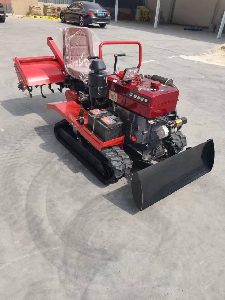
The defining feature of a Riding Crawler Rotary Tiller is its tracked undercarriage, which offers distinct advantages over wheeled alternatives. Crawler tracks distribute machine weight over a larger surface area, reducing ground pressure and minimizing soil compaction—a critical benefit for maintaining soil health. Tracks also provide superior traction on wet, muddy, or sloped terrain where wheeled machines may slip or become stuck. This makes crawler tillers particularly well-suited for rice paddies, hilly orchards, and high-moisture clay soils.
Powertrain and Engine Technology
Modern compact crawler tillers are typically powered by 10–25 horsepower diesel engines, balancing sufficient torque for deep tilling with fuel efficiency. Many Crawler Rotary Tiller Manufacturer companies now offer water-cooled diesel engines with electric start, improving reliability in hot climates and reducing operator effort. Some models incorporate belt-driven or gear-driven transmission systems with multiple forward and reverse speeds, allowing operators to match tilling speed to soil conditions and crop requirements.
Tilling Depth and Width Adjustability
Adjustability is a key consideration when evaluating a Small Farm Rotary Tiller. Most compact riding models offer tilling widths ranging from 80 cm to 130 cm, accommodating everything from narrow row crop beds to open field preparation. Tilling depth is typically adjustable from 5 cm to 25 cm via a depth control lever or skid shoe, allowing farmers to customize tillage intensity for different crops and soil types. Some advanced models feature hydraulic depth control for precise, on-the-go adjustments.
Manufacturing Process and Quality Considerations
Production Workflow
A typical Riding Crawler Rotary Tiller manufacturing process begins with frame fabrication, where high-strength steel is cut, bent, and welded into the main chassis and operator platform. The track undercarriage assembly includes rubber or steel tracks, idler wheels, drive sprockets, and tensioning mechanisms. The engine and transmission are mounted and aligned, followed by installation of the rotary tiller attachment—comprising the tiller shaft, blades (typically 20–40 curved blades arranged in a spiral pattern), and gearbox. Final steps include wiring, control installation, painting, and comprehensive operational testing.
Quality Assurance Standards
Reputable Crawler Rotary Tiller Manufacturer facilities adhere to ISO 9001 quality management systems and hold CE certification for European export markets. Key quality checks include weld integrity inspection, track alignment calibration, transmission load testing, and blade balance verification. Each machine undergoes a minimum 2–4 hour runtime test under simulated load conditions before packaging. Buyers should inquire about component sourcing—premium manufacturers often use branded engines (such as Changchai or Jiangdong), reliable gearboxes, and UV-resistant rubber tracks to ensure long service life.
Applications and Use Cases
Crop Field Preparation
The primary application of a Compact Riding Crawler Tiller for Farms is seedbed preparation for a wide range of crops. In rice cultivation, crawler tillers excel in flooded paddy fields, where their low ground pressure and superior traction allow effective puddling and soil mixing. For dryland crops such as corn, wheat, soybeans, and vegetables, these machines perform primary tillage to break up compacted soil, incorporate crop residue and organic matter, and create a fine, uniform seedbed that promotes germination and root development.
Orchard and Vineyard Management
In orchards and vineyards, the compact dimensions and tight turning radius of a Small Farm Rotary Tiller make it ideal for inter-row cultivation. These machines can till soil between tree rows to control weeds, improve water infiltration, and incorporate fertilizer—all without damaging tree roots or trunks. The crawler track system provides stability on sloped orchard terrain, while adjustable tilling width allows operation in varying row spacings. Some models can be fitted with specialized attachments for mowing, ditching, or pesticide spraying, further enhancing their versatility.
Greenhouse and Protected Agriculture
For greenhouse and high-tunnel operations, where space is limited and soil compaction must be minimized, a compact riding crawler tiller is an excellent choice. Its narrow profile navigates confined greenhouse aisles, while the tracked undercarriage exerts minimal ground pressure on carefully managed greenhouse soils. Electric-start models with low exhaust emissions are particularly suitable for enclosed environments, and some manufacturers offer electric-powered variants specifically designed for greenhouse use.
Sourcing Considerations for B2B Buyers
When evaluating a Crawler Rotary Tiller Manufacturer, international buyers should consider several critical factors. First, verify the manufacturer's export experience and whether their products carry certifications relevant to your target market (CE, EPA, ISO). Second, assess the availability of spare parts—consumable items such as tiller blades, belts, filters, and track components should be readily obtainable through local dealers or direct shipping. Third, evaluate the warranty terms, typically 12 months for the complete machine with separate coverage for the engine. Finally, consider total cost of ownership, including fuel consumption, maintenance frequency, and expected blade and track replacement intervals, rather than focusing solely on upfront price.
FAQ
Q1: What is the typical tilling capacity of a compact riding crawler tiller?
A: A standard Riding Crawler Rotary Tiller with 15–20 horsepower can till approximately 0.3–0.5 hectares (0.75–1.25 acres) per hour, depending on soil conditions, tilling depth, and operator experience. Over an 8-hour workday, this translates to 2.4–4 hectares (6–10 acres), making it suitable for farms ranging from 5 to 50 hectares in size. Larger 25-horsepower models can achieve even higher productivity rates.
Q2: How does a crawler tiller compare to a wheeled tiller for farm use?
A: The primary differences lie in traction, ground pressure, and terrain adaptability. A Riding Crawler Rotary Tiller distributes weight more evenly, reducing soil compaction and providing superior grip on wet, muddy, or sloped ground. Wheeled tillers are generally faster on dry, flat terrain and easier to transport between locations, but they may struggle in soft soil or steep conditions. For rice paddies, clay-heavy soils, or hilly farms, crawler models are the clear choice.
Q3: What maintenance is required for a riding crawler rotary tiller
A: Regular maintenance is essential for maximizing the service life of your Small Farm Rotary Tiller. Daily tasks include checking engine oil, hydraulic fluid, and fuel levels, inspecting track tension and condition, and clearing debris from the tiller assembly. Periodic maintenance (every 50–100 hours) involves changing engine oil and filters, inspecting and replacing worn tiller blades, checking gearbox oil levels, and lubricating pivot points. Track replacement is typically required every 1,000–1,500 hours depending on operating conditions.
Q4: Can a compact riding crawler tiller be used with other attachments?
A: Yes, many models from a reputable Crawler Rotary Tiller Manufacturer are designed with multi-function capability. Common compatible attachments include rear-mounted mowers for grass cutting, ditching plows for irrigation channel creation, fertilizer spreaders, and small trailers for material transport. Some models feature a front PTO (power take-off) or hydraulic connections to power additional implements. When purchasing, confirm the available attachment options and whether conversion kits are available for future needs, as this significantly enhances the machine's return on investment.