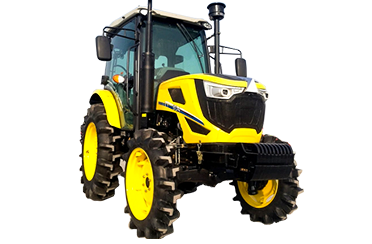

Big Tractor
1. Extreme Productivity and Operational Capacity
This is the core and most direct advantage of large tractors.
1. Amazing Operating Speed and Width: Large tractors possess exceptional power, enabling them to pull or drive wider and heavier implements. For example, they can simultaneously drive a planter or cultivator with a swath width exceeding 10 meters while maintaining high operating speeds. This means the area (hectares/day) that a single machine can cover exponentially increases, making them the ultimate weapon for seizing the farming season.
2. Unparalleled Traction: For operations requiring immense traction, such as deep plowing, deep loosening, and heavy harrowing, large tractors are the only choice. They can easily break up hard soil and create an optimal soil environment for crops, a feat unmatched by small and medium-sized tractors.
3. Powerful Power Output: Their PTO shafts deliver immense power, enabling them to drive energy-intensive implements such as large combines and large square balers, ensuring efficient operation at full capacity.
Product Details
This is the fundamental difference between large tractors and small and medium-sized tractors.
1. High-Precision Automatic Navigation System:
· Based on RTK-GPS, it achieves centimeter-level autonomous driving.
· Advantages: Significantly reduces driver fatigue; 24-hour uninterrupted operation; straight working lines with no overlap or omissions, saving seeds, fertilizers, and pesticides.
2. ISOBUS System:
· This is an international standard. A single display can control all ISOBUS-compatible agricultural implements (such as seeders and fertilizer spreaders) of different brands, achieving "one terminal, control all," greatly simplifying operation.
3. Variable Operation Technology:
· Large tractors are the core of "prescription map" implementation. Based on pre-loaded soil fertility, moisture content, and yield data maps, they automatically and in real time adjust seeding, fertilizer, or spraying rates while in operation, achieving "locally tailored solutions" and representing the highest level of precision agriculture. 4. Data Management and Cloud Platform:
· While operating, the tractor automatically collects data such as operating area, fuel consumption, and yield, and uploads it to the cloud platform via the Internet. Farmers can remotely monitor and manage the entire operation process via a computer or mobile phone.
IV. Main Categories
· By Horsepower:
· Large: 150-300 horsepower
· Extra-large/Heavy: 300 horsepower and above
· By Propelling Structure:
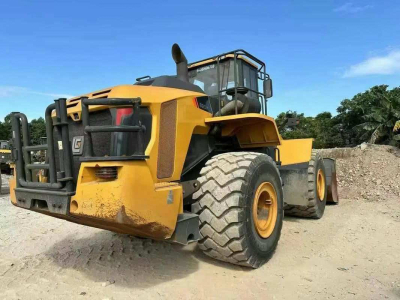
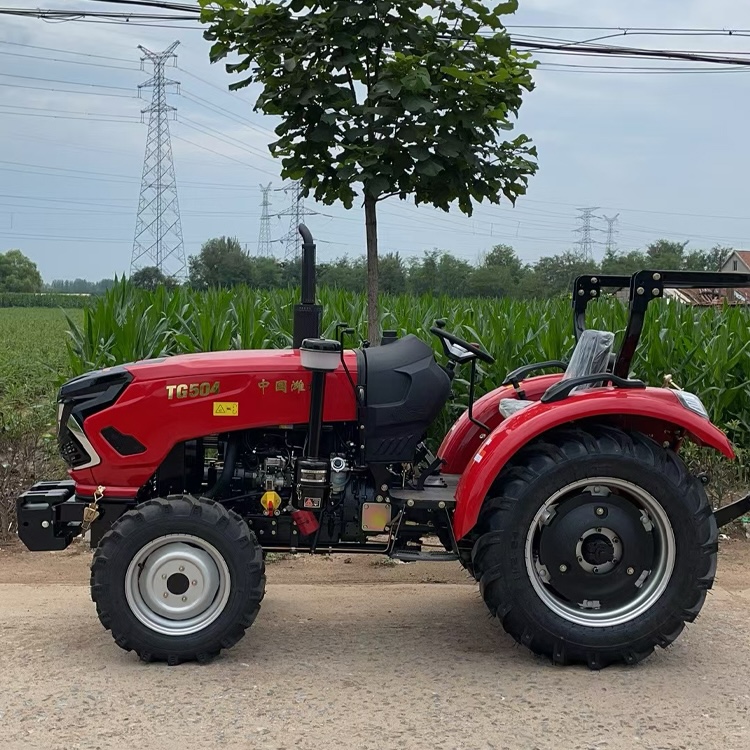
· Large wheeled tractors: The most common, suitable for both field operations and road transport.
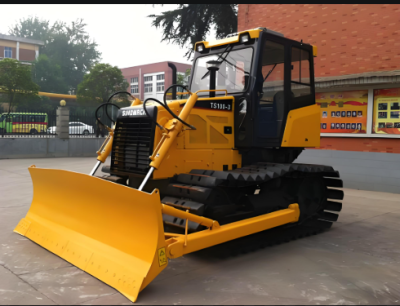
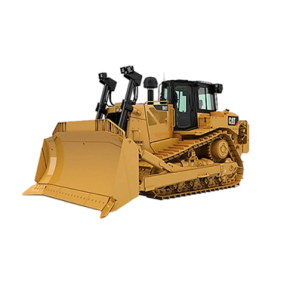
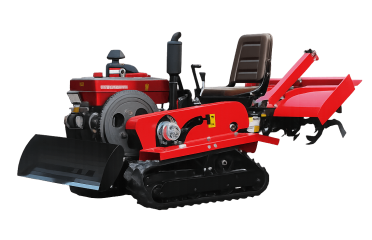
· Large crawler tractors: Primarily used for large farms with extremely high soil compaction requirements or on soft soil.
V. Main Application Scenarios
· Large state-owned farms and reclamation areas: Such as the large-scale farms in Heilongjiang and Xinjiang, China.
· Family farms and agricultural cooperatives: These form large-scale land management units through alliances.
· Large overseas farms: These are standard equipment on farms of tens of thousands or even hundreds of thousands of acres in North America, South America, Australia, and Eastern Europe. Large-scale land reclamation and consolidation projects.
Large tractors have evolved from simple agricultural machinery into intelligent, highly efficient production systems that integrate mechanical engineering, information technology, and agronomic knowledge. They are not only the ultimate embodiment of agricultural productivity but also the core engine driving agricultural development towards scale, precision, intelligence, and sustainability. For producers managing tens of thousands of acres of land, investing in large tractors is an essential option for maintaining competitiveness and achieving profitability.
Leave your messages