
Growing Global Demand Drives Wheel Tractor Export Opportunities
2026/09/08 15:09
Booming Global Wheel Tractor Market Fuels Export Growth
The global wheel tractor market maintains a steady growth trend, with emerging markets becoming the main driving force of industry increment. Industry survey data shows that the penetration rate of agricultural mechanization in most developing countries is still at a low level, and there is a huge market gap in medium and small horsepower wheel tractor equipment suitable for local farmland operation scenarios.
The Asia-Pacific region, as the core agricultural production base in the world, occupies the largest market share of global wheel tractor consumption. At the same time, Africa and Latin America have become the fastest-growing emerging markets for wheel tractor exports. Local governments have successively introduced agricultural subsidy policies to encourage farmers and farm cooperatives to purchase professional farming machinery, which greatly stimulates the global demand for wheel tractor.
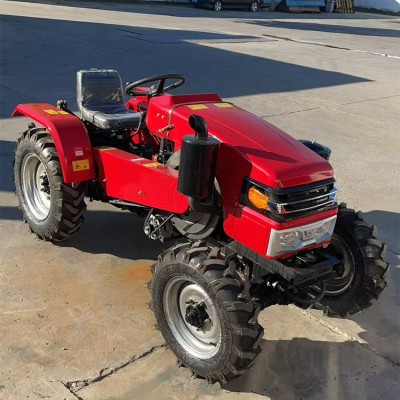
Different regional markets show differentiated demand characteristics. Small and medium-sized family farms prefer compact wheel tractor with flexible operation and low maintenance cost, while large-scale commercial planting bases and agricultural estates tend to purchase high-horsepower, heavy-duty wheel tractor to meet the needs of large-area land preparation, deep ploughing and long-distance transportation. Diversified market demands bring rich agricultural machinery export opportunities for export-oriented manufacturers, covering full horsepower segments from compact to heavy-duty models.
Core Industry Trends Reshape Wheel Tractor Export Market Pattern
Accelerated Mechanization in Emerging Agricultural Markets
The insufficient agricultural mechanization rate in emerging economies is the core factor driving the continuous growth of wheel tractor export business. In most African agricultural regions, more than 60% of arable land still relies on manual and animal power farming, and the market replacement space for mechanical equipment is huge. Southeast Asian countries are facing severe rural labor outflow problems due to urbanization, and mechanical farming has become an inevitable choice to improve agricultural efficiency.
Plantation crops such as rice, rubber and oil palm in Southeast Asia are highly dependent on matched wheel tractor and supporting agricultural implements. Latin America’s vast cultivated land resources also generate stable replacement and new procurement demand for medium and high horsepower wheel tractor every year. The continuous release of demand from emerging markets has become the core engine of global wheel tractor trade growth.
Technical Upgrades Improve Global Product Competitiveness
With the continuous iteration of agricultural machinery manufacturing technology, modern wheel tractor has achieved comprehensive upgrades in power performance, operational stability, environmental protection and intelligence. Formal export-grade wheel tractor products adopt reinforced chassis structure, optimized hydraulic lifting system and efficient heat dissipation device, which can adapt to complex working conditions such as high temperature, humidity and muddy farmland in overseas markets.
In terms of production and manufacturing, all export wheel tractor equipment strictly implements standardized production processes, including raw material cutting, precision welding, overall assembly, power system matching and full machine debugging. Before leaving the factory, each piece of equipment will pass multiple performance tests such as steering, braking, power output and hydraulic system to ensure stable operation in different regional environments.
In addition, mainstream export models support 2WD and 4WD switching configurations, matched with international standard three-point suspension and PTO power output interface, which can be compatible with a variety of agricultural implements such as rotary tillers, ploughs, seeders and trailers, realizing multi-scenario one-machine multi-purpose operation and greatly improving the cost performance of equipment, which is widely recognized by global B2B buyers.
Complete Supply Chain and After-Sales Service Boost Export Advantages
In the current global agricultural machinery trade market, product quality and price are no longer the only competitive factors. Complete export certification, stable spare parts supply and professional technical after-sales service have become key indicators for overseas importers and distributors to select suppliers. Regular wheel tractor export manufacturers provide complete CE certification, customs clearance documents and product operation manuals, which can meet the market access standards of most countries and regions.
At the same time, standardized spare parts inventory and global technical support services effectively solve the after-sales maintenance problems of overseas end users, greatly improving product repurchase rate and market reputation, and further stabilizing agricultural machinery export opportunities in the long term.
Professional Application Scenarios of Export-Grade Wheel Tractor
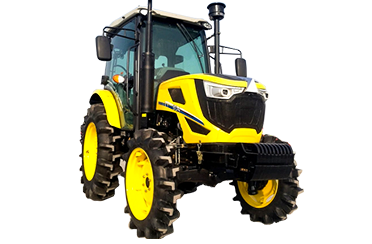
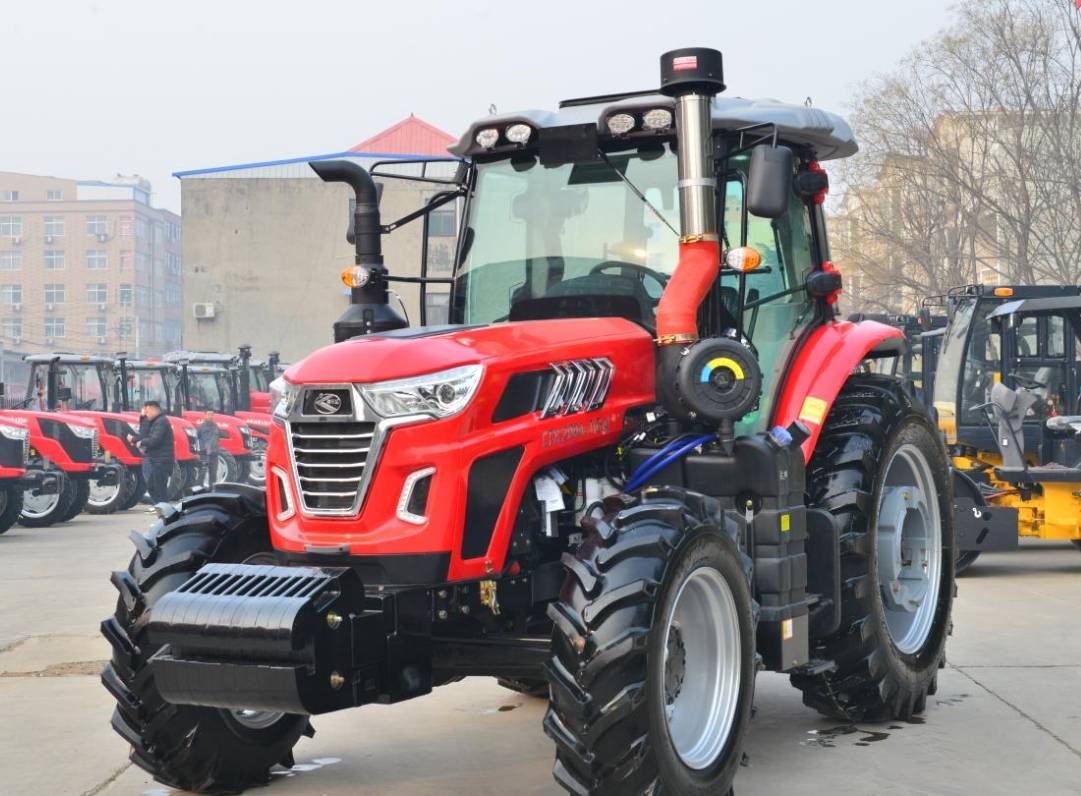
Wheel tractor, as the most versatile agricultural machinery equipment, covers almost all links of modern farm operation. Compact small horsepower wheel tractor is widely used in small and medium-sized farms for fine land preparation, sowing, fertilization and short-distance material transportation. Medium horsepower wheel tractor, with balanced power and flexibility, is the mainstream model for general farmland operations in Southeast Asia, South America and other regions, suitable for rotary tillage, ploughing and harvesting auxiliary work.
High-horsepower heavy-duty wheel tractor is mainly used in large-scale agricultural estates and intensive planting bases, completing heavy-duty operations such as deep ploughing, land reclamation and large-trailer transportation. Relying on its strong adaptability and multi-functional characteristics, wheel tractor has maintained a rigid market demand in global agricultural production.
FAQ: Common Sourcing Questions for Global Wheel Tractor B2B Buyers
Q1: What key factors should be considered when sourcing wheel tractor for overseas market sales?
A: Importers need to comprehensively evaluate local farm scale, soil and climate conditions, mainstream supporting implements, national import certification standards and after-sales service conditions. It is necessary to select matched horsepower, 2WD/4WD configuration and emission standards according to regional characteristics to ensure product market adaptability.
Q2: What are the core differences between 2WD and 4WD wheel tractor for export?
A: 2WD wheel tractor has a more competitive price, suitable for flat terrain and light-duty farming operations, and is favored by low-budget small farm buyers. 4WD wheel tractor has stronger traction and anti-slip performance, adapting to sloping land, muddy farmland and heavy-load operation scenarios, with wider market applicability in emerging agricultural countries.
Q3: How to guarantee after-sales service and spare parts supply for imported wheel tractor?
A: It is recommended to cooperate with formal export manufacturers with complete service systems. Confirm the official warranty period, global spare parts supply channels and remote technical guidance services before ordering. Local distributors can stock up on core wearing parts in advance to improve after-sales response efficiency.
Q4: Which regions have the most potential for wheel tractor export business in 2026?
A: Southeast Asia, sub-Saharan Africa and Latin America are the three core high-growth markets. Driven by agricultural mechanization policies and labor shortage, these regions continue to release strong global demand for wheel tractor, bringing sustainable agricultural machinery export opportunities for global suppliers.
Industry Outlook
With the continuous advancement of global agricultural modernization and mechanization upgrading, the global demand for wheel tractor will maintain a stable upward trend in the next few years. Relying on excellent cost performance, mature manufacturing technology and perfect export service system, high-quality wheel tractor products will continue to occupy the mainstream position in the global agricultural machinery trade market.
For global agricultural machinery importers and distributors, grasping the market development trend, selecting high-quality and market-adaptive wheel tractor products, and establishing long-term cooperative relationships with professional manufacturers will help seize the continuous agricultural machinery export opportunities and achieve stable business growth in the global agricultural equipment market.