
Walk‑behind Weeder Addresses Labor Shortage in Small‑Scale Farm Operations
2026/09/08 15:36
Industry Background: Labor Shortage Restricts the Development of Small‑Scale Agriculture
In recent years, the global agricultural labor force has shown a continuous declining trend. According to international agricultural industry research data, more than 60% of smallholder farms in Asia‑Pacific, Latin America and Eastern Europe face seasonal labor gaps during crop growth and weeding peak periods. The shortage of farm workers not only pushes up manual operation costs year by year but also leads to delayed weeding work, resulting in weeds competing with crops for soil nutrients, water and light resources. This problem directly causes 10%‑25% of crop yield reduction for small‑scale farm operations every year.
Large‑scale agricultural machinery such as heavy tractors is suitable for large flat farmland but cannot adapt to narrow orchard rows, terraced fields, scattered small plots and hilly farmland. For a long time, small and medium‑sized growers have lacked targeted mechanized weeding tools, and can only rely on inefficient manual labor. This market gap has greatly stimulated the market demand for lightweight, flexible and easy‑to‑operate mechanical weeding equipment, making the Walk‑behind Weeder the most popular agricultural machinery product in the small farm mechanization segment.
Product Advantages: Walk‑behind Weeder Becomes a Core Solution for Labor Saving
Efficient Operation, Greatly Reducing Labor Dependence
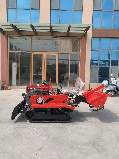
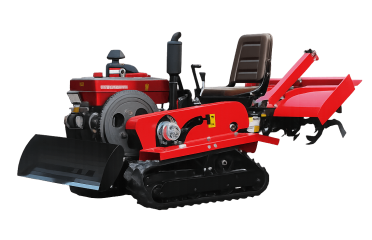
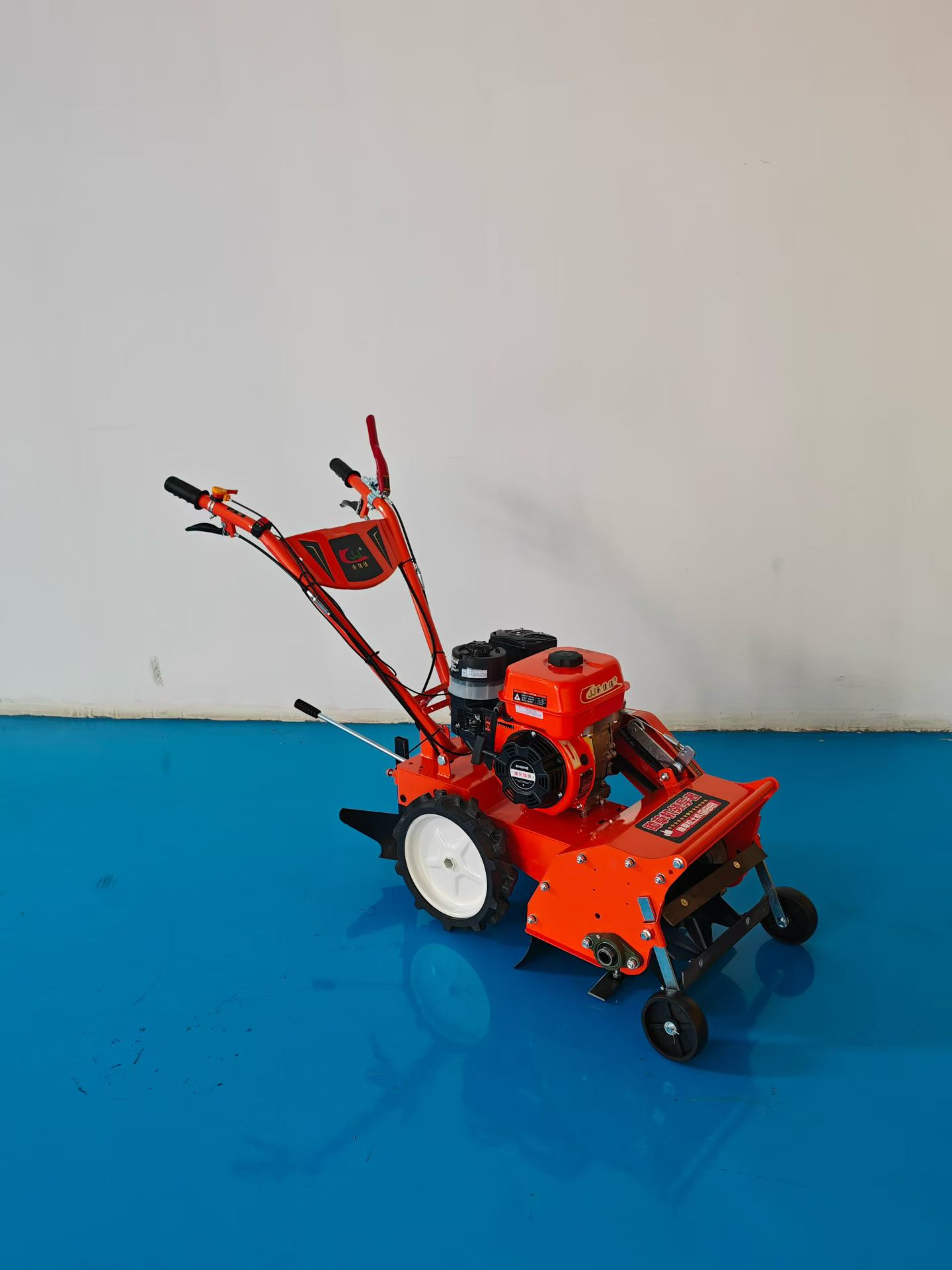
Different from traditional manual weeding and bulky large machinery, the Walk‑behind Weeder is a professional mechanical weeding machine tailored for small‑scale farm operations. The equipment adopts a compact integrated structure, with flexible steering and strong terrain adaptability, which can freely shuttle between fruit tree rows, vegetable ridges and crop intervals. It perfectly makes up for the operational limitations of large agricultural equipment in complex small‑plot scenarios.
In terms of operational efficiency, a single Walk‑behind Weeder can complete 0.8 to 1.2 acres of weeding and shallow soil loosening work per hour. Its daily operating capacity is equivalent to the manual workload of 6 to 8 skilled farm workers. For small‑scale farm operations with tight seasonal construction schedules, this orchard weeding equipment can completely replace a large number of temporary workers, effectively alleviating the pressure of labor shortage and ensuring that weeding operations are completed on schedule during the critical crop growth period.
Multi‑functional Design to Improve Farm Comprehensive Benefits
The upgraded Walk‑behind Weeder integrates multiple functions such as weeding, soil loosening and soil aeration. The adjustable working depth can effectively remove surface weeds while avoiding damage to crop roots and fruit tree root systems, which is very suitable for high‑value crop planting scenarios such as orchards, traditional Chinese medicinal materials and vegetables. The crushed weeds after operation can be directly returned to the field as organic fertilizer, reducing the use of chemical herbicides, helping farms achieve green and ecological planting, and improving the market competitiveness of agricultural products.
Manufacturing and Field Application Process
Regular manufacturers strictly control the production and manufacturing standards of the Walk‑behind Weeder. The whole machine is made of high‑strength wear‑resistant steel, and the core cutting blade adopts alloy forging process, which has long service life and stable operation. The equipment is equipped with qualified gasoline or diesel power modules, which can meet the emission standards of different countries and regions. Before leaving the factory, each mechanical weeding machine will pass dynamic debugging, depth calibration and continuous operation tests to ensure stable field performance.
In actual field application, the operation process is simple and efficient. Farmers only need to adjust the working width and weeding depth according to crop spacing and weed growth height, and then push the equipment to walk along the crop rows. The whole operation process is labor‑saving and easy to learn, and ordinary operators can master the operation skills in a short time. Relying on these advantages, this orchard weeding equipment has been widely promoted and applied in global small‑scale farm operations.
Global Market Development Trend
The global small farm mechanization market is maintaining a steady growth trend. Industry forecast data shows that the global small agricultural weeding machinery market will maintain a compound annual growth rate of more than 6.5% from 2025 to 2030. Benefiting from the global labor shortage trend and the policy support of various countries for small agricultural machinery, the market demand forWalk‑behind Weeder is rising rapidly.
At present, the Asia‑Pacific region is the largest consumer market, while Latin America, Africa and Southeast Asian markets show strong growth potential. More and more agricultural machinery importers and distributors take high‑quality mechanical weeding machine and orchard weeding equipment as key product layouts to meet the mechanization upgrading needs of local smallholder farmers. In the future, multi‑functional, lightweight and low‑energy‑consuming walk‑behind weeding equipment will become the mainstream development direction of the industry.
FAQ – Common Questions for B2B Global Buyers
Q1: What planting scenarios is the Walk‑behind Weeder suitable for?
A: This professionalmechanical weeding machine is specially designed for small‑scale farm operations. It is widely applicable to fruit orchards, vegetable fields, medicinal material planting bases, terraced fields and hilly scattered farmland. It is the preferred orchard weeding equipment for small and medium‑sized growers worldwide.
Q2: What core parameters should be focused on when purchasing the equipment?
A: B2B buyers should focus on engine power, working width, adjustable weeding depth, blade material and overall machine stability. Meanwhile, it is necessary to confirm whether the equipment meets local environmental emission standards and whether the supplier provides OEM customization and complete after‑sales spare parts support.
Q3: How much economic benefit can the Walk‑behind Weeder bring to farms?
A: The equipment can replace 6‑8 manual workers, greatly saving seasonal labor costs for farms. At the same time, efficient and timely weeding avoids crop yield loss caused by weed flooding, and the soil loosening function improves crop growth environment, effectively increasing the overall planting income of small‑scale farm operations.
Q4: Is the equipment easy to maintain and suitable for long‑term export sales?
A: The Walk‑behind Weeder has a simple structural design, few vulnerable parts and low daily maintenance costs. The equipment has strong adaptability to various complex farmland environments, with stable performance and long service life. It is very suitable for bulk export and long‑term distribution cooperation for global agricultural machinery dealers.
Conclusion
The global agricultural labor shortage is a long‑term industry trend, and mechanized replacement of manual weeding has become an inevitable development direction of small‑scale agricultural production. As an efficient, labor‑saving and cost‑effective mechanical weeding machine, the Walk‑behind Weeder perfectly solves the operational pain points of insufficient manpower and low weeding efficiency in small farms. With strong terrain adaptability and multi‑functional practicality, it has become the most reliableorchard weeding equipment for global smallholder farmers. In the future, with the continuous advancement of small farm mechanization, this type of equipment will continue to occupy an important market share and bring stable economic benefits to global agricultural growers and B2B distributors.