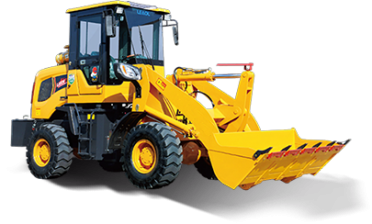

High‑Efficiency Wheel Loader Rolls Out with Reinforced Bucket Assembly
2026/09/21 15:37
Global Market Background for Heavy‑Duty Wheel Loader Equipment
Global infrastructure investment, mining expansion and urban redevelopment projects continue to fuel steady demand for reliable wheel loader machines. Statistical industry data indicates the global wheel loader market maintains a compound annual growth rate of 4.5% from 2025 to 2032, with construction and quarry applications occupying more than 79% of overall market consumption. Markets across Southeast Asia, the Middle East, Africa and Latin America keep generating strong demand for medium‑sized wheel loader units that can sustain long‑hour continuous operation under abrasive, dusty and uneven site conditions.
Traditional standard‑specification wheel loader often suffers from premature failure on bucket parts. Under frequent impact and friction from rock, gravel and crushed stone, bucket plates and bucket teeth wear out rapidly. Frequent downtime for bucket repair or replacement brings considerable losses for quarry operators and construction contractors. This pain point creates clear market demand for an improved wheel loader equipped with a robust reinforced bucket assembly and premium wear‑resistant bucket teeth.
Chinese wheel loader manufacturers have been accelerating product iteration in recent years. Instead of competing merely on selling price, manufacturers focus on upgrading core working attachments to lower the total‑of‑ownership cost for end‑users. Many international machinery importers now prioritize durability of working attachments when selecting a wheel loader, rather than only comparing engine power parameters.
Product Overview and Key Technical Specifications of the New Wheel Loader
Application Scenarios & Product Positioning
This new high‑efficiency wheel loader is specially optimized for heavy‑loading working scenarios, including quarry rock loading, aggregate stockpile handling, highway construction material transfer and waste‑recycling material shifting. It fills the market gap for medium‑size wheel loader models that require outstanding anti‑abrasion performance.
For regional market differences: Middle‑East quarry clients focus on anti‑dust performance and continuous long‑shift capacity; African construction contractors look for simple maintenance and easy‑to‑source spare parts of the reinforced bucket assembly; South‑American infrastructure projects expect higher breakout force to handle compacted rock piles. The updated wheel loader has taken these diversified site requirements into consideration during product development.
Core Product Structure and Bucket Technical Features
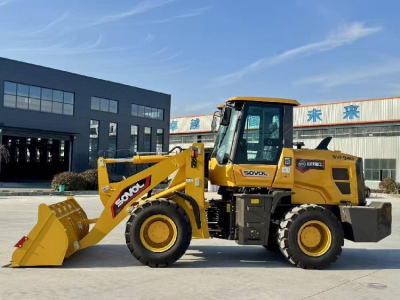
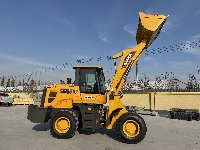
The most prominent upgrade of this wheel loader lies in its reinforced bucket assembly. The bucket adopts high‑strength quenched alloy steel as base material; key stress areas including the cutting edge, side plates and back baffle receive additional overlay welding treatment to strengthen anti‑impact capability. Replaceable wear‑resistant bucket teeth are installed on the front cutting edge. Each tooth is heat‑treated to achieve high surface hardness, effectively resisting abrasion caused by sharp rock fragments.
Major technical specifications of this new wheel loader are listed below:
Item | Technical Specification |
Rated operating load | 5‑ton standard payload |
Bucket volume | 2.7 m³‑3.0 m³ (reinforced rock‑type bucket) |
Power unit | Turbocharged diesel engine, 162 kW |
Hydraulic system | Dual‑pump combined‑flow hydraulic circuit |
Key bucket component | Reinforced bucket assembly with bolt‑on wear‑resistant bucket teeth |
Working cycle time | Shortened loading‑dumping cycle for improved site productivity |
Besides the reinforced bucket assembly, the whole machine is also upgraded. The front working arm has reinforced hinge connection points to withstand frequent heavy‑impact loads. The optimized dual‑pump combined‑flow hydraulic system shortifies lifting and dumping cycle time, directly improving overall working efficiency for the wheel loader on busy jobsites. Operators can select optional quick‑coupling device to switch between rock bucket, fork attachment and grading bucket according to different site assignments.
Manufacturing & Factory Quality‑Control Process
Durability of the reinforced bucket assembly is guaranteed by strict manufacturing workflow. Thick alloy steel plates go through CNC cutting first, followed by robotic automatic welding to ensure stable welding seam quality. Critical welding joints undergo non‑destructive inspection to detect hidden cracks. After welding, bucket components go through surface anti‑corrosion electrophoretic painting treatment.
After full assembly of the complete wheel loader, every finished machine needs to complete factory bench testing for hydraulic performance. Simulation loading tests with heavy rock materials are carried out to verify the anti‑impact performance of wear‑resistant bucket teeth and the whole reinforced bucket assembly. For export‑bound wheel loader units, inspection staff will check the whole machine, attachment accessories, spare wear parts and complete technical documents before container loading, to minimize breakdown risks after the machine arrives at overseas construction or quarry sites.
B2B International Buyers’ Procurement Preferences & Core Pain Points
Changing Procurement Preferences among Global Importers
In previous years, many international dealers purchased wheel loader mainly based on nominal payload and basic engine configuration. Currently, more professional B2B purchasers pay close attention to attachment durability. Buyers clearly recognize that premature bucket wear will increase operating expenditure significantly. Therefore, the reinforced bucket assembly and replaceable wear‑resistant bucket teeth have gradually become one of the key selection criteria for heavy‑duty wheel loader procurement.
Meanwhile, global importers attach great importance to after‑sales spare‑part supply. Many dealers hope suppliers can offer separate spare‑part kits including bucket teeth, side wear plates and bucket edge protective pieces together with main unit shipments. Local maintenance support, multi‑language operation manuals and optional certification documents such as CE also rank high on buyers’ checklist.
Main Procurement Pain Points for Overseas Wheel Loader Purchasers
Even with rising market demand for durable wheel loader attachments, cross‑border procurement still faces several common challenges.
First, inconsistent bucket quality among different manufacturers. Two wheel loader units with identical nominal payload may be equipped with bucket assemblies of completely different steel grades. Some suppliers use ordinary low‑carbon steel to reduce production cost. After several months of heavy quarry operation, the bucket suffers deformation and rapid wear of wear‑resistant bucket teeth, leading to frequent site shutdown. Many buyers find this problem only after the wheel loader has been delivered to the jobsite.
Second, spare‑part supply barriers. Some manufacturers only deliver the complete wheel loader without providing sufficient spare wear‑resistant bucket teeth and bucket protective components. Once these vulnerable attachments are worn out, local end‑users have to wait for long‑distance spare‑part shipping, which interrupts quarry and construction schedules.
Third, configuration confirmation risks. Many buyers fail to specify whether they need reinforced rock‑type bucket or general‑purpose bucket in early negotiation. After shipment, they discover that the delivered wheel loader cannot adapt to local harsh quarry working conditions. Fourth, certification and logistics issues. Larger wheel loader units may require ro‑ro shipment, while container transportation is available for partially disassembled machines. Different regional certification standards also bring compliance challenges for importers.
Future Industry Trends for Wheel Loader Market
From 2026 onward, the wheel loader industry will gradually shift from simple power competition to comprehensive durability and total‑cost‑of‑ownership competition. For heavy‑duty application scenarios such as quarry and aggregate yards, reinforced bucket assembly and high‑quality wear‑resistant bucket teeth will no longer be merely optional upgrades; they will become mainstream standard configurations for medium‑size heavy‑duty wheel loader products.
Modular attachment design will gain wider popularity. Wheel loader products will support quick switching of multiple working buckets and accessories to satisfy diversified site assignments. At the same time, intelligent monitoring systems will be gradually deployed on new‑generation wheel loader to remind operators of wear status of bucket teeth and bucket plates. Service competition will become more intense; forward‑thinking manufacturers will cooperate with overseas distributors to build regional spare‑parts inventory for vulnerable bucket components, shortening lead‑time for replacement parts. Besides, low‑emission power versions will be developed to satisfy stricter environmental regulations in mature markets.
Frequently Asked Questions (FAQ)
Q1: What are the core advantages of this new wheel loader’s reinforced bucket assembly?A: The reinforced bucket assembly uses high‑strength alloy steel with overlay‑welded stress zones. Matching wear‑resistant bucket teeth can be individually replaced. This design effectively reduces bucket deformation and abrasion when handling rock and gravel, extending the whole bucket service life under heavy‑duty quarry conditions.
Q2: Can customers order alternative bucket volumes or customized attachments for this wheel loader?A: Yes. The manufacturer supports customization on bucket capacity, quick‑coupler installation and other attachments. Buyers can select general‑purpose bucket, rock bucket or fork working attachment according to local construction or quarry requirements at the ordering stage.
Q3: What spare‑parts related to the reinforced bucket assembly can be supplied along with the wheel loader shipment?A: Spare wear‑resistant bucket teeth, side wear plates and cutting‑edge protective components can be supplied as optional spare‑part kits together with the main machine shipment, to facilitate local on‑site maintenance for end‑users.
Q4: Which certification documents are available for this export‑oriented wheel loader?A: The export wheel loader can provide CE certification, factory inspection reports and multi‑language maintenance manuals. Buyers are recommended to confirm local market access requirements before formal purchase.