
How to Choose the Right Wheel Loader
Market Dynamics Drive Demand for Informed Procurement
Several converging trends are reshaping the global wheel loader market. Government-funded infrastructure initiatives across Southeast Asia, Africa, and the Middle East, combined with equipment replacement cycles in North America and Europe, have sustained strong demand. Simultaneously, three transformative trends are influencing buyer decision-making.
First, electrification is accelerating. The electric construction equipment market is expected to grow at a CAGR of 23.5% through 2030, propelled by tightening emissions regulations and corporate sustainability mandates. Second, automation and integrated telematics systems are becoming standard features, enabling remote monitoring, predictive maintenance, and data-driven fleet optimization. Third, the compact wheel loader segment is experiencing disproportionate growth, fueled by urban construction, landscaping, and agricultural applications where maneuverability and space efficiency are paramount.
"Buyers today are not just comparing horsepower and bucket size," said a senior product engineer at a leading wheel loader manufacturer. "They are evaluating total cost of ownership, emissions compliance, telematics capability, and the global availability of after-sales support. The decision has become far more strategic than it was a decade ago."
Operating Capacity and Bucket Size: The Foundation of Sel
ection
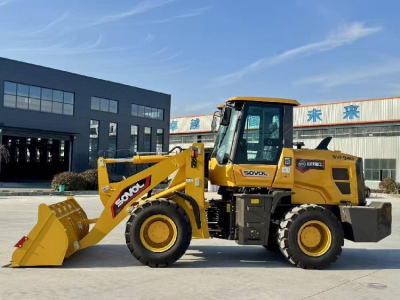
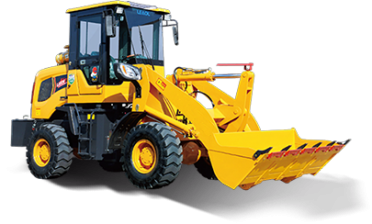
The starting point for any wheel loader procurement is determining the appropriate operating capacity and bucket size. Wheel loaders are categorized by bucket volume, ranging from compact units with 0.5–1.5 m³ buckets to mining-class machines exceeding 10 m³. Compact wheel loaders (0.5–1.5 m³) are primarily used in landscaping, urban construction, and agriculture. Medium wheel loaders (1.5–4.0 m³) serve general construction and material handling applications. Large wheel loaders (4.0–8.0 m³) are deployed in mining, quarrying, and heavy infrastructure projects, while mining-class units (8.0+ m³) handle large-scale mining operations.
Procurement specialists recommend calculating average material density and target cycle throughput before specifying a bucket size. An undersized wheel loader compromises productivity, while an oversized unit inflates fuel consumption and operating costs without corresponding operational benefit.
Wheel Loader Engine Power: Matching Performance to Application
Wheel loader engine power is a decisive specification that directly influences productivity, fuel efficiency, and operational capability. Engine output, measured in horsepower or kilowatts, must be carefully matched to the machine's operating weight and intended use case.
Compact wheel loaders typically deploy 40–80 HP engines, adequate for light-duty material handling and yard operations. Mid-range construction wheel loaders commonly feature 120–220 HP engines, delivering the torque necessary for aggressive stockpile work and efficient truck loading. Large mining-class wheel loaders may exceed 500 HP, providing the breakout force required for heavy rock and ore handling.
When evaluating wheel loader engine power, buyers should examine the torque curve rather than focusing solely on peak horsepower. Low-end torque is critical for bucket penetration and pushing applications. Additionally, emissions compliance — particularly Tier 4 Final and Stage V standards for North American and European markets — is non-negotiable. Modern common-rail diesel engines with variable geometry turbochargers deliver 10–15% better fuel economy compared to older mechanically injected alternatives.
Hydraulic Systems and Drivetrain: The Productivity Multipliers
The hydraulic system determines a wheel loader's loading speed and operational precision. Load-sensing hydraulic systems, which adjust flow and pressure dynamically based on demand, have become the industry standard for mid-to-large wheel loaders, delivering fuel savings of up to 15% over fixed-displacement systems.
Key hydraulic metrics include breakout force, lift capacity at full height, combined cycle time (raise, dump, lower), and auxiliary hydraulic flow for attachments such as forks, grapples, and sweepers.
In terms of drivetrain, compact wheel loaders predominantly use hydrostatic transmissions, offering infinite speed control and exceptional low-speed maneuverability in confined spaces. Medium and large wheel loaders typically employ powershift transmissions, engineered for heavy-duty cycles and high-speed travel between work zones. Four-wheel drive with limited-slip or locking differentials is essential for construction and mining environments, where traction on loose surfaces directly impacts cycle efficiency.
Operator Comfort, Safety, and Total Cost of Ownership
Modern wheel loader cabins feature ergonomic seating, low-noise interiors below 72 dB, climate control, and intuitive joystick controls. ROPS/FOPS certified structures, seatbelt interlocks, hydraulic lockout systems, and 360-degree visibility with rearview cameras are baseline safety expectations for any reputable manufacturer.
Beyond the purchase price, B2B buyers must evaluate total cost of ownership over a typical service life of 10,000–15,000 operating hours. Fuel consumption can represent 40–50% of total operating costs, followed by maintenance, tires, and operator wages. Selecting a wheel loader with readily available spare parts and a strong regional dealer network significantly reduces downtime and long-term maintenance expenses.
Manufacturing and Application: Behind the Machine
Quality wheel loaders are manufactured through a rigorous process. Structural components — front and rear frames, boom arms, and buckets — are fabricated from high-strength steel using robotic welding for consistent quality, then stress-relieved and shot-blasted before receiving multi-layer corrosion-resistant paint. The drivetrain assembly integrates the engine, transmission, axles, and wheels onto the rear frame, while the front frame receives the hydraulic system, boom, and bucket. The two frames are joined by an articulated steering pivot, which delivers the wheel loader's characteristic tight turning radius. Each unit undergoes comprehensive performance testing before shipment.
In a typical quarry or construction operation, the wheel loader executes a repeating cycle: approaching the material pile, penetrating with combined forward thrust and breakout force, lifting while reversing toward the haul truck, dumping into the truck bed, and returning for the next load. Cycle times of 25–35 seconds are standard for medium wheel loaders in well-managed operations, directly determining daily production volumes.
FAQ: Common Buyer Questions
**Q1: What size wheel loader do I need for my operation?**
A: Calculate your required bucket capacity based on average material density and target hourly throughput. For general construction and aggregate handling, a medium wheel loader with a 2.0–3.0 m³ bucket and 130–180 HP engine is typically sufficient. A compact wheel loader (0.8–1.5 m³) suits urban sites and agricultural feedlots, while large loaders (4.0 m³+) are designed for mining and high-volume quarry operations.
**Q2: How important is wheel loader engine power compared to hydraulic performance?**
A: Both are critical, but their relative importance depends on the application. Wheel loader engine power governs pushing ability and ramp-climbing performance, while hydraulic breakout force determines bucket penetration in compacted or dense materials. For stockpiling and rehandling, hydraulic speed and breakout force matter most; for digging virgin material or operating on steep grades, engine power takes priority. Always evaluate both specifications in tandem.
**Q3: Should I buy a new or used wheel loader?**
A: New wheel loaders offer the latest emissions technology, full manufacturer warranties, and predictable maintenance costs. Used wheel loaders can provide 30–50% savings but require thorough inspection of engine hours, hydraulic condition, tire wear, and structural integrity. For fleets operating 2,000+ hours annually, new equipment typically delivers lower total cost of ownership. For seasonal or occasional use, a well-maintained used wheel loader may be more economical.
**Q4: What attachments should I consider for my wheel loader?**
A: Common attachments include general-purpose buckets, rock buckets, pallet forks, grapple buckets, snow plows, and sweepers. If your operation handles diverse materials, a quick-coupler system enables rapid attachment changes without the operator leaving the cabin. Ensure the wheel loader's auxiliary hydraulic flow and pressure match the requirements of any attachments you plan to deploy.
Conclusion
Selecting the right wheel loader demands a systematic evaluation of operational requirements, site conditions, and financial parameters. By carefully assessing bucket capacity, wheel loader engine power, hydraulic performance, drivetrain configuration, and total cost of ownership, B2B buyers can make informed procurement decisions that maximize productivity and return on investment. Whether the requirement is a compact wheel loader for confined urban sites or a large mining-class unit for heavy-duty material handling, the principle remains the same: match machine specifications precisely to application needs, and partner with a manufacturer that delivers comprehensive global after-sales support.
技能
连接器