
Walk-Behind Weeder: Efficient Weed Control for Farms
Market Momentum: Labor Costs and Sustainability Drive Adoption
The accelerating adoption of walk-behind weeders is underpinned by three converging industry forces. First, rural labor shortages across Asia, Africa, and South America have made manual farmland weeding economically unsustainable, with hourly agricultural wages rising 15–25% in key producing regions over the past three years. Second, the global organic food market, expanding at over 8% annually, is generating strong demand for mechanical weed control alternatives to synthetic herbicides. Third, government farm-mechanization subsidies in countries including India, Nigeria, Brazil, and Vietnam are lowering the capital barrier for smallholder farmers investing in agricultural weeding equipment.
"Farmers are no longer choosing between expensive tractor-mounted systems and backbreaking manual labor," said [Name], Chief Technology Officer at [Company Name], a leading manufacturer of export-grade walk-behind weeders. "Our walk-behind weeder fills the critical middle ground—a reliable, efficient weed control machine priced within reach of small and medium operations while delivering productivity that replaces five to eight field workers."
Asia-Pacific currently represents the largest regional market, accounting for approximately 38% of global demand, followed by North America and Europe. Emerging economies are witnessing particularly rapid adoption, with import volumes of walk-behind weeders into Sub-Saharan Africa and Southeast Asia growing by an estimated 22% year-over-year.
Technology and Manufacturing: Engineering for Durability in the Field
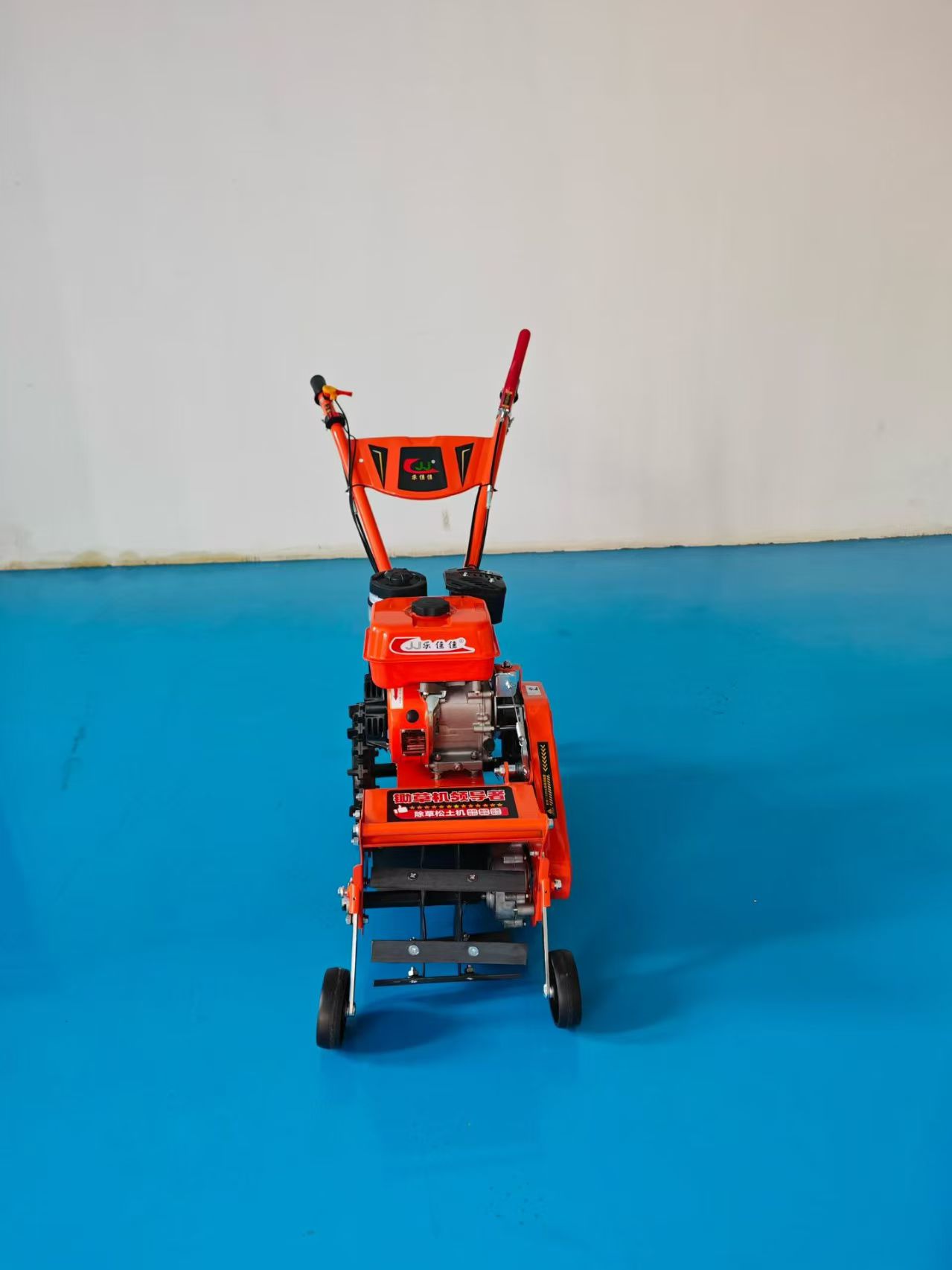
A modern walk-behind weeder integrates several precision-engineered components. The power unit typically features a 4–7 horsepower gasoline or diesel engine, selected for fuel efficiency and compliance with international emission standards including EU Stage V and EPA Tier 4. A gear- or belt-driven transmission transfers power to rotating weeding wheels and, on self-propelled models, to the drive wheels. The weeding assembly consists of hardened-steel tines arranged on adjustable shafts, enabling row-spacing customization from 20 to 80 centimeters to accommodate diverse crops.
Depth control is maintained through a gauge wheel or adjustable skid, keeping working depth consistent between 2 and 8 centimeters—deep enough to uproot established weeds yet shallow enough to preserve crop root systems. The handlebar assembly incorporates ergonomic throttle and clutch controls, reducing operator fatigue during extended farmland weeding operations.
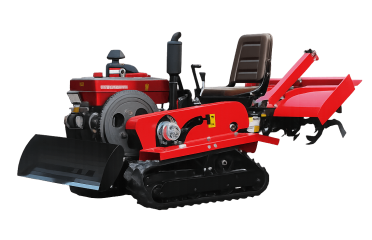
During manufacturing, frames are fabricated from heavy-gauge steel and treated with anti-corrosion powder coating. Weeding tines are forged and heat-treated for wear resistance, and every unit undergoes simulated field testing to verify performance as an efficient weed control machine before final packaging for export. Interchangeable attachments—including mini tillers, furrowers, and soil cultivators—further extend the machine's utility, converting a single-purpose weeder into a multi-function agricultural weeding equipment platform.
Applications: From Orchards to Smallholder Plots
The versatility of the walk-behind weeder underpins its broad market appeal. In orchards and vineyards, the compact chassis navigates between closely spaced trees and vines where larger equipment cannot operate, performing precise farmland weeding without risking bark or root damage. On vegetable and row-crop farms, adjustable row spacing makes the same unit suitable for densely planted leafy greens and widely spaced melons alike, while shallow cultivation also breaks soil crusts and improves water infiltration.
For smallholder operations in developing economies, the walk-behind weeder represents an entry point into mechanization. With typical export pricing ranging from USD 300 to 800—compared with USD 5,000–15,000 for tractor-mounted systems—the machine achieves a return on investment within one to two growing seasons. Many national agricultural extension programs now include walk-behind weeders in subsidized agricultural weeding equipment initiatives, accelerating grassroots adoption.
Frequently Asked Questions
**Q: What is the typical daily working capacity of a walk-behind weeder?**
A: A standard unit covers approximately 0.3 to 0.8 hectares per day, depending on soil conditions, weed density, and operator experience. Self-propelled models consistently achieve higher productivity than push-type units.
**Q: Can walk-behind weeders operate effectively in all soil types?**
A: Yes, these machines perform across sandy loam, clay, and silty soils with adjustable tilling depth and tine configurations. Extremely rocky or waterlogged conditions may reduce performance.
**Q: What certifications are required for importing walk-behind weeders?**
A: European markets require CE certification and EU Stage V emission compliance; North America requires EPA certification and ANSI safety compliance. Many African and Asian markets recognize ISO 9001 quality certification alongside local standards such as ISI (India) or SONCAP (Nigeria).
**Q: What warranty and after-sales support are standard for export models?**
A: Most export-grade units include a 12-month manufacturing-defect warranty. Established suppliers offer multilingual technical support, spare parts kits for common wear items, and—for high-volume orders—custom branding, extended warranty options, and distributor technician training.
Conclusion
The walk-behind weeder has become a strategic investment in agricultural productivity, sustainability, and cost efficiency. As labor costs rise and demand for chemical-free farming grows, this compact agricultural weeding equipment bridges manual labor and large-scale mechanization—delivering an efficient weed control machine accessible to farms of all sizes.
For B2B buyers, the value is clear: strong market demand, attractive pricing, fast end-user ROI, and low maintenance. With annual growth exceeding 6% and accelerating adoption across emerging economies, the walk-behind weeder represents a high-potential opportunity for importers and distributors worldwide.
Partnering with a reliable manufacturer is not just a timely decision—it is an investment in the future of sustainable global farming.