
How Riding Crawler Rotary Tiller Improves Soil Preparation
Introduction
Soil preparation is the foundation of every successful crop cycle, directly determining germination rates, root development, water retention, and yield. Yet for millions of small and medium-scale farmers across Asia, Africa, and Latin America, effective tillage remains constrained by labor scarcity and terrain limitations. Walk-behind tillers demand intense physical effort and suit only small fields; wheeled tractors lose traction in muddy or hilly terrain and cause soil compaction. This gap has driven fast-growing demand for a middle-ground solution: the Riding Crawler Rotary Tiller.
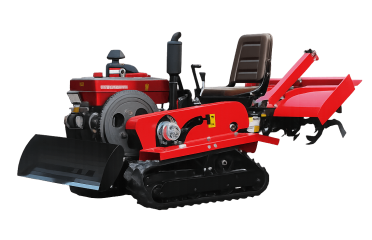
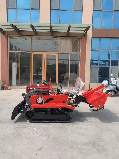
A Riding Crawler Rotary Tiller combines operator comfort with the superior traction of a crawler track system and the aggressive soil-working capability of a rear-mounted rotary tiller. For B2B buyers sourcing farm equipment for emerging markets, this is one of the fastest-growing segments in agricultural mechanization. This article examines how a Riding Crawler Rotary Tiller improves soil quality, reviews market data and trends, explains the underlying technology, and answers common buyer questions.
Industry Background
Global agriculture faces unprecedented pressure. Food production must rise by roughly 70% by 2050 to feed nearly 10 billion people, while arable land per capita declines and rural labor migrates to cities. In this context, soil preparation quality is a strategic priority. Poorly prepared soil causes uneven germination, restricted root growth, accelerated erosion, and planting interference. A farm tiller that consistently produces a fine, level, well-aerated seedbed while minimizing compaction is among the highest-return investments a farmer can make.
Mechanization has progressed unevenly. Large farms in North America and Europe use high-horsepower tractors, but across much of Asia and Africa the average farm is below two hectares, fields are fragmented or terraced, and soils range from heavy clay to waterlogged paddy. For these conditions, a compact, tracked, self-propelled Riding Crawler Rotary Tiller is often more practical and cost-effective than either a walk-behind unit or a large wheeled tractor.
Market Data and Growth Trends
The global rotary tiller market reached approximately USD 2.29 billion in 2025 and is projected to grow at a CAGR of roughly 6.5% through 2034, exceeding USD 4.0 billion. Within this market, crawler self-propelled rotary tillers — including the **Riding Crawler Rotary Tiller — are among the fastest-growing subsegments, driven by smallholder-dominated economies.
Asia-Pacific dominates, accounting for an estimated 48% of worldwide tiller revenues in 2025. India represents roughly 32.6% of regional revenues, backed by a government commitment of approximately USD 5.2 billion toward agricultural mechanization through 2030, including subsidy programs. China, the world's largest manufacturing hub, accounts for over 60% of global production capacity, and domestic crawler tractor sales grew approximately 12% year-over-year in 2024.
Southeast Asia — Indonesia, Vietnam, Thailand, and the Philippines — is another high-growth region, where rice cultivation and small wet fields create ideal conditions for a tracked farm tiller. The Middle East and Africa show earlier-stage but accelerating adoption, driven by food security initiatives and irrigation-linked farming. Compact tillers have been shown to improve soil preparation efficiency by approximately 21% in field evaluations.
Key trends include: a shift from wheeled tractors to crawler-type machines for challenging terrain; demand for multi-functional machines with interchangeable attachments; emerging electrification (electric tiller sales grew an estimated 18%); and digital integration such as GPS guidance and automatic depth control on premium models.
How a Riding Crawler Rotary Tiller Improves Soil Quality
The core value of a Riding Crawler Rotary Tiller is consistent, high-quality soil preparation across a wider range of conditions than competing formats.
Superior Traction and Reduced Slippage
The crawler track system distributes weight over a much larger contact area than wheels, resulting in ground pressure typically one-third to one-half that of a comparable wheeled tractor. In wet paddy fields, muddy clay, or on slopes, the machine maintains forward momentum without spinning, ensuring the tiller receives consistent power and depth. Reduced slippage translates to uniform tilling depth across the entire field — essential for an even seedbed.
Minimized Soil Compaction
Compacted soil has reduced pore space, limiting water infiltration, root growth, and microbial activity. The low ground pressure of a Riding Crawler Rotary Tiller minimizes compaction and preserves the soil's natural structure — critical in no-till and reduced-till systems. By reducing compaction, the machine indirectly helps improve soil quality over multiple growing seasons rather than degrading it.
Consistent Tilling Depth and Fine Seedbed
The rear-mounted rotary tiller uses a horizontal shaft with curved blades rotating at high speed, cutting, breaking, and mixing soil into a fine, crumbly tilth ideal for germination. Most models offer adjustable depth from 10 to 20 centimeters, allowing operators to match soil type and crop requirement. Stable tracked propulsion combined with a powered tiller shaft ensures consistent depth even on uneven ground, eliminating shallow patches and deep gouges.
Efficient Residue Management and Weed Control
The high-speed blades chop and mix crop residue — rice straw, wheat stubble, corn stalks — into the soil, accelerating decomposition and returning organic matter to the topsoil. This action also uproots and buries weeds, reducing early-season pressure and lowering herbicide needs. For organic farming operations and environmentally conscious markets, this dual function is a significant selling point.
Improved Water Management and Aeration
Well-tilled soil has improved porosity, enhancing water infiltration and drainage. In high-rainfall regions, tilled soil absorbs water efficiently, reducing runoff and erosion. In drier regions, the fine tilth creates a surface mulch that reduces evaporation and conserves moisture. The mixing action also introduces air, stimulating aerobic microbial activity that releases nutrients in plant-available forms. These effects collectively contribute to healthier, more productive soil.
Technology and Manufacturing Overview
A Riding Crawler Rotary Tiller consists of several key subsystems. The power unit is typically a water-cooled diesel engine of 15 to 35 horsepower, driving both the track system and the rear tiller shaft. The crawler chassis includes rubber or steel tracks, drive sprockets, idlers, and tensioners; rubber tracks are increasingly preferred for less surface damage and quieter operation. The operator station features a seat, steering controls, and instrument panel, with modern designs prioritizing ergonomics and vibration reduction. The rotary tiller assembly comprises a gearbox, horizontal rotor shaft, and L- or C-shaped blades in a helical pattern, with tilling width typically 80 to 150 centimeters and a rear leveling board for a ready-to-plant surface.
Manufacturing involves steel cutting and welding for the chassis, precision machining for gearboxes, engine integration, track assembly, and final testing including load checks and endurance runs. China's Shandong, Henan, and Jiangsu provinces host the majority of global Riding Crawler Rotary Tiller production, offering competitive pricing, scalable output, and improving quality control.
Application Scenarios
The versatility of a Riding Crawler Rotary Tiller suits many applications. In rice farming, it performs dry-field tillage and wet-field puddling for transplanting. In wheat and maize systems, it handles primary tillage and seedbed preparation in one pass. In vegetable and greenhouse production, compact models navigate narrow rows with fine tilth. In orchards and vineyards, tracked machines work between rows without compacting root zones. For land reclamation, the same machine clears vegetation and prepares soil. This multi-application capability strengthens the business case for dealers, as one product serves multiple customer segments.
Frequently Asked Questions (FAQ)
Q1: What is the difference between a Riding Crawler Rotary Tiller and a walk-behind power tiller?
A Riding Crawler Rotary Tiller is a self-propelled, operator-ridden machine with a tracked undercarriage and rear-mounted rotary tiller, typically 15 to 35 horsepower with 80 to 150 centimeter tilling width. A walk-behind power tiller requires the operator to walk behind, usually offers 5 to 13 horsepower, and suits smaller fields. The riding format reduces fatigue, covers more area per hour, handles challenging terrain, and delivers more consistent depth — but at a higher purchase price and with less maneuverability in extremely small plots.
Q2: What soil types and terrain are most suitable?
A Riding Crawler Rotary Tiller excels where wheeled equipment struggles: wet paddy fields, heavy clay, sloped or terraced land, and soft uneven surfaces. The low ground pressure prevents sinking and compaction. It also works well on loamy and sandy soils. It is less ideal for very large flat fields where a high-horsepower wheeled tractor is more efficient, or for plots under 0.2 hectares where a walk-behind unit is more economical.
Q3: What maintenance and after-sales support should B2B buyers expect?
Routine maintenance includes engine oil and filter changes every 100 to 200 hours, track tension inspection, blade sharpening or replacement, gearbox oil checks, air filter cleaning, and pivot lubrication. The most wear-prone parts are tiller blades, rubber tracks, and drive belts. Importers should source from manufacturers providing spare parts catalogs, English or local-language technical documentation, warranty coverage (commonly 12 months or 1,000 hours), and responsive technical support. A local spare parts inventory is strongly recommended.
Q4: What is the typical price range and return on investment?
Entry-level models from Chinese manufacturers typically range from USD 2,500 to USD 5,000 FOB; mid-range models of 20 to 30 horsepower range from USD 5,000 to USD 9,000; premium brands can exceed USD 12,000. For farmers, ROI depends on local labor costs, land area, and rental income. Where manual or animal-drawn tillage is common, a riding crawler tiller can reduce preparation time by 60 to 80% and generate rental income, with many farmers recovering investment within two to three seasons. For distributors, growing demand, attractive margins, and repeat spare parts revenue make this a strong portfolio addition.
Conclusion
The Riding Crawler Rotary Tiller represents a meaningful advance in soil preparation, addressing the dual challenges of labor scarcity and terrain limitation across emerging markets. By combining superior tracked traction, minimized compaction, consistent tilling depth, efficient residue management, and improved water and air management, these machines do more than till soil — they actively help improve soil quality over time. With the global rotary tiller market growing at over 6% annually, Asia-Pacific leading demand, and mechanization subsidies expanding across India, Southeast Asia, and Africa, the commercial opportunity for B2B buyers and distributors is substantial. The Riding Crawler Rotary Tiller offers a compelling balance of versatility, durability, and return on investment — and a product that contributes to more productive, sustainable agriculture worldwide.