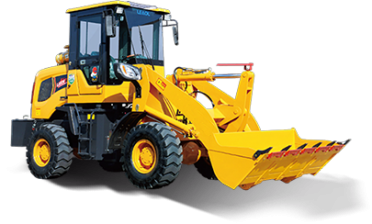

New Wheel Loader Models Deliver Superior Fuel Economy
Advanced Diesel Technology Leads Immediate Gains
Today's most fuel-efficient diesel wheel loader models employ high-pressure common rail (HPCR) fuel injection, variable geometry turbochargers (VGT), and electronically controlled combustion management that precisely meters fuel delivery across all load conditions.
Komatsu's WA480-8 wheel loader, powered by the SAA6D125E-7 engine, delivers up to 20 percent improved fuel consumption compared to its predecessor while meeting EPA Tier 4 Final standards. Caterpillar's 988 XE large wheel loader emits up to 37 percent less CO₂ than the previous 988K model, thanks to its high-efficiency powertrain and integrated emissions module.
Beyond the engine, load-sensing hydraulic systems and dual-pump confluence designs reduce parasitic energy loss. Chinese-manufactured 5-ton wheel loader models equipped with Euro 3 electronic-injection engines and dual-pump confluence hydraulics report an additional 8 to 12 percent reduction in fuel consumption. Volvo Construction Equipment's OptiShift technology — integrating a lock-up torque converter and reverse-by-braking function — further improves efficiency while shortening cycle times.
Electrification Delivers the Largest Savings
The most dramatic efficiency gains are coming from electrification. Series hybrid wheel loader powertrains have demonstrated fuel savings of up to 43.6 percent in simulation studies and approximately 50 percent in real-world customer testing. Fully electric wheel loader units offer an 85 percent energy efficiency rate — far higher than the 35 to 45 percent efficiency of hydrogen alternatives — and can reduce operating costs by 30 to 50 percent compared to diesel equivalents.
In China, electric wheel loader sales surpassed a 50 percent penetration rate in the domestic market by early 2026, with year-on-year growth exceeding 175 percent. Globally, sales of medium and large electric construction equipment — including loaders — rose 52 percent year-on-year in the first quarter of 2026, with penetration in developed markets exceeding 28 percent.
Advances in lithium-ion battery chemistry have increased specific energy by roughly 15 percent since 2023, enabling a typical 8-ton electric wheel loader to operate for a full 10-hour shift on a single charge. Fleet operators transitioning to electric units report an average 22 percent reduction in daily fuel expenses.
Manufacturing Excellence Behind the Performance
The production of a modern fuel efficient wheel loader involves precision manufacturing across multiple stages. High-strength steel structural components — including front and rear frames, lift arms, and buckets — are fabricated using robotic welding to ensure consistent quality and structural integrity. Powertrain assemblies integrating engine, transmission, axles, and hydraulic pumps undergo rigorous bench testing before installation.
A critical step unique to fuel efficient models is the calibration of engine control units (ECUs) with application-specific fuel maps optimized for typical loading cycles such as V-pattern truck loading, stockpiling, and hopper charging. Factory-installed telematics systems enable real-time fuel monitoring, idle-time tracking, and predictive maintenance alerts, helping operators sustain efficiency gains over the machine's lifecycle.
Market Outlook: Sustainability as Competitive Advantage
Industry experts identify four converging trends that will shape the wheel loader market through 2030: accelerating electrification beyond China into European and North American urban markets; the integration of semi-autonomous loading cycles that can reduce fuel waste by an additional 5 to 10 percent; a shift toward total cost of ownership (TCO) evaluation in procurement; and the growth of remanufacturing and extended service intervals — some new models now offer 1,000-hour oil change intervals, reducing fluid and filter consumption by up to 45 percent.
"For international B2B buyers, selecting a fuel efficient wheel loader is increasingly not just an environmental choice, but a sound financial investment that pays dividends over the entire lifecycle of the machine," the analyst added. "As the heavy machinery industry continues its transition toward sustainability, the question for buyers is no longer whether to adopt fuel-efficient technology, but how quickly they can integrate it to gain a competitive edge."
About the Industry
The wheel loader is a versatile piece of heavy machinery used across construction, mining, agriculture, and material handling for loading, transporting, and stockpiling bulk materials. The global market encompasses compact, medium, and large wheel loaders, with the Asia-Pacific region — led by China — accounting for approximately 34.9 percent of global demand. Major manufacturers include Caterpillar, Komatsu, Volvo Construction Equipment, John Deere, Hitachi Construction Machinery, and a growing roster of Chinese OEMs expanding their international footprint.
Frequently Asked Questions (FAQ)
Q1: How much can a fuel efficient wheel loader reduce my operating costs?
A: Modern diesel wheel loader units typically reduce fuel consumption by 10 to 20 percent compared to previous generations. Hybrid models can achieve 30 to 50 percent savings, while fully electric wheel loader units may reduce energy costs by 30 to 50 percent versus diesel. For a machine operating 2,000 hours per year, these savings can amount to USD 5,000–15,000 annually per unit.
Q2: Are fuel efficient wheel loaders suitable for heavy-duty mining and quarrying applications?
A: Yes. Leading manufacturers offer large wheel loader models — with bucket capacities ranging from 6 to 16 cubic yards — that incorporate fuel-efficient technologies while maintaining the durability and breakout force required for mining and quarry operations.
Q3: What is the typical payback period for upgrading to a fuel efficient wheel loader?
A: For diesel-powered fuel efficient wheel loaders, buyers typically see payback within 2 to 4 years through fuel savings alone. Electric models may have a higher upfront cost but often achieve payback in 3 to 5 years when accounting for lower maintenance and energy costs.
Q4: Do fuel efficient wheel loaders require special maintenance or fuel?
A: Most modern fuel-efficient diesel wheel loader models use ultra-low-sulfur diesel (ULSD) and diesel exhaust fluid (DEF), which is standard across the heavy machinery industry. Some manufacturers also approve hydrotreated vegetable oil (HVO) as a drop-in renewable fuel. Electric models require no engine oil, filters, or DEF, significantly simplifying maintenance.