
Why Riding Crawler Rotary Tillers Outperform Wheel Models
Industry Background and Market Context
The global agricultural machinery market continues its steady expansion, with tillage equipment representing a substantial segment. According to recent industry reports, the worldwide rotary tiller market is projected to grow at a compound annual growth rate of approximately 5–6% through 2030, driven by mechanization adoption in emerging economies and the replacement cycle of aging fleets in mature markets.
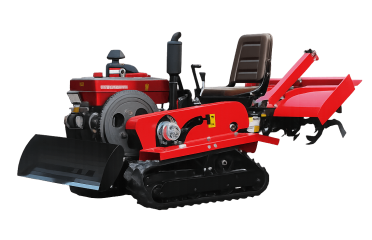
Within this growth trajectory, the Riding Crawler Rotary Tiller category is outpacing wheeled alternatives. The shift is most pronounced in regions with heavy clay soils, rice paddies, and high-rainfall zones — precisely the environments where wheeled machines struggle with traction and soil compaction.
Market Data: The Crawler Advantage in Numbers
Recent procurement data from major agricultural regions reveals a clear trend. In Southeast Asia, where rice cultivation dominates, crawler-type tillers now account for over 40% of new riding tiller sales, up from roughly 28% five years ago. Similar growth is observed in parts of Eastern Europe and South America, where large-scale farms are replacing wheeled fleets with crawler models to reduce operational downtime during wet seasons.
The economic logic is compelling. A wheeled tiller operating in saturated soil can lose up to 30% of its effective working hours annually due to slippage and getting stuck. By contrast, a Riding Crawler Rotary Tiller maintains traction in conditions that would immobilize a wheeled machine, translating directly into higher annual utilization rates and faster return on investment.
Technical Superiority: How Crawler Systems Work
Track Design and Ground Pressure Distribution
The fundamental advantage of a crawler system lies in its ground contact area. A typical wheeled tiller concentrates its weight on four relatively small tire footprints, resulting in ground pressure that can exceed 80 kPa in soft soil. A crawler undercarriage distributes the machine's weight across a broad, continuous track, reducing ground pressure to approximately 25–35 kPa. This lower pressure means the machine "floats" rather than sinks, preserving soil structure and avoiding deep rutting.
Powertrain and Transmission
Modern Riding Crawler Rotary Tiller units are equipped with hydrostatic transmissions or advanced gear-drive systems that deliver high torque at low speeds. This configuration is ideal for primary tillage, where consistent blade rotation under heavy load is critical. The tiller shaft — typically fitted with hardened steel blades arranged in a spiral pattern — pulverizes soil to a uniform depth of 15–25 cm, creating an optimal seedbed in a single pass.
Manufacturing Process Overview
The production of a crawler rotary tiller involves several precision stages. High-strength steel chassis components are cut and welded on automated lines, followed by robotic welding for critical load-bearing joints. The track undercarriage is assembled using forged idlers, rubber or steel track links, and sealed roller bearings designed for long service intervals. The rotary shaft is dynamically balanced to minimize vibration, and the entire unit undergoes load testing before paint and final assembly. Quality control at each stage ensures that the machine can withstand the punishing conditions of commercial farming.
Wet Field Adaptability: A Defining Advantage
Wet Field Adaptability is perhaps the single most compelling reason buyers choose crawler tillers. In rice-growing regions, fields are intentionally flooded before tillage to soften stubble and prepare the paddy. Wheeled machines quickly lose traction in these conditions, their tires spinning and digging trenches that require additional leveling work.
A Riding Crawler Rotary Tiller excels in this environment. The wide track footprint provides grip even on submerged, muddy surfaces, while the low ground pressure prevents the machine from bogging down. Operators can complete primary and secondary tillage in one pass, reducing the number of field entries and minimizing soil disturbance. This capability extends the working window for farmers, allowing tillage operations to proceed shortly after rainfall when wheeled machines would be parked.
Fuel Efficiency: Doing More with Less
Contrary to the assumption that heavier crawler machines consume more fuel, modern Riding Crawler Rotary Tiller models demonstrate impressive Fuel Efficiency. The key lies in reduced wheel slip. A wheeled tiller operating in loose or wet soil can experience slip rates of 20–30%, meaning a significant portion of engine power is wasted spinning tires rather than tilling soil. Crawler tracks, with their superior grip, typically operate at slip rates below 10%, converting more engine output into useful work.
Independent field tests have shown that crawler rotary tillers can achieve 15–25% lower fuel consumption per tilled hectare compared to wheeled equivalents in comparable conditions. Over a season of intensive use, this difference amounts to substantial cost savings — a factor that resonates strongly with B2B buyers managing large fleets and tight operating budgets.
Trend Analysis: What Lies Ahead
Several trends are accelerating the adoption of crawler rotary tillers:
Precision Agriculture Integration. Newer models are compatible with GPS guidance systems and variable-rate technology, allowing for automated steering and optimized tillage depth. This reduces operator fatigue and ensures consistent field coverage.
Emissions Regulation Compliance. As global emissions standards tighten, manufacturers are equipping crawler tillers with Tier 4 / Stage V compliant engines that deliver cleaner combustion without sacrificing power.
Rental and Leasing Growth. The expansion of equipment rental markets in developing regions makes higher-priced crawler tillers accessible to smaller operations that previously could only afford wheeled machines.
Sustainability Focus. Reduced soil compaction and lower fuel use align with the growing emphasis on sustainable farming practices, making crawler tillers an attractive choice for environmentally conscious buyers and certification programs.
Application Scenarios
A Riding Crawler Rotary Tiller finds its strongest applications in:
Rice and paddy cultivation, where flooded fields demand superior traction.
Heavy clay soils that become sticky and impassable after rain.
Hilly or sloped terrain, where low center of gravity and track grip enhance stability.
Large-scale commercial farms requiring high daily throughput and minimal downtime.
Land reclamation and soil renovation projects involving rough, uneven ground.
In each scenario, the combination of Wet Field Adaptability, low ground pressure, and strong Fuel Efficiency creates a compelling total cost of ownership proposition.
FAQ: Common Buyer Questions
Q1: How does the maintenance cost of a Riding Crawler Rotary Tiller compare to a wheeled model?
A: Crawler undercarriages do require periodic track tension adjustment and roller inspection, but modern sealed and lubricated track systems have significantly extended service intervals. Overall maintenance costs are comparable to or slightly lower than wheeled machines when accounting for reduced tire replacement frequency — tires on wheeled tillers operating in abrasive conditions often wear out in 1–2 seasons.
Q2: Can a crawler rotary tiller be used on hard, dry ground as effectively as a wheeled one?
A: Yes. While crawler machines excel in wet conditions, they perform equally well on dry ground. The track system provides stable traction, and the low ground pressure actually benefits soil structure by reducing compaction. Most commercial models offer adjustable tillage depth and blade configurations to suit various soil types.
Q3: What is the typical lifespan of a Riding Crawler Rotary Tiller under heavy commercial use?
A: With proper maintenance and genuine replacement parts, a well-built crawler rotary tiller can provide 8–12 years of reliable commercial service. Key factors include regular oil changes, track system inspections, and timely replacement of worn tiller blades. Many manufacturers offer extended warranty packages for fleet buyers.
Q4: How does Fuel Efficiency of crawler tillers hold up in large-scale operations?
A: In large-scale operations covering hundreds of hectares annually, the fuel savings compound significantly. Field studies consistently show 15–25% lower fuel use per hectare for crawler models in mixed conditions. For a fleet of 5–10 machines, this can translate to tens of thousands of dollars in annual fuel savings, making the higher initial purchase price recoverable within 2–3 seasons.
Conclusion
The evidence is clear: a Riding Crawler Rotary Tiller delivers measurable advantages over wheeled alternatives in traction, Wet Field Adaptability, and Fuel Efficiency. As global farming operations continue to scale and mechanize, the crawler configuration is no longer a niche choice but a strategic investment in productivity and cost control. For B2B buyers evaluating long-term value, the combination of lower operating costs, extended working windows, and durable construction makes crawler rotary tillers the forward-looking choice.