
Wheel Tractor Demand Rises Among Commercial Farmers
Wheel Tractor Demand Rises Among Commercial Farmers
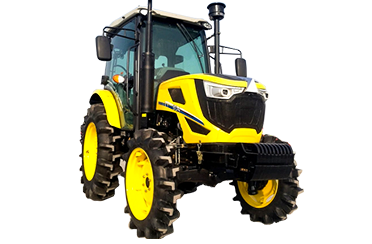
The global agricultural landscape is undergoing a profound transformation. As commercial farms expand in scale and scope, the demand for reliable, high-performance equipment has never been stronger. At the center of this shift is the wheel tractor — a versatile workhorse that continues to gain traction among commercial farmers worldwide. From large-scale row-crop operations in North America to emerging agribusinesses across Asia-Pacific and Sub-Saharan Africa, the wheel tractor has become an indispensable asset in modern farming operations.
According to recent industry analyses, the global wheel tractor market was valued at approximately USD 68.4 billion in 2025 and is projected to expand at a compound annual growth rate (CAGR) of roughly 4.9% through 2034, reaching over USD 105 billion. This sustained growth reflects a fundamental realignment in how commercial farmers approach mechanization, with the wheel tractor emerging as the preferred platform for a wide spectrum of agricultural tasks.
Market Overview: A Growing Agricultural Machinery Sector
The broader agricultural machinery sector is experiencing robust expansion, driven by rising global food demand, shrinking agricultural labor pools, and increasing farm consolidation. Within this sector, wheel tractors account for the dominant share of equipment sales, underscoring their central role in commercial agriculture.
Data from multiple market research firms indicates that tractors in the 40–100 horsepower (HP) band captured the largest revenue share in 2025, representing approximately 43–47% of the global market. This mid-range segment is particularly popular among commercial farmers because it strikes an optimal balance between power, fuel efficiency, and versatility — capable of handling plowing, seeding, spraying, and haulage tasks across medium to large operations. Meanwhile, the above-100 HP segment is expanding at an accelerated pace, with a projected CAGR exceeding 7% through 2031, as large-scale commercial farms seek higher-horsepower units to cover more acreage in less time.
Regional dynamics further illuminate the demand picture. Asia-Pacific leads in total volume, supported by government mechanization subsidies and the gradual consolidation of fragmented landholdings. North America and Europe dominate the high-horsepower and precision-technology segments, where commercial farmers prioritize automation, GPS guidance, and telematics integration. In Latin America and Africa, growing commercial farming sectors are driving rapid adoption of mid-range wheel tractors as the foundation for mechanized farming operations.
Key Drivers Behind Wheel Tractor Demand Growth
Mechanization of Farming Operations
The single most powerful driver of wheel tractor demand is the ongoing mechanization of farming operations worldwide. As rural labor costs rise and younger generations migrate to urban centers, commercial farmers are increasingly replacing manual and animal-powered practices with mechanized solutions. A wheel tractor serves as the universal power source, capable of driving an extensive array of implements — from plows and cultivators to seeders, sprayers, balers, and trailers. This multi-functionality means that a single wheel tractor can replace multiple specialized machines, delivering significant capital and operational efficiencies for commercial buyers.
Industry estimates suggest that mechanized farming adoption has risen by over 70% globally in recent years, with medium-sized farms leading the charge. For these operations, the wheel tractor is not merely a piece of equipment but a strategic investment that directly impacts yield, timeliness, and profitability.
Government Support and Subsidies
Government policies play a critical role in accelerating wheel tractor adoption. Many nations — particularly in Asia, Africa, and Eastern Europe — offer direct purchase subsidies, low-interest financing, and tax incentives for farmers investing in agricultural machinery. These programs are designed to modernize the agricultural sector, improve food security, and boost rural productivity. For commercial farmers, subsidies can reduce the upfront cost of a wheel tractor by 20–40%, making mechanization financially accessible to a broader range of operations.
In China, for example, the wheel tractor industry reached approximately RMB 90.7 billion in 2025, growing 10.3% year-over-year, with the 150–250 HP segment accounting for the largest share of sales. Government support for high-horsepower, intelligent tractor models has been a key catalyst for this growth.
Technological Advancements in Agricultural Machinery
Modern wheel tractors are far removed from the basic mechanical machines of previous decades. Today's commercial-grade units integrate advanced agricultural machinery technologies, including GPS-based auto-steering systems, ISOBUS-compatible implement control, telematics for remote monitoring and diagnostics, and precision farming software that optimizes input application. These technologies enable commercial farmers to achieve sub-inch accuracy in planting and spraying, reduce fuel and input waste, and collect detailed field data for continuous improvement.
Autonomous tractor development is also advancing rapidly, with over 1,500 pilot deployments reported worldwide, primarily in North America, Europe, and Australia. While fully autonomous commercial adoption remains in early stages, the trajectory signals a future where wheel tractors operate with minimal human intervention — a development that resonates strongly with commercial farmers facing labor shortages.
Product Spotlight: How Wheel Tractors Are Built and Applied
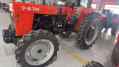
Understanding the manufacturing and application of a wheel tractor helps international buyers make informed procurement decisions. A typical commercial wheel tractor is built around a robust chassis frame that supports the engine, transmission, axles, hydraulic system, and operator cab. The engine — predominantly diesel-powered, accounting for roughly 90% of the market — delivers power through a multi-speed transmission to the rear wheels (2WD) or all four wheels (4WD). The hydraulic system provides lift and power to rear-mounted three-point hitch implements and front-end loaders, while the power take-off (PTO) shaft drives rotary equipment such as mowers, balers, and sprayer pumps.
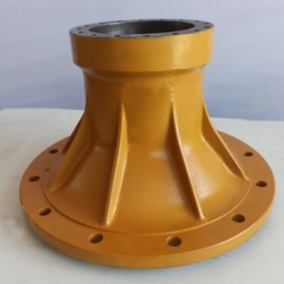
In manufacturing, quality wheel tractor producers follow rigorous processes: precision machining of transmission gears and axle components, automated welding of chassis frames, electronic engine calibration, and comprehensive dyno testing before shipment. Commercial buyers should prioritize manufacturers that offer CE certification, robust after-sales support, and a global parts distribution network.
In practical farming operations, a wheel tractor's application is nearly universal. During planting season, it pulls seed drills and planters with precision guidance. Throughout the growing season, it operates boom sprayers and cultivators for crop protection and weed management. At harvest, it hauls grain carts and trailers, and in the off-season, it handles land preparation, manure spreading, and general estate maintenance. This year-round utility is precisely why commercial farmers continue to invest in wheel tractors as the backbone of their equipment fleet.
Future Trends: What Commercial Farmers Should Expect
Looking ahead, several trends will shape the wheel tractor market. First, electrification is gaining momentum — while diesel remains dominant, hybrid and fully electric wheel tractor models are entering the market, driven by improving battery density and tightening emissions regulations. Second, connectivity and data integration will become standard features rather than premium options, as commercial farmers demand seamless integration with farm management software. Third, the shift toward higher-horsepower units will continue, especially in mature markets, as farms consolidate and operators seek to maximize productivity per labor hour.
For international B2B buyers, the key takeaway is clear: the wheel tractor market is expanding, evolving, and offering more capable, technologically advanced machines than ever before. Selecting the right partner — one that combines competitive pricing, proven quality, and reliable global support — is essential for long-term success in mechanized farming operations.
FAQ: Common Questions from International Buyers
Q1: What horsepower range is best for commercial farming operations?
For most medium to large commercial farms, the 40–100 HP range offers the best balance of versatility and cost-effectiveness, handling the majority of standard tasks. Operations exceeding 200 hectares or specializing in heavy tillage and large-scale hauling should consider 100+ HP models for improved productivity and cycle times.
Q2: Should I choose 2WD or 4WD for a wheel tractor?
Two-wheel drive (2WD) tractors are more affordable and dominate cost-sensitive markets, representing roughly 62% of global sales. Four-wheel drive (4WD) tractors provide superior traction, stability, and pulling power — particularly valuable in wet, hilly, or heavy-soil conditions. Commercial farmers operating in challenging terrain or pulling heavy implements should prioritize 4WD.
Q3: How do I evaluate the quality of a wheel tractor manufacturer?
Key indicators include CE and ISO certification, the use of branded engines and transmission components, automated manufacturing processes, in-house dyno testing, the availability of a global spare parts network, and the manufacturer's track record of after-sales support. Requesting factory audits, reference customer contacts, and detailed warranty terms is standard practice for serious B2B buyers.
Q4: What is the typical service life and maintenance schedule for a commercial wheel tractor?
A well-maintained commercial wheel tractor can provide 8,000–15,000 operating hours of reliable service. Routine maintenance includes oil and filter changes every 200–500 hours, hydraulic fluid replacement every 1,000–2,000 hours, regular inspection of clutch, brakes, and tire condition, and seasonal servicing of the cooling and electrical systems. Following the manufacturer's maintenance schedule is the most effective way to maximize uptime and protect your investment.
This article is intended for international B2B buyers and agricultural machinery professionals. For procurement inquiries, customized specifications, or partnership opportunities, please contact our export sales team.