
Robust Riding Crawler Rotary Tiller for Wet Farmland
Growing Demand for Robust Riding Crawler Rotary Tiller in Wet‑Land Agriculture
Global rice and wet‑land farming sectors face mounting pressure to raise productivity while coping with complicated soil conditions in 2026. Many low‑lying paddy zones and seasonal muddy farmland cannot support conventional wheel‑type farming machines, which frequently get stuck and cause soil compaction. As a result, the riding crawler rotary tiller has become highly sought‑after equipment among international agricultural importers, farm contractors and large‑scale plantation operators.
According to industry statistics, the global crawler rotary tiller market reaches USD 714.93 million in 2026, maintaining a compound annual growth rate of 6.22% in the forecast period, and paddy‑field applications account for more than one‑third of total market consumption. Buyers from Southeast Asia, South Asia, Latin‑American rice belts and parts of Africa actively source paddy field crawler rotary tiller for seasonal soil preparation work. In regions with prolonged rainy seasons, a reliable crawler rotary tiller for muddy field directly shortens tillage cycles and avoids yield losses caused by delayed sowing.
Traditional hand‑held tillers consume heavy labor and limit working efficiency on large plots. Wheeled tractors often sink in water‑logged soil. Against this background, robust riding crawler rotary tiller fills the market gap, delivering stable tillage performance even on saturated wet farmland. Government mechanization incentive policies in many emerging agricultural markets further push import volumes of this specialized farm machinery upward.
Core Technical Strengths of Robust Riding Crawler Rotary Tiller
Reinforced Crawler Chassis for Muddy and Saturated Soil
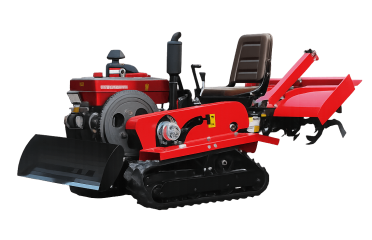
The most prominent advantage of robust riding crawler rotary tiller lies in its low‑ground‑pressure rubber crawler system. Compared with wheeled agricultural machines, the crawler design distributes machine weight across a larger contact area, greatly reducing sinking risks on water‑soaked mud. A qualified crawler rotary tiller for muddy field adopts thickened, anti‑aging rubber tracks with deep tread patterns, securing strong grip during forward, reverse and turning operations in wet farmlandAlibaba.co....
Heavy‑duty chassis frames are welded with high‑tensile steel plates to resist distortion under continuous vibration and mud corrosion. Sealed bearing and anti‑mud blocking structures prevent silt and water from entering transmission parts, lowering breakdown frequency during long‑time paddy‑field tasks. This structural robustness explains why paddy field crawler rotary tiller wins consistent praise from B2B buyers operating in high‑moisture farm zones.
High‑Torque Powertrain and Optimized Rotary Working Assembly
Modern riding crawler rotary tiller is equipped with water‑cooled diesel engines calibrated for heavy‑load muddy‑field operation. Stable low‑speed high‑torque output guarantees smooth rotation of rotary blades when cutting through sticky wet soil. Reinforced gearboxes transfer power steadily to the rotary tillage shaft, reducing gear wear under heavy tillage resistance.
Heat‑treated high‑strength rotary blades break clods and mix straw residue evenly within wet farmland. Operators can adjust tilling depth flexibly to satisfy different crop‑planting requirements. The riding‑type seating layout lessens operator fatigue during long working shifts, different from exhausting walk‑behind models. Multiple gear settings allow users to match travel speed with soil viscosity, improving overall field work quality.
Operator‑Oriented Safety and Multi‑Scene Compatibility
Most robust riding crawler rotary tiller units adopt roll‑over protective structures, meeting international agricultural machinery safety standards. Intuitive control levers simplify operation procedures for new‑start operators. Apart from wet paddy plots, the same machine can handle hilly orchards, low‑moisture dry farmland and vegetable plots by switching auxiliary attachments, such as furrow openers and ridging tools. This multi‑scene capability improves asset value for distributors and farm fleet owners who purchase crawler rotary tiller for muddy field and diverse farming assignments.
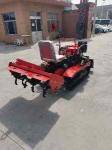
Manufacturing Process and Typical On‑Site Application Workflow
During manufacturing of riding crawler rotary tiller, manufacturers follow strict quality‑control flows. Robust steel chassis components go through robotic welding and stress‑relief treatment. Factories complete powertrain assembly, crawler system installation, rotary‑blade assembly and hydraulic circuit debugging step‑by‑step. Every finished machine passes simulated muddy‑load running‑in testing before shipment. Suppliers can adjust engine configurations to satisfy regional emission requirements for export destinations.
In practical wet‑farmland workflows, operators drive the paddy field crawler rotary tiller across water‑filled or mud‑covered plots. The rotary assembly churns, loosens and levels soil in one pass, preparing ideal seedbeds for rice or aquatic crop plantation. After harvesting seasons, this crawler rotary tiller for muddy field can also mix crop straw residues back into wet farmland to improve soil fertility. For custom‑hire agricultural service teams, robust riding crawler rotary tiller can serve multiple nearby farm households within short planting windows, bringing steady operating income.
Key Industry Trends Influencing Global Sourcing of Riding Crawler Rotary Tiller
Three major trends are reshaping B2B purchasing decisions for wet‑land tillage machinery in 2026. First, buyers attach greater importance to anti‑corrosion and anti‑mud‑blocking performance. Machines working constantly in silt‑rich wet farmland face accelerated component aging; hence robust structural design becomes a core selection indicator instead of only horsepower parameters.
Second, spare‑part availability and local after‑sales support weigh more heavily in purchasing evaluation. Importers sourcing paddy field crawler rotary tiller pay close attention to whether suppliers can supply quick‑wearing parts such as rotary blades and crawler belts in a timely manner. Vendors with complete global spare‑part systems obtain stronger competitive edges.
Third, multi‑function requirements keep rising. Global customers prefer one riding crawler rotary tiller compatible with various attachments for tilling, ditching, ridging and weeding. Integrated multi‑purpose equipment helps farms control total procurement expenditure.
FAQ — Frequently Asked Questions from International B2B Buyers
Q1: What soil conditions are suitable for robust riding crawler rotary tiller?
A: This machine performs best in muddy paddy land, water‑logged plots and high‑humidity seasonal wet farmland. It also adapts to hilly orchards and ordinary dry farmland. For extremely deep swamp zones, buyers should confirm ground‑bearing conditions before operation.
Q2: What core wearing parts need regular replacement for crawler rotary tiller for muddy field?
A: Rotary tillage blades, rubber crawler tracks, sealing gaskets and filter elements need periodic inspection and replacement. It is recommended for bulk‑order buyers to order a set of consumable spare parts together with the paddy field crawler rotary tiller for emergency field maintenance.
Q3: What certifications should I check when importing riding crawler rotary tiller?
A: Prioritize ISO quality certificates, safety protective‑structure certificates and engine emission documents matching target‑market regulations. European markets require relevant CE certification; other regions shall follow local agricultural machinery import standards.
Q4: Can one riding crawler rotary tiller handle both wet paddy fields and dry farmland?
A: Yes. The robust riding crawler rotary tiller supports dual‑usage for paddy and dry‑land operations. Adjust tilling depth and travel speed according to soil hardness, and regularly clean mud residues after finishing wet‑field work to extend machine service life.
Conclusion
Robust riding crawler rotary tiller has established itself as irreplaceable specialized machinery for wet‑land and paddy‑oriented agricultural production. Driven by global demand for paddy‑field mechanization, market demand for high‑quality crawler rotary tiller for muddy field will keep expanding in coming years. When selecting paddy field crawler rotary tiller, international B2B buyers should comprehensively evaluate structural robustness, power matching, certification compliance and after‑sales support. A properly‑specified riding crawler rotary tiller will cut down field failure rates, boost tillage efficiency and create solid economic returns for farmers, contractors and agricultural distributors worldwide.