
Walk‑behind Weeder: Boost Farmland Weeding Efficiency With Light‑Duty Agricultural Machinery
2026/08/17 08:20
1. Global Industry Background & Market Data of Walk-Behind Weeders
The global agricultural machinery industry is undergoing a structural upgrade, shifting from large-scale full mechanization to segmented and refined supporting equipment. Large intelligent weeding robots are suitable for ultra-large commercial farms, while most smallholder farms, suburban planting bases, and hilly farmland urgently need lightweight, easy-to-operate, and low-consumption farmland weeding equipment. Against this industry background, the market demand for walk-behind weeders has continued to expand stably.
According to global agricultural machinery market monitoring data, the global walk-behind cultivators and small weeding equipment market reached USD 1.93 billion in 2025, and is expected to grow at a CAGR of 6.0% from 2026 to 2033, exceeding USD 2.5 billion by 2033. As a core subdivision product of light-duty agricultural machinery, the walk-behind weeder occupies more than 45% of the small farmland weeding equipment market share, with outstanding market vitality.
From a regional demand perspective, emerging agricultural markets such as Asia-Pacific, Africa, and South America are the main consumption regions of walk-behind weeders, benefiting from a large number of fragmented farmland and small-scale planting scenarios. European and American markets mainly purchase high-end upgraded walk-behind weeder models, focusing on environmental protection, low noise, and multi-functional integration. The overall market presents a situation of steady growth in demand and continuous product iteration, bringing stable order opportunities for global B2B agricultural machinery suppliers and distributors.
2. Core Development Trends of Walk-Behind Weeder Industry
Driven by market demand and agricultural mechanization policies, the walk-behind weeder industry, as an important part of light-duty agricultural machinery, has formed three major development trends, guiding product upgrading and market procurement direction.
2.1 Lightweight & Humanized Design Becomes Standard
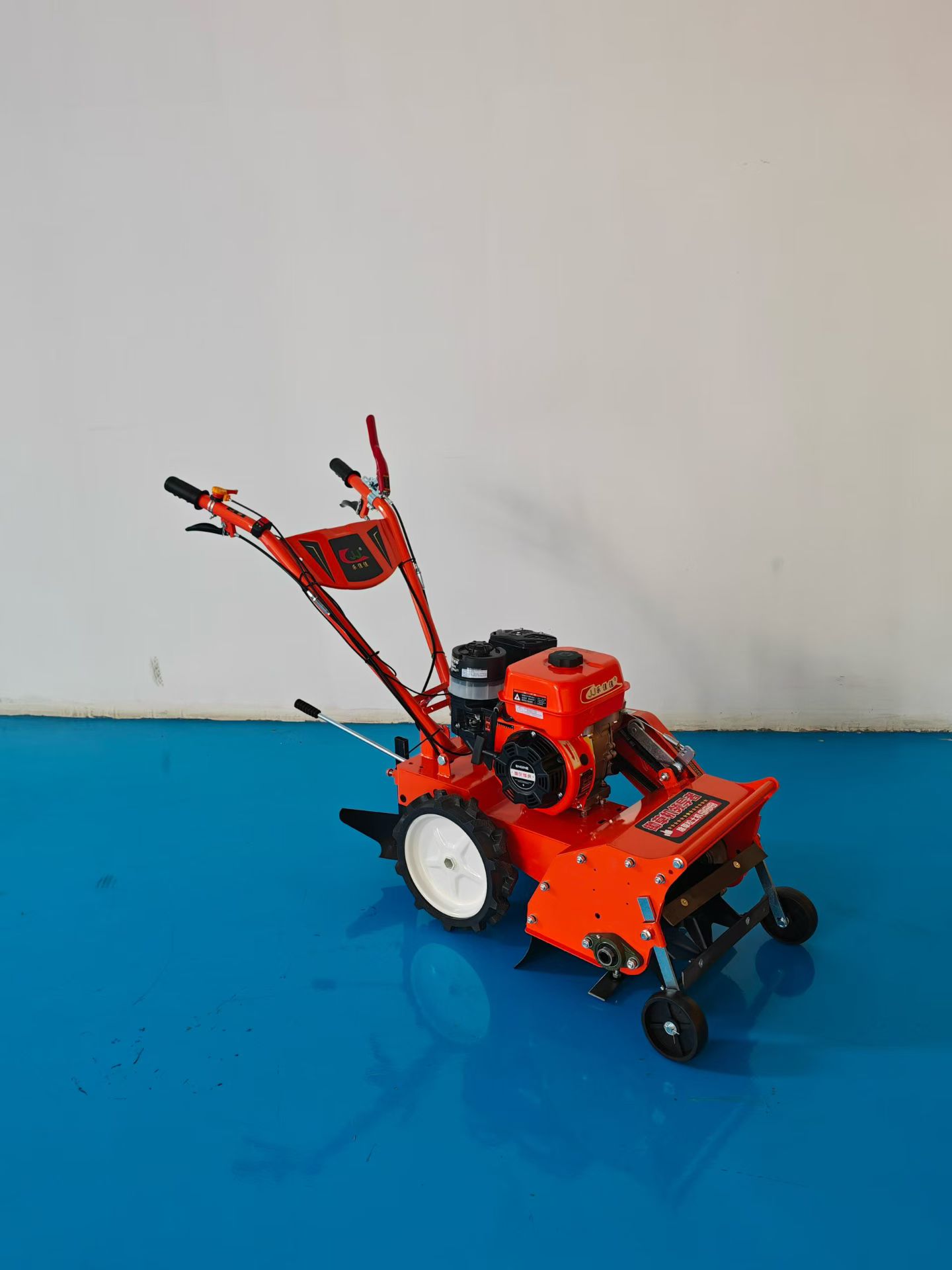
Traditional weeding equipment is bulky and difficult to operate, limiting the promotion efficiency of farmland weeding. Modern walk-behind weeders adopt optimized lightweight structural design, using high-strength lightweight alloy materials on the premise of ensuring structural stability. The equipment is easy to push and control, reducing the physical burden of operators. The adjustable handrail design adapts to operators of different heights, greatly improving the comfort and continuity of farmland weeding operations.
2.2 Multi-Functional Integration Improves Operational Value
Single-functional weeding equipment can no longer meet the diversified planting needs of small farms. New walk-behind weeders on the market realize multi-functional integration, which can complete farmland weeding, soil loosening, shallow tillage, and inter-row soil cultivation by replacing different working accessories. One machine with multiple functions effectively reduces the overall procurement cost of light-duty agricultural machinery for farmers and improves the comprehensive utilization rate of equipment.
2.3 Energy-Saving & Eco-Friendly Upgrading Accelerates
Global green agriculture policies have put forward higher requirements for agricultural machinery emissions and energy consumption. New generation walk-behind weeders are upgraded with low-emission fuel engines and efficient pure electric drive systems, which effectively reduce fuel consumption and carbon emissions. Compared with traditional chemical weeding, mechanical farmland weeding by walk-behind weeders avoids herbicide residue, protects soil ecological environment, and conforms to the sustainable development trend of modern agriculture.
3. Product Manufacturing, Technical Advantages & Application Scenarios
As a mature light-duty agricultural machinery, the walk-behind weeder has standardized manufacturing processes and stable core performance, which can efficiently meet the daily farmland weeding needs of various small and medium-sized planting scenarios.
3.1 Professional Product Manufacturing Process
High-quality walk-behind weeders adopt standardized industrial manufacturing procedures. The main body is made of thickened wear-resistant steel plate, which is integrally stamped and welded to ensure firm structure and strong impact resistance. The weeding blade is made of high-hardness alloy steel, after high-temperature quenching and anti-rust treatment, with strong wear resistance and long service life. The power system adopts brand new energy-saving power devices, with stable power output and low failure rate. All equipment undergoes strict factory debugging and field operation tests to ensure stable performance in complex farmland environments such as sandy land, dry land, and hilly land.
3.2 Core Technical Advantages for Farmland Weeding
Compared with manual weeding and large weeding equipment, the walk-behind weeder has unique technical advantages in farmland weeding. First, it achieves precise inter-row weeding, with adjustable weeding depth and working width, which can accurately remove weeds without damaging crop roots and seedlings. Second, the operation flexibility is strong, and it can freely shuttle in narrow crop rows and small-area fragmented farmland, solving the problem that large machinery cannot operate. Third, the operation efficiency is significantly improved: a single walk-behind weeder can complete 3-5 acres of farmland weeding per day, which is 5-8 times the efficiency of manual weeding, greatly saving labor time and cost.
3.3 Wide Application Scenarios
The walk-behind weeder is suitable for almost all small and medium-sized farmland planting scenarios. It is widely used for inter-row farmland weeding of grain crops such as corn, wheat, rice, and soybeans, as well as cash crops such as vegetables, fruits, tobacco, and flowers. In addition, it can also be used for weeding and soil maintenance in orchard intervals, greenhouse farmland, and suburban nursery bases, covering the diversified needs of household planting, small farms, and agricultural planting bases.
4. FAQ: Common Procurement Questions for B2B Buyers
Q1: What are the core advantages of walk-behind weeders compared with other farmland weeding equipment?
As a typical light-duty agricultural machinery, the walk-behind weeder balances cost, efficiency and applicability perfectly. Compared with manual weeding, it greatly improves farmland weeding efficiency and saves labor costs; compared with large intelligent weeding equipment, it has low procurement cost, simple maintenance, and no site restrictions. It is the most cost-effective weeding solution for small-area, fragmented, and hilly farmland scenarios.
Q2: Is the walk-behind weeder suitable for novice operators and large-scale promotion?
Yes. The walk-behind weeder adopts an integrated simple operation design, with flexible steering and easy start-up. Novice operators can master the operation skills in a short time without professional training. The equipment has low failure rate and simple daily maintenance, which is very suitable for large-scale promotion and batch procurement by agricultural machinery distributors.
Q3: What is the service life and maintenance cost of a standard walk-behind weeder?
High-quality industrial-grade walk-behind weeders have a service life of 5-7 years under normal operating conditions. The daily maintenance only includes regular cleaning of blades, lubrication of transmission parts, and regular replacement of wearing parts. The overall maintenance cost is extremely low, and the long-term use cost performance is far higher than traditional manual weeding and disposable chemical weeding methods.
Q4: How to select the right walk-behind weeder model for different farmland scenarios?
For ordinary dry land and grain crop farmland, standard fuel-powered walk-behind weeders with high power and wide working width are recommended; for greenhouses, nurseries, and suburban ecological farmland, low-noise pure electric walk-behind weeders are more suitable; for hilly and uneven farmland, lightweight upgraded models with anti-slip tires and adjustable balance are preferred to ensure stable farmland weeding operation.
5. Conclusion
With the continuous development of global refined agriculture and the continuous shortage of agricultural labor, light-duty agricultural machinery represented by walk-behind weeders will maintain stable market growth. The walk-behind weeder relies on its advantages of high efficiency, low cost, flexible operation, and environmental protection, becoming an essential core equipment for global small and medium-sized farmland weeding. For international B2B agricultural machinery distributors and farm operators, selecting high-quality walk-behind weeder products can effectively improve farmland weeding efficiency, reduce comprehensive planting costs, and gain stable market competitive advantages in the increasingly competitive modern agricultural market