
Wheel Loader Demand Surges Amid Infrastructure Boom
Wheel Loader Demand Surgerastructure Booms Amid Infrastructure Boom
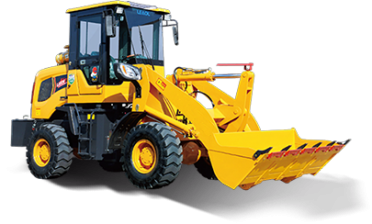
A worldwide wave of infrastructure investment is reshaping the heavy equipment landscape, and few machines are benefiting as directly as the **wheel loader**. From road rehabilitation in North America to mega-port projects in Southeast Asia and mining expansions in the Middle East, the wheel loader has become the workhorse of choice for moving aggregates, stockpiling bulk materials and feeding production lines. For international B2B buyers, understanding the market forces behind this surge is essential to sourcing the right equipment at the right time.
Industry Background: A Global Infrastructure Buildout
Governments and private developers are committing record capital to infrastructure modernization. In the United States, the Bipartisan Infrastructure Law channels more than USD 1.2 trillion into roads, bridges, ports, broadband and clean-energy networks. The European Union continues to disburse Recovery and Resilience Facility funds toward transport and digital infrastructure, while Gulf states are pushing ahead with vision-driven urban and logistics projects. Across Asia-Pacific, urbanization and industrialization remain the underlying engines of construction activity.
This buildout translates directly into demand for **construction equipment**. Earthmoving and material-handling machines account for the largest share of equipment deployment, and loaders alone represent roughly 24% of the global heavy equipment fleet in operation. Because a **wheel loader** is versatile enough to serve on a highway project one week and a quarry the next, it is often the first machine contractors add when project pipelines expand.
Market Data: Quantifying the Wheel Loader Surge
Recent industry estimates place the global **wheel loader** market at approximately USD 19.6 billion in 2025, with projections pointing to steady expansion through the early 2030s at compound annual growth rates ranging from 4.5% to 7.3%, depending on the segmentation and forecast horizon. The broader **construction equipment** market is valued at roughly USD 172–193 billion in 2025 and is expected to approach USD 280–310 billion by 2031–2034, reflecting a CAGR of about 6.6–6.8%.
Within that larger picture, infrastructure is the fastest-growing application segment, forecast to expand at roughly 9% annually. More than 58% of **heavy machinery** demand is now tied to infrastructure and public works, a share that has climbed steadily as governments prioritize shovel-ready projects.
Regional Demand Dynamics
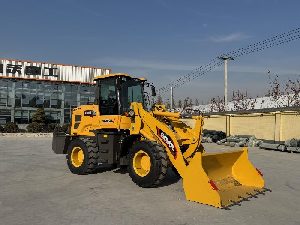
Asia-Pacific dominates the market, accounting for approximately 42–45% of global **construction equipment** sales. China alone holds about 22.5% of the **wheel loader** market, supported by a mature domestic manufacturing base and growing export volumes to Africa, Latin America and Southeast Asia. India, Indonesia and Vietnam are among the fastest-growing demand centers, driven by urban transit, airport expansion and industrial park development.
North America is experiencing a strong replacement cycle combined with federally funded project activity. European demand is shaped by stricter emissions rules and a push toward low-carbon job sites, which is accelerating fleet renewal. In the Middle East and Africa, mining, oil-and-gas infrastructure and large-scale real estate developments continue to underpin orders for medium and large **wheel loader** models.
Trend Analysis: What Is Driving Buyer Behavior
Three trends are defining how buyers evaluate and purchase **heavy machinery** in 2026: total cost of ownership, emission compliance, and digital readiness.
Buyers increasingly prioritize fuel efficiency, uptime and resale value over sticker price alone. A **wheel loader** that consumes less fuel per ton moved, requires fewer service interventions and retains strong residual value will outperform a cheaper alternative over a five-year ownership cycle. OEMs that can document these metrics — through telematics reports and certified fuel-consumption tests — gain a clear advantage in tender processes.
Electrification and Low-Emission Powertrains
Emission regulations such as EU Stage V and US EPA Tier 4 Final have become baseline requirements in mature markets, and many emerging economies are adopting equivalent standards. In response, manufacturers are rolling out high-efficiency diesel engines with high-pressure common-rail injection, turbocharging and exhaust aftertreatment, alongside hybrid and fully electric **wheel loader** platforms.
Battery-electric compact and mid-size loaders are now commercially viable for indoor material handling, recycling facilities and urban job sites where noise and exhaust emissions are constrained. At the larger end of the spectrum, hybrid drive systems — such as the ultra-class hybrid **wheel loader** introduced by LiuGong — are demonstrating measurable fuel savings in mining and quarry applications. For B2B buyers, the key question is no longer whether electric options exist, but whether the duty cycle, charging infrastructure and total cost economics support a switch.
Autonomy, Telematics and Connectivity
Autonomous operation is moving from pilot projects to routine deployment in controlled environments such as mines, mixing plants and tunnels. Manufacturers are combining 3D LiDAR, thermal imaging, AI-based path planning and 5G connectivity to enable loaders to complete digging, hauling and dumping cycles without an operator in the cab. Volvo CE's autonomous electric loader for tunnel construction and Case CE's modular RoofX autonomy concept illustrate the direction of travel.
Even for buyers who are not ready for full autonomy, telematics has become standard. Remote monitoring of engine hours, fuel burn, fault codes and maintenance intervals helps fleet managers reduce downtime and plan servicing. The global wheeled autonomous loader segment alone is projected to grow from roughly USD 2.0 billion in 2025 toward USD 2.8 billion by 2028, signaling that intelligent **construction equipment** is becoming a mainstream procurement category.
Technology and Manufacturing: How a Modern Wheel Loader Is Built
A modern **wheel loader** is the product of integrated design across powertrain, hydraulics and structural engineering. The chassis is typically fabricated from high-strength steel, with reinforced articulation joints and loader arms engineered for repeated impact loads. The powertrain pairs a diesel, hybrid or electric drive with a torque converter or hydrostatic transmission, while a load-sensing hydraulic system delivers precise bucket control and breakout force.
During assembly, key components — engine, transmission, axles, hydraulic pumps and the operator cabin — are mounted on a dedicated line, followed by rigorous testing of brake systems, hydraulic pressure, steering geometry and emission compliance. Many OEMs now pre-install telematics control units at the factory so that each machine is connected from delivery. For export buyers, this factory-level integration matters because it reduces field modification risk and ensures warranty coverage.
Applications: Where Wheel Loaders Deliver the Most Value
The versatility of the **wheel loader** explains its broad adoption. In construction, it handles aggregate stockpiling, backfilling and truck loading. In mining and quarrying, large and ultra-class models feed primary crushers and haul trucks. In agriculture and forestry, loaders move grain, wood chips and biomass. In waste and recycling, specialized buckets and grapples sort and transport materials.
For buyers specifying a machine, the critical parameters remain bucket capacity, operating weight, engine power, breakout force and dump height — but the evaluation now also includes emission certification, telematics capability and the availability of aftermarket support in the destination country.
Frequently Asked Questions
**Q1: What size wheel loader do I need for a typical infrastructure project?**
For general road and building construction, a mid-size **wheel loader** with a 2.5–4.0 m³ bucket and 120–180 kW engine is usually sufficient. Mining and large quarry operations typically require large or ultra-class machines above 300 kW. The right size depends on haul-truck match, material density and site space.
**Q2: Are electric wheel loaders ready for heavy-duty use?**
Battery-electric loaders are well suited to indoor, urban and short-cycle applications where charging is available. For heavy, long-cycle outdoor work, hybrid or high-efficiency diesel models remain the more common choice, though battery technology and charging infrastructure are improving rapidly.
**Q3: How do I verify fuel efficiency and total cost of ownership?**
Request certified fuel-consumption test data, telematics sample reports from reference fleets, and a detailed five-year cost estimate covering maintenance, parts and expected residual value. Reputable OEMs should be able to provide all three.
**Q4: What should I check before importing a wheel loader?**
Confirm emission certification for your market, voltage and connector standards for electric models, availability of local service technicians and spare-parts stock, and any customs or registration requirements specific to **heavy machinery** in your country.
Conclusion
The infrastructure boom is not a temporary spike; it is a multi-year investment cycle that will sustain demand for **wheel loaders** and related **construction equipment** through the next decade. For international B2B buyers, the opportunity lies in partnering with manufacturers that combine competitive pricing, proven product quality, emission compliance and digital readiness. As electrification and autonomy reshape the **heavy machinery** landscape, sourcing decisions made today will determine fleet efficiency and competitiveness for years to come.