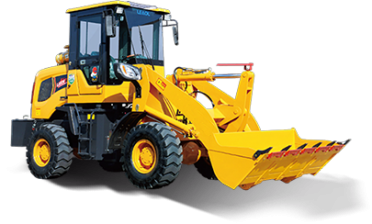
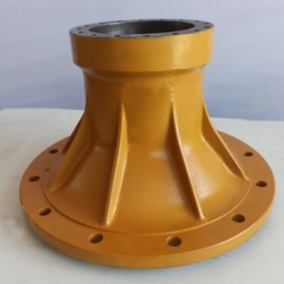

Efficient Wheel Loader for Construction Projects
2026/09/03 09:31
1. Global Construction Machinery Market Drives Sustained Demand for Efficient Wheel Loaders
The global construction industry has maintained steady growth in 2026, driven by large-scale infrastructure renovation, urban new construction, road and water conservancy engineering projects worldwide. According to professional industry data, the global construction equipment market maintains a stable compound growth rate, among which the market demand for wheel loader, as the most versatile auxiliary construction equipment, has shown a continuous upward trend.
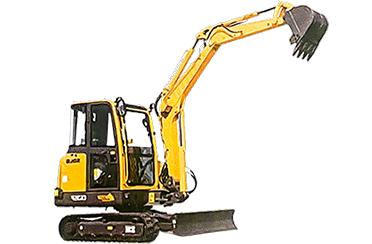
In the actual procurement process of global engineering enterprises, most buyers will form a matching purchase plan for loaders and excavators. When screening excavator for sale products and comparing comprehensive excavator price systems, professional buyers will prioritize supporting high-efficiency wheel loaders to form a complete construction machinery combination. On all kinds of construction sites, excavators are mainly responsible for earth excavation and foundation trenching, while wheel loaders undertake core tasks such as material stacking, aggregate handling, construction waste cleaning and truck loading, which directly determine the overall operation efficiency of the project.
Emerging markets in Southeast Asia, Africa, Latin America and other regions have launched a large number of infrastructure investment plans, greatly stimulating the import demand for medium and high-efficiency wheel loaders. At the same time, European and North American markets have continuously upgraded environmental protection and energy-saving standards, eliminating traditional high-energy-consumption and low-efficiency machinery. Efficient, low-emission and intelligent wheel loaders have become the mainstream procurement choice for developed market projects, further expanding the global market scale of high-quality wheel loader equipment.
2. Core Technical Advantages of Modern Efficient Wheel Loader for Construction Projects
2.1 Optimized Power and Hydraulic System to Improve Construction Efficiency
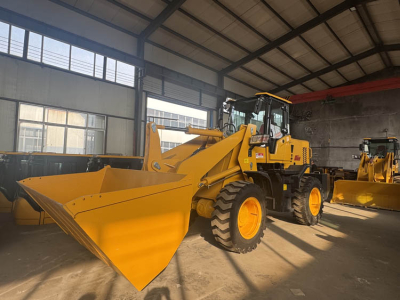
The new generation of efficient wheel loader for construction projects is equipped with an upgraded turbocharged energy-saving engine and optimized positive flow hydraulic system, realizing perfect matching of power output and hydraulic response. Different from traditional loaders with high energy consumption and low utilization rate, this equipment accurately adjusts power output according to construction load, effectively reducing invalid fuel consumption.
The optimized Z-shaped link working device greatly improves the bucket filling rate and breakout force. In repeated loading and handling operations, the single working cycle time is significantly shortened, and the daily material handling capacity is increased by 15%-20% compared with traditional models. For long-term continuous construction projects, the efficient wheel loader can effectively reduce unit operating costs and create higher economic benefits for construction enterprises.
2.2 Multi-scenario Adaptability Meets Diversified Construction Needs
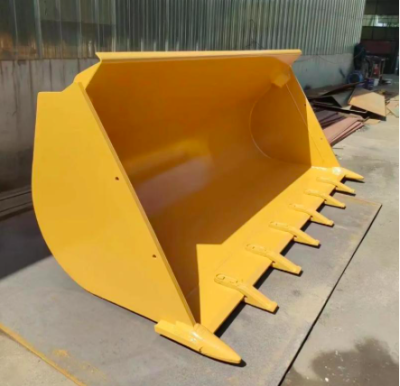
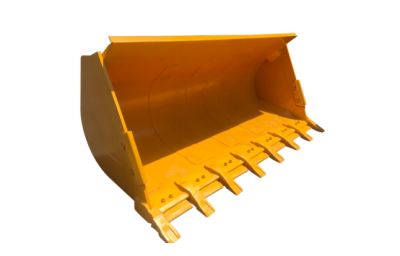
Construction sites often have complex working conditions such as uneven ground, muddy roads and mixed gravel terrain. The efficient wheel loader is equipped with reinforced heavy-duty chassis and high-grip wear-resistant tires, with strong off-road performance and stable driving performance, which can adapt to various harsh construction environments. In addition, the equipment supports diversified accessory replacement, including standard buckets, pallet forks, material grapples and other accessories, realizing multi-machine and multi-purpose functions.
Whether it is urban building construction, road renovation, rural infrastructure construction or quarry auxiliary operation, the wheel loader can complete efficient operations. Its strong scene compatibility makes it an essential supporting equipment for construction fleets, and also an important reason why it is widely matched with excavator equipment in global engineering procurement.
2.3 Safety and Intelligent Upgrade to Adapt to Modern Construction Standards
In response to the modern construction safety management system, the efficient wheel loader adopts ROPS/FOPS certified fully enclosed cab, which can effectively protect the safety of operators and meet international construction safety standards. At the same time, the built-in intelligent monitoring system can realize real-time monitoring of equipment fuel consumption, operating hours, fault code and other data, helping fleet managers realize predictive maintenance and avoid construction downtime caused by equipment failure.
3. Manufacturing Standards and On-site Construction Application Process
All efficient wheel loaders used for construction projects are manufactured in strict accordance with ISO international quality system standards and CE certification specifications. The core production links include high-strength steel frame welding, precision powertrain assembly, standardized hydraulic pipeline layout and full-machine load debugging. Each piece of equipment will undergo 200 hours of continuous simulated load operation before leaving the factory to ensure stable performance in long-term construction scenarios.
In actual construction applications, the wheel loader forms an efficient collaborative operation mode with excavators. First, the excavator completes earthwork excavation and raw material accumulation; then the efficient wheel loader transports sand, gravel, soil and other materials to the designated area, or loads materials for engineering transport vehicles. In the later stage of the project, the wheel loader can also complete site cleaning, backfill leveling and other finishing work, running through the whole cycle of construction projects.
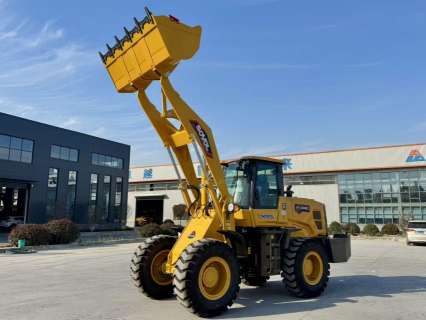
4. 2026 Global Wheel Loader Industry Development Trends
First, energy conservation and environmental protection have become rigid procurement indicators. With the continuous improvement of global emission standards, low-carbon, fuel-efficient and low-noise wheel loaders have gradually replaced traditional high-pollution equipment, and new energy hybrid models are also gradually popularized in urban construction projects.
Second, full-life cycle cost replacement of single purchase price. Global B2B buyers are no longer simply comparing excavator price or the quotation of single wheel loader equipment. They pay more attention to equipment durability, spare parts availability, after-sales service guarantee and long-term operating cost, and tend to choose high-efficiency equipment with higher cost performance in the whole life cycle.
Third, intelligent fleet management becomes a new demand. More engineering enterprises begin to pay attention to the intelligent management function of construction machinery, and realize unified scheduling and remote monitoring of wheel loader, excavator and other equipment through digital systems to improve the overall management efficiency of construction projects.
5. FAQ – Professional Q&A for Global Construction Machinery Buyers
Q1: Why is it necessary to equip a wheel loader when purchasing excavators for construction projects?
A: Excavators focus on excavation and trenching operations, while wheel loaders are responsible for loading, handling and site finishing. The two types of equipment have complementary functions. Even if buyers carefully check excavator price and select high-quality excavator for sale products, lacking supporting wheel loaders will lead to low on-site operation efficiency and increased labor costs. Matching use can maximize the construction efficiency of the whole fleet.
Q2: What tonnage of efficient wheel loader is most suitable for general construction projects?
A: For small and medium-sized urban construction, residential building and road maintenance projects, 3-5 ton medium-sized wheel loaders are the most cost-effective; for large-scale infrastructure, quarry and earthwork projects, 6-10 ton heavy-duty efficient wheel loaders are recommended to meet high-intensity material handling needs.
Q3: Do wheel loaders and excavators share the same maintenance system?
A: Part of the engine maintenance items are universal, but the core systems are different. Wheel loaders focus on hydraulic lifting system and drive axle maintenance, while excavators focus on rotary hydraulic system and bucket device maintenance. It is recommended to implement professional maintenance according to the official manual to extend equipment service life.
Q4: What certifications do export wheel loaders need for global construction projects?
A: mainstream international markets require CE certification, ISO quality certification and ROPS/FOPS safety certification. European regions need to meet Stage V emission standards, and the North American market needs EPA Tier 4 certification. All our efficient wheel loaders support customized certification configuration to meet different national import requirements.
6. Conclusion
As a core efficient equipment for modern construction projects, the wheel loader plays an irreplaceable role in improving project efficiency and reducing construction costs. Driven by global infrastructure investment, the market demand for high-efficiency, energy-saving and intelligent wheel loaders will continue to grow in the next few years. For global B2B buyers, while paying attention toexcavator price and excavator for sale resources, scientific selection of matched efficient wheel loaders is an important part of optimizing construction fleet configuration and improving project profitability.