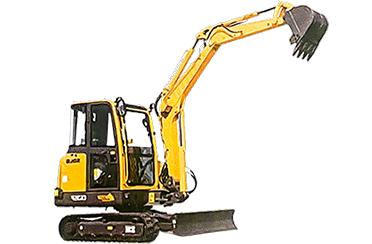

Mini Excavators: Sale, Best Price & Local Lease Cost
2026/09/04 13:37
1. Global Mini Excavator Industry Background & 2026 Market Data
The global mini excavator industry has maintained steady and rapid growth in recent years, driven by booming small-scale construction projects, urban renewal programs, rural infrastructure upgrading, and green construction policies. According to professional industry market research data, the global mini excavator market size reached USD 7.99 billion in 2025, and is projected to grow at a CAGR of 6.08% from 2026 to 2035, eventually reaching nearly USD 15.82 billion, almost doubling the current market scale . As the core segment of compact construction equipment, mini excavators account for 46.7% of the global compact equipment market share, ranking first in market demand and shipment volume .
From the regional market perspective, North America, Europe, and Asia-Pacific are the three core consumption markets. In 2025, the North American mini excavator market scale reached USD 1.76 billion, the European market hit USD 1.44 billion, and the Latin American, Middle Eastern and African markets maintained continuous growth with the expansion of local infrastructure construction . In terms of export volume, China’s mini excavator exports achieved a year-on-year increase of 52.33% in January-February 2026, and the full-year export volume is expected to exceed 110,000 units, providing sufficient high-quality and cost-effective equipment supply for global B2B buyers .
In the secondary market, both new and used mini excavator transactions remain active. From June 2025 to May 2026, the global sales volume of new mini excavators stabilized at 32,500 units, while the used equipment trading volume maintained a high level, meeting the differentiated procurement needs of buyers for high-end new machines and cost-effective second-hand equipment . For local enterprise buyers, searching for mini excavators for sale in my area can effectively shorten procurement cycles, reduce equipment transportation costs, and realize rapid equipment deployment for projects.
2. 2026 Core Market Trends of Mini Excavators
2.1 Electrification & Intelligent Upgrading Become Mainstream
Energy conservation, emission reduction and intelligent construction have become the core development trends of the global construction machinery industry. The penetration rate of electric mini excavators reached 15% in 2026, and it is predicted that electric models will occupy 40% of the global mini excavator rental market share within the year . Compared with traditional fuel mini excavators, electric mini excavators have the advantages of zero emission, low noise, low operating cost and simple maintenance, which are very suitable for urban indoor construction, residential area renovation and environmentally restricted construction scenarios.
In addition, intelligent configuration has become an important standard for measuring the best mini excavator for price. High-quality new generation mini excavators are equipped with AI-assisted digging, precision grade control, intelligent fault diagnosis and remote monitoring systems, which greatly improve construction accuracy and operation efficiency, and reduce manual operation errors and project loss costs .
2.2 Diversified Application Scenarios Drive Market Demand Growth
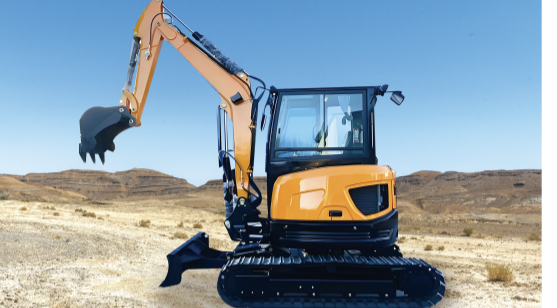
Traditional large excavators are limited by site space and are difficult to adapt to small and medium-sized construction scenarios, while mini excavators with flexible operation, small turning radius and strong adaptability are widely used in landscaping, municipal pipeline renovation, farmland reconstruction, house foundation excavation, road maintenance and other fields. With the global focus on fine urban construction and rural infrastructure upgrading, the market demand for mini excavators below 4 tons is exploding, and this tonnage segment has become the most popular choice for local leasing and bulk procurement .
2.3 Balanced Demand for Sales & Leasing Procurement
Affected by capital turnover and project cycle factors, global B2B buyers form two mainstream procurement modes: direct purchase and local leasing. For long-term, multi-project continuous operation enterprises, purchasing mini excavators in bulk can reduce long-term equipment use costs; for short-term projects, temporary construction and start-up enterprises, calculating reasonable mini excavator lease cost and choosing local leasing can effectively avoid equipment idle loss and high one-time investment risks, which has become a flexible procurement strategy widely adopted by the industry in 2026.
3. Mini Excavator Core Technology & Manufacturing Process Advantages
Modern high-quality mini excavators adopt integrated hydraulic transmission system and optimized body structure design, which solves the problems of low power, unstable operation and easy damage of traditional small excavators. In the manufacturing process, mainstream manufacturers adopt integrated casting technology for key components such as chassis, boom and hydraulic cylinder, and conduct strict fatigue testing and load testing to ensure the durability and stability of equipment in long-term high-intensity operation.
In terms of performance configuration, mainstream mini excavators on the market are divided into two categories: below 4 tons and above 4 tons. The 4-ton and below mini excavators are lightweight and flexible, suitable for narrow working spaces; the 4-ton and above models have stronger digging force and load capacity, meeting the needs of medium-scale earthwork projects . At the same time, most models support multi-functional accessory replacement, including breaking hammers, augers, grabbing buckets, etc., realizing multi-machine integration and greatly improving the comprehensive utilization rate of equipment, which is an important reference index for buyers to screen the best mini excavator for price.
In terms of after-sales guarantee, regular manufacturers support global parts supply and local after-sales maintenance services. Buyers who find mini excavators for sale in my area can enjoy faster after-sales response, more convenient parts replacement and lower later maintenance costs, which effectively guarantees the continuous and stable operation of construction projects.
4. Mini Excavator Sale Price & Local Lease Cost Analysis
4.1 New & Used Mini Excavator Sale Price Range
The sale price of mini excavators is mainly affected by tonnage, power type (fuel/electric), configuration and brand. At present, the price of new 1-3 ton mini excavators in the global market is moderate, with high cost performance, and is the mainstream model for local bulk sales. Electric mini excavators are slightly higher in initial purchase price, but have lower fuel and maintenance costs in the later stage, which is more suitable for long-term investment. Used mini excavators with complete procedures and good operation conditions have a more competitive price, which is favored by small and medium-sized contractors with limited budget.
When screening the best mini excavator for price, buyers should not only focus on the initial purchase price, but also comprehensively evaluate the equipment’s power performance, energy consumption, service life, after-sales service and residual value retention rate, so as to select the equipment with the highest comprehensive cost performance rather than the lowest single price.
4.2 Local Mini Excavator Lease Cost Influencing Factors
Mini excavator lease cost varies greatly in different regions, mainly affected by equipment tonnage, leasing cycle, local market supply and demand, and whether it is equipped with operators. Short-term daily leasing and weekly leasing have higher unit prices, while long-term monthly and annual leasing can enjoy obvious preferential policies. Electric mini excavators have lower daily operating costs, so their leasing prices are slightly higher than fuel models, but the overall project comprehensive cost is lower.
In addition, choosing local leasing merchants can save equipment transportation fees and cross-region adjustment costs, which is the core reason why more buyers tend to search for local leasing resources to control project costs. For enterprise buyers, calculating the break-even point of purchase and leasing according to the project cycle is the key to optimizing equipment procurement costs.
5. FAQ: Common Questions for B2B Mini Excavator Buyers
Q1: How to find reliable mini excavators for sale in my area?
Buyers can screen reliable supply channels through official manufacturer local dealers, authorized distributors and formal construction equipment trading platforms. It is recommended to prioritize local suppliers with complete qualification certificates, physical exhibition venues and perfect after-sales services, which can realize on-site machine inspection, trial operation and rapid delivery, while avoiding the risk of false equipment information and reducing later maintenance costs.
Q2: How to confirm the best mini excavator for price for project needs?
First, select the appropriate tonnage and power type according to the project scenario; second, compare the configuration differences of different brands, focusing on hydraulic system, intelligent configuration and accessory compatibility; finally, comprehensively calculate the total cost of equipment including purchase cost, energy consumption cost, maintenance cost and residual value. For short-term projects, cost-effective entry-level models are preferred; for long-term continuous operation, high-configured durable models are more worthy of investment.
Q3: What is the average mini excavator lease cost for long-term rental?
The long-term lease cost of mini excavators is mainly determined by the equipment specification. The monthly lease cost of 1-3 ton fuel mini excavators is relatively low, while the price of electric and large-tonnage models is slightly higher. Long-term annual leasing can reduce the unit leasing cost by 20%-30% compared with short-term leasing. In addition, local market supply and demand, seasonal construction peak and whether with operator service will also cause small fluctuations in leasing prices.
Q4: Are electric mini excavators worth buying or leasing in 2026?
Absolutely. With the global upgrading of green construction standards, electric mini excavators have become the industry trend. Although the one-time purchase cost is slightly higher, they have zero fuel cost, low failure rate and low noise, which can effectively reduce project operation costs and meet environmental protection construction standards. For leasing, electric mini excavators have higher market demand and lower idle rate, which is suitable for both equipment leasing enterprises and construction contractors with environmental protection project requirements.
6. Conclusion
With the continuous expansion of the global compact construction market and the continuous upgrading of equipment intelligence and electrification, mini excavators will maintain stable market growth in the next few years. For global B2B buyers, accurate screening of mini excavators for sale in my area, rational selection of the best mini excavator for price equipment, and scientific budgeting of mini excavator lease cost are crucial to improving project profitability and equipment utilization efficiency.
Whether it is bulk procurement for long-term project operation or temporary leasing for short-term construction, grasping 2026 market trends, comparing multi-dimensional cost performance, and selecting formal and reliable local supply channels can help enterprises realize refined equipment procurement management and gain competitive advantages in the increasingly fierce construction market.