
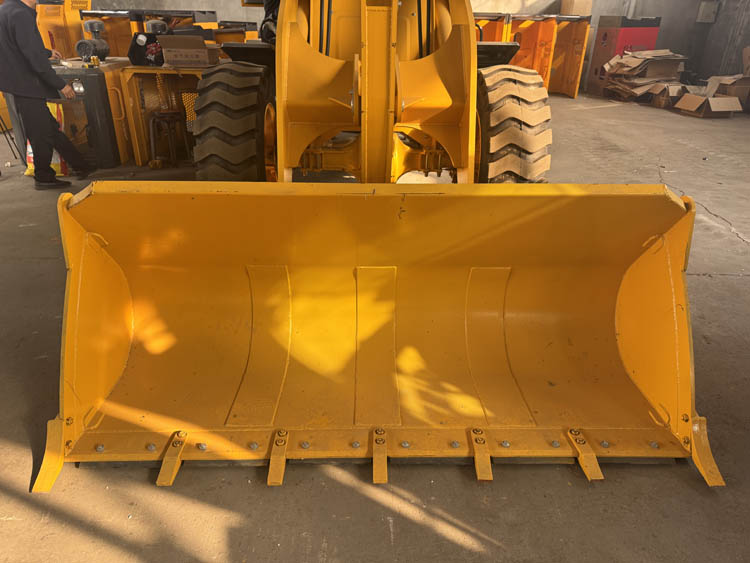
Wheel Loader
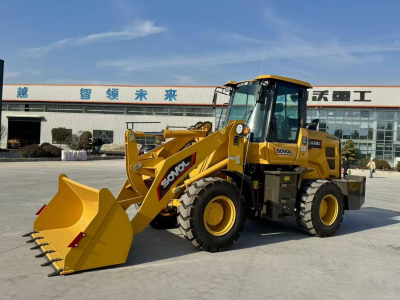
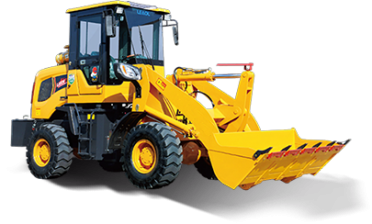
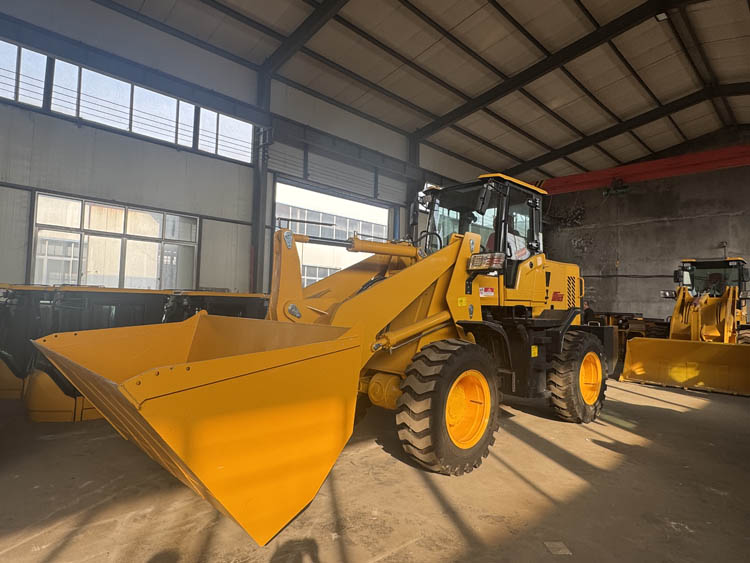
1. This heavy‑duty Wheel Loader delivers strong digging and lifting force to handle bulk materials in quarry, construction site and farm efficiently.
2. Equipped with a high‑torque diesel engine, the Wheel Loader maintains stable power output even under continuous heavy‑loading working conditions.
3. Optimized four‑wheel‑drive design provides outstanding grip performance, allowing the machine to travel smoothly on muddy, gravel and uneven ground.
4. Quick‑coupler attachment system enables fast switching between standard bucket, pallet fork and snow plow to realize multi‑purpose operation.
5. Reinforced thick‑steel frame and heavy‑duty axle effectively reduce wear and tear, extending the overall service life of the Wheel Loader.
6. Human‑oriented enclosed cab with good shock absorption lowers operator fatigue, while convenient daily maintenance helps cut long‑term running costs.
Product Details
Product Overview
Our wheel loader is a versatile, high-efficiency heavy-duty construction machine widely used in construction, mining, municipal engineering, agricultural production and material handling industries. As a core piece of engineering equipment, the wheel loader integrates shoveling, loading, lifting, transporting and stacking functions, solving most bulk material handling problems for industrial and agricultural users. For buyers looking for reliable, cost-effective construction machinery, our Wheel Loader For Sale series provides standardized, customizable and fully verified equipment solutions, suitable for individual contractors, engineering teams, farms, and large mining enterprises. Different from traditional rigid loaders, this modern wheel loader adopts optimized articulated body design, combining powerful working performance with flexible driving performance, greatly improving operation efficiency and site adaptability.
In particular, the Wheel Loader For Farm model is specially upgraded for complex agricultural working scenarios. Traditional large engineering loaders are bulky, high in fuel consumption and inflexible, which cannot adapt to narrow farm roads, greenhouses, farmyards and farmland operation environments. Our agricultural optimized wheel loader adjusts the body proportion, steering radius and operating sensitivity, perfectly matching farm material transportation, land leveling, fertilizer stacking, grain loading and farm renovation work. Whether it is large-scale industrial operation or fine agricultural daily operation, our wheel loader can maintain stable and efficient working status, becoming a multi-functional essential machine for multiple industries.
Superior Power & Hydraulic Performance
All of our wheel loader devices are equipped with high-torque professional diesel engines, featuring strong power reserve, stable output and low failure rate. The power system is precisely calibrated according to actual working conditions, which can instantly respond to operating instructions and provide continuous strong power for heavy-load shoveling and bulk material handling. Even in long-term continuous operation and harsh working environments such as high temperature and heavy dust, the wheel loader will not suffer from power attenuation or engine stall, ensuring stable and uninterrupted construction progress. Compared with ordinary loaders on the market, this equipment optimizes fuel combustion structure, effectively reducing comprehensive fuel consumption and helping users save long-term operating costs.
The core hydraulic system of the wheel loader adopts integrated high-precision hydraulic components, with sensitive response, smooth lifting and descending actions, and no jamming or delay. The overall hydraulic pipeline is reasonably arranged with excellent pressure resistance and sealing performance, which avoids oil leakage and pipeline aging failure during long-term high-intensity operation. The optimized hydraulic transmission efficiency greatly improves the working efficiency of loading and unloading. Whether it is heavy stone and sand loading for engineering projects or light and frequent material handling for the Wheel Loader For Farm, the hydraulic system can always maintain accurate and stable operation, meeting different load operation requirements of various scenarios.
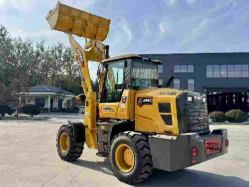
Stable Structure & Strong Site Adaptability
The body frame of the wheel loader is welded with thickened high-strength steel plates, with overall reinforcement and anti-impact structural design. The whole machine has strong torsion resistance, compression resistance and impact resistance, which can effectively resist vibration and impact generated by frequent operation and harsh road conditions. The reinforced drive axle and durable walking mechanism further enhance the load-bearing capacity and anti-wear performance of the equipment, greatly extending the service life of the whole machine. The four-wheel drive configuration is standard for all models, with upgraded deep-groove anti-slip tires, which has super grip performance. The wheel loader can drive stably on muddy roads, gravel roads, uneven construction sites and soft farmland, effectively avoiding slipping and sinking.
Thanks to the optimized articulated steering structure, the wheel loader has a small turning radius and flexible movement. It can freely shuttle in narrow construction sites, rural lanes, greenhouse groups and compact farmyards, solving the problem that large loaders are difficult to operate in limited spaces. This excellent flexibility makes the Wheel Loader For Farm extremely suitable for fine agricultural operations, and also enables the equipment to adapt to complex and changeable construction working conditions, realizing one machine for multiple scenarios and greatly improving the utilization rate of the equipment.
Multi-functional Application & Diversified Working Scenarios
Our wheel loader supports a complete set of quick-change attachment systems, which can freely switch various working accessories according to user needs. It can be equipped with standard large-capacity buckets for bulk material shoveling and loading, pallet forks for warehouse and farm cargo handling, push snow blades for winter snow removal, bulldozing plates for land leveling, and grasping devices for wood and straw handling. The multi-functional design breaks the single working mode of traditional loaders, allowing one wheel loader to complete multiple types of work, greatly reducing user equipment investment costs.
In engineering construction, the wheel loader is widely used for road foundation filling and excavation, construction waste cleaning, sand and stone material loading and yard stacking. In mining and quarry scenarios, it undertakes heavy-duty material transportation and site sorting work with its strong load-bearing capacity. As a professional agricultural equipment, the Wheel Loader For Farm is mainly used for farmland soil improvement, organic fertilizer transportation and stacking, grain loading and unloading, farm road maintenance, livestock farm cleaning and greenhouse waste cleaning, covering all daily operation links of modern farms. With powerful comprehensive performance, our Wheel Loader For Sale has become the preferred equipment for construction, agriculture, municipal administration and logistics industries.
Humanized Operation & Low Maintenance Cost
The wheel loader adopts a humanized integrated operating system with simple and intuitive control handles and buttons. The operation logic is clear and easy to learn, without complex professional skills requirements. New operators can quickly master the operation essentials after simple training, effectively reducing user training time and labor cost. The spacious cab is equipped with a wide-angle transparent window, which provides a super-wide field of vision for the operator, effectively avoiding visual blind areas and operational risks, and improving overall operation safety. At the same time, the optimized shock absorption and noise reduction design reduces equipment vibration and working noise, greatly improving driving comfort and reducing long-term operation fatigue.
In terms of daily maintenance, the wheel loader adopts modular and open structural design. Key maintenance parts such as engine oil ports, hydraulic oil ports and filter elements are exposed in intuitive positions, which is convenient for daily inspection, oil replacement, dust removal and fault troubleshooting. The high-quality supporting parts have low failure rate and strong durability, avoiding frequent parts replacement and repeated maintenance. The simple and efficient maintenance mode greatly saves users' later maintenance time and economic cost. The whole machine has strong weather resistance and can work stably in high temperature, low temperature, humid and dusty environments, with strong environmental adaptability and long service life.
Product Advantages & Purchase Value
Our wheel loader balances power performance, flexibility, energy saving and durability, with comprehensive performance far exceeding ordinary similar equipment on the market. It not only has the heavy-load capacity of industrial loaders, but also has the flexible and energy-saving advantages of small agricultural loaders, realizing dual-purpose of engineering and agriculture. For agricultural users, the Wheel Loader For Farm effectively solves the problems of low efficiency and high labor cost of manual farm work; for engineering users, it improves construction efficiency and reduces equipment investment and operating costs.
All Wheel Loader For Sale products have passed strict quality testing and certification, with reliable quality and stable performance. We support customized configuration, flexible model selection and comprehensive after-sales service, providing global customers with high-cost-performance wheel loader equipment and one-stop mechanical solution. Whether for small-scale daily operation or large-scale long-term engineering projects, our wheel loaders can create stable and lasting economic benefits for users, which is your trustworthy choice of construction and agricultural machinery.
Leave your messages