
2.5 Ton Excavator
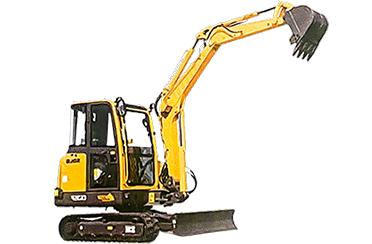
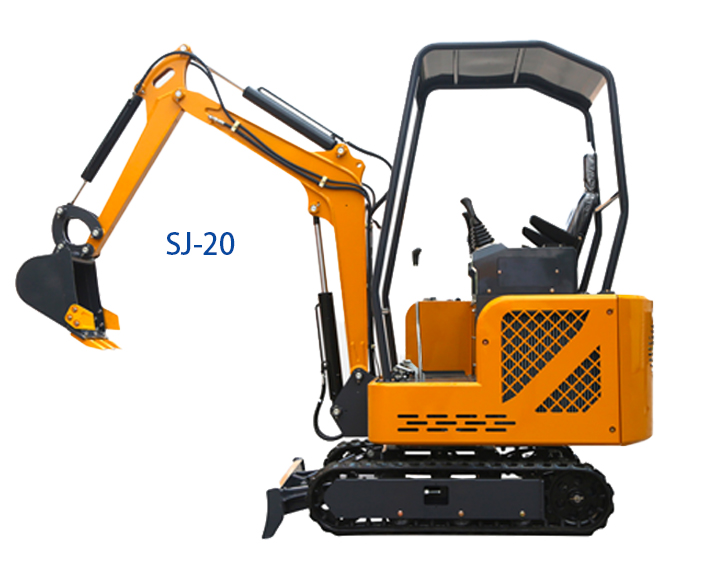
1. The 2.5 Ton Excavator has compact overall size and small tail‑swing radius for confined‑space construction.
2. Its light operating weight enables easy haulage by light trailer to move between different work sites rapidly.
3. Reliable breakout force supports trenching, pit digging, backfilling and small‑scale earth‑moving tasks.
4. Quick‑coupling design permits fast attachment changes for breaking, auger drilling and land grading work.
5. Pilot hydraulic control delivers smooth, accurate movements for fine‑grading and precision excavation jobs.
6. Low ground pressure crawler tracks minimize ground damage on lawns, orchards and paved working areas.
Product Details
1. Compact Body Design & Super Site Adaptability
The core advantage of the 2.5 Ton Excavator lies in its compact and streamlined body structure. As a professional Mini Excavator 2.5ton, it features a narrow body width and short turning radius, completely breaking the space limitation of traditional large excavators. It can easily pass through standard door openings, narrow road sections and low-height working spaces, and is especially suitable for urban old community renovation, indoor wall demolition, garden landscaping, orchard ditching and other confined operations. Unlike heavy excavators that need large construction space, our Excavators Mini 2.5 Ton has zero turning dead angle, which will not damage surrounding buildings, green vegetation and road surfaces during operation, greatly reducing secondary repair costs.
Equipped with high-quality rubber crawler tracks as standard, this Mini Excavator has extremely low ground pressure, which can effectively protect lawns, asphalt roads, cement floors and orchard soil from rolling damage. It can work normally on soft soil, muddy ground and gentle slopes, with strong terrain passing ability. Optional steel tracks are available for harsh working conditions such as gravel yards and hard soil layers, realizing free switching of multiple terrain adaptations and meeting the diverse construction needs of different scenarios.
2. Powerful Power System & Stable Hydraulic Performance
Our Mini Excavator 2.5ton is equipped with a high-efficiency energy-saving diesel engine, which meets Euro V and EPA emission standards, with sufficient power reserve, low fuel consumption and low noise. The engine matches a precisely tuned hydraulic system, realizing stepless speed regulation and smooth power output. The optimized hydraulic distribution technology reduces power loss during operation, making the digging, lifting and swinging actions of the 2.5 Ton Excavator more coherent and stable. Even in long-hour continuous operation, the equipment will not experience weakness or high temperature failure, ensuring stable and efficient construction progress.
In terms of digging performance, the Excavators Mini 2.5 Ton has strong bucket breakout force and arm digging force, which can easily cope with hard clay, frozen soil, gravel mixed soil and other complex soil layers. It can efficiently complete foundation pit excavation, trench digging, earth backfilling, road surface breaking and other heavy-duty operations. Compared with other small-sized Mini Excavator products on the market, our 2.5-ton model has stronger load resistance and more durable power output, effectively improving construction efficiency and shortening project cycles.
3. Multi-Attachment Compatibility & Super Versatility
This 2.5 Ton Excavator is designed with a universal quick-hitch interface and reserved multi-channel hydraulic pipelines, supporting the fast replacement of various working attachments. In addition to the standard digging bucket, the Mini Excavator 2.5ton can be equipped with grading buckets, hydraulic breakers, spiral augers, wood grapples, stone grapples and rake tools. One machine can realize multiple functions including earth digging, ground leveling, rock breaking, pile hole drilling, material grabbing and land sorting, covering almost all small and medium construction and farmland operation scenarios.
For engineering contractors and equipment lessors, the multi-functional design of Excavators Mini 2.5 Ton greatly improves the utilization rate of the equipment. There is no need to purchase multiple single-function machines, which effectively reduces equipment procurement costs and site placement pressure. Whether it is municipal road maintenance, rural house foundation construction, orchard planting and digging, or greenhouse soil improvement, this versatile Mini Excavator can deliver excellent working performance, bringing higher economic benefits for users.
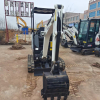
4. Light Weight & Low-Cost Convenient Transportation
Weighing only 2.5 tons, the Mini Excavator 2.5ton features light overall weight and convenient transfer. It can be directly transported by ordinary light trailers and small flatbed trucks, without the need for large professional transport vehicles and special road transportation approval. Users can quickly transfer the 2.5 Ton Excavator between urban construction sites, rural projects and farmland operation sites, saving a lot of logistics transportation costs and transfer time.
Its lightweight design does not affect the overall structural strength. The key parts of the Excavators Mini 2.5 Ton adopt thickened high-strength steel plates and integrated welding technology, with strong impact resistance and compression resistance. The reinforced boom and bucket rod effectively avoid deformation and damage during heavy-duty operation, ensuring long-term stable use of the equipment. Compared with large excavators with high transportation and use costs, this Mini Excavator has lower daily operation and transfer costs, and is more suitable for small-batch, multi-frequency mobile construction operations.
5. Humanized Operation & High Safety & Durability
The 2.5 Ton Excavator adopts a pilot hydraulic control system, with flexible and sensitive operating handles, simple and labor-intensive operation. New operators can quickly get started and master the operation skills, realizing precise control of fine digging and leveling operations. The equipment is optional with an open safety canopy and fully enclosed cab with dustproof, heat insulation and silent functions, equipped with adjustable suspension seats, which can effectively reduce the operator's driving fatigue during long-hour work and greatly improve operation comfort.
In terms of safety design, the Mini Excavator 2.5ton is equipped with an anti-slip crawler system, stable balance structure and emergency stop protection device, which can effectively avoid rollover and misoperation risks during slope operation and complex site construction. All core components of the Excavators Mini 2.5 Ton are brand-new genuine parts, with low failure rate and strong durability. The standardized modular structure design simplifies daily maintenance work. Users can complete daily inspection, oil replacement and parts maintenance independently, reducing later maintenance time and cost. With reliable quality, the service life of our Mini Excavator is significantly longer than that of similar products.
6. Wide Application Scenarios & Reliable After-Sales Service
Our 2.5 Ton Excavator and Mini Excavator 2.5ton are widely used in municipal engineering, urban renovation, rural construction, agricultural development, garden landscaping, road maintenance and other fields. It is suitable for small-scale earthwork, foundation excavation, trench drainage, green belt trimming, orchard ditching and fertilizing, indoor demolition and other projects, with extremely high market applicability. All Excavators Mini 2.5 Ton have passed CE, ISO and other international certifications, meeting the import and use standards of most countries and regions around the world.
We provide one-stop full-cycle services for all sold Mini Excavator products, including pre-sales professional parameter consultation, personalized configuration customization, factory real-shot inspection, and after-sales long-term warranty, free technical guidance and complete spare parts supply. No matter you are a individual user purchasing a single2.5 Ton Excavator for personal use or a trader purchasing bulk Mini Excavator 2.5ton for resale, we can provide the most cost-effective products and intimate services. With stable performance, diverse functions and low operating costs, our Excavators Mini 2.5 Ton is the most worthy compact construction machinery investment for global users.
Leave your messages