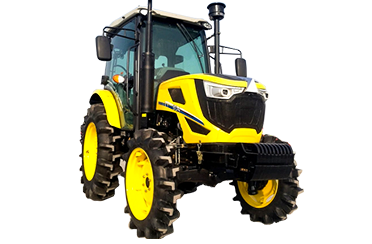

Farm Tractors
1. Reduced Unit Production Cost: Although the initial investment in a tractor is high, its extremely high operating efficiency dilutes the machinery and labor costs per acre. In the long run, the unit cost of large-scale production is far lower than traditional manual labor.
2. Supporting Large-Scale Agricultural Operations: Without tractors, it would be impossible to manage and operate farms spanning hundreds or even thousands of acres. It is a key piece of equipment for modern agricultural enterprises and large farms to achieve profitability.
3. Increased Risk Resilience: It enables rapid harvesting and planting (for example, before heavy rain or frost), reducing losses caused by sudden weather changes.
Technological Integration Advantages: A Carrier of Modern Agricultural Technology
The modern tractor is no longer a simple machine but a highly integrated intelligent platform.
1. The Gateway to Smart Agriculture: It is the core of precision agriculture. Equipped with various sensors, controllers, and navigation systems, the tractor becomes a mobile terminal for collecting field data and making intelligent decisions.
2. Data-Driven Decision-Making: During operation, it can collect real-time data on soil composition, crop growth, and other aspects, providing a scientific basis for future agricultural management. 3. Comfort and Safety: Modern cabs are equipped with air conditioning, shock absorption, and noise reduction devices, significantly improving the driver's working environment. Safety features such as ROPS (Rollover Protective Structure) also ensure driver safety.
Product Details
Tractors can be categorized in various ways, the most common of which are as follows:
· By Purpose:
· General Purpose: The most versatile type, used for most field work and transport.
· Orchard Purpose: Low, compact design, convenient for maneuvering under fruit trees.
· Horticulture Purpose: Small tractors suitable for small farms, orchards, or lawn management.
· By Travel Mechanism:
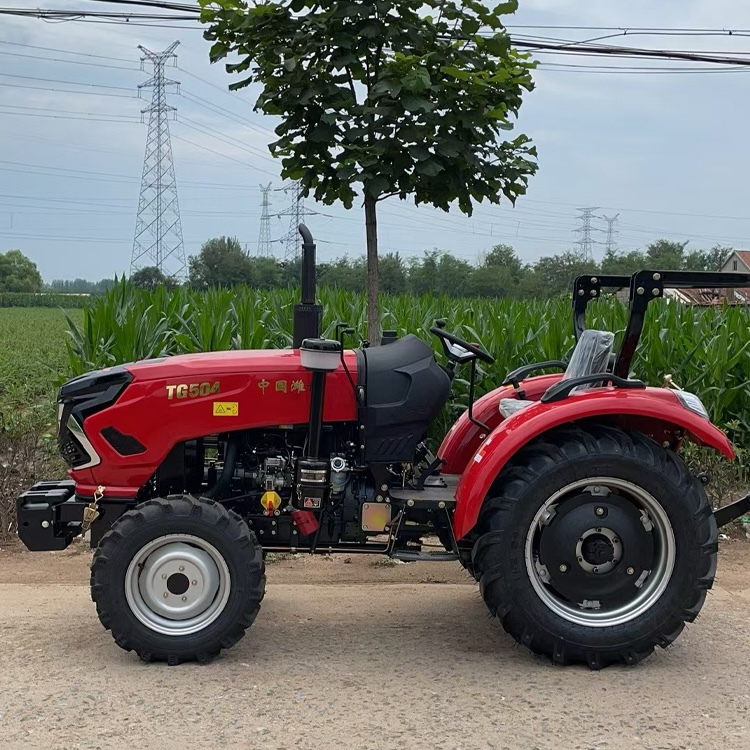
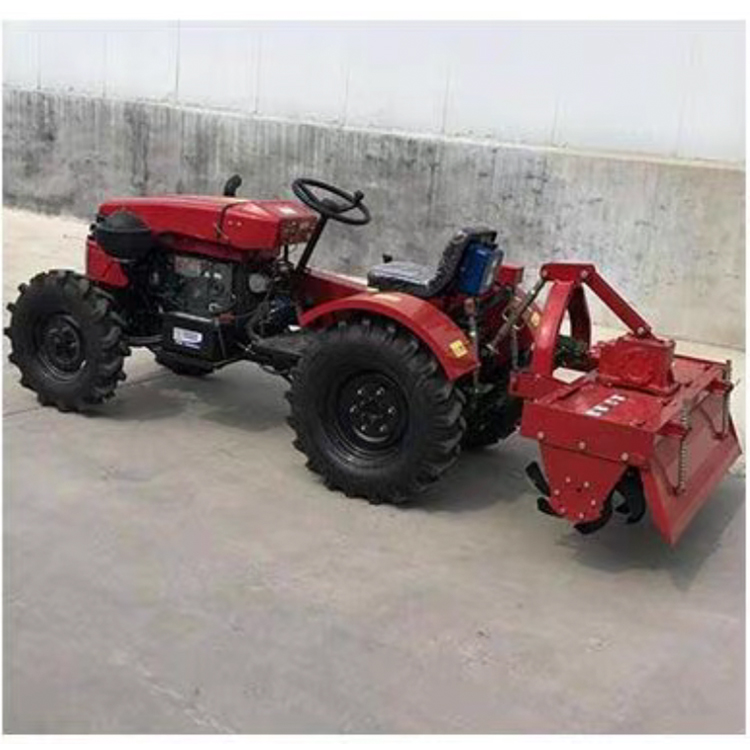
· Wheeled Tractor: The most common, highly adaptable, suitable for both field work and road transport.
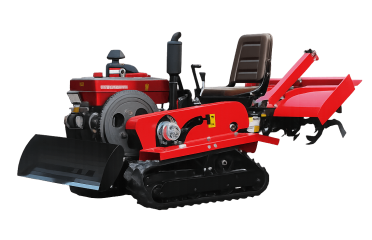
· Crawler Tractor: Low ground pressure, less prone to sinking, and high traction, making it particularly suitable for wetlands, paddy fields, and loose soil, with minimal soil compaction.
---
IV. How to Attach to Implements - Three-Point Hitch System
This is one of the most revolutionary tractor designs. This triangular mechanism, consisting of two lower links and one upper link, allows for quick attachment and detachment of most implements. The operator can easily control the raising and lowering of implements and tillage depth from the cab using a hydraulic system, greatly improving convenience and efficiency. V. Development Trends of Modern Tractors: Intelligence and Precision Agriculture
Modern tractors are far more than just machines; they are now highly intelligent mobile work platforms.
· Automatic Navigation Systems: Based on GPS, tractors can automatically follow pre-set routes, ensuring straight, seamless operation without overlaps or omissions, significantly reducing driver fatigue and improving work quality and efficiency.
· Variable Operation Technology: Tractors automatically adjust seeding, fertilizer, or spraying rates based on pre-generated prescription maps while driving, achieving "on-demand" distribution, conserving resources, protecting the environment, and improving profitability.
· Data Management and Connectivity: While operating, tractors collect data on yields, soil conditions, and other factors, transmitting them to a cloud platform via the Internet to provide a scientific basis for farmers' decision-making.
Leave your messages