
Wheel Loader: Heavy-Duty Power for Construction & Mining
Market Data and Growth Projections
The global wheel loaders market demonstrates robust and sustained growth. Valued at approximately USD 19.85 billion in 2025, the market is projected to reach USD 27.01 billion by 2032, expanding at a compound annual growth rate (CAGR) of 4.5%. Alternative industry analyses place the 2025 market value at USD 21.1 billion, with projections reaching USD 33.7 billion by 2034 at a CAGR of 5.2%, reflecting the breadth and diversity of market segmentation methodologies. Regardless of the data source, the trajectory is clear: demand for wheel loaders is growing steadily across both mature and emerging markets.
The broader construction and mining equipment market provides additional context. Valued at USD 203.5 billion in 2025, this sector is forecast to reach USD 338.5 billion by 2034, growing at a CAGR of 5.8%. Within this landscape, mining applications represent nearly 22% of global heavy equipment demand, with autonomous mining machinery installations increasing by 28% as operators prioritize efficiency and worker safety. Mining and quarrying are among the fastest-growing application segments, with some analysts projecting a CAGR of 9.05% through 2031, fueled by rising global demand for energy transition minerals.
Regional dynamics further shape the market. Asia Pacific dominates with a 36.32% market share in 2025, driven by massive infrastructure programs in China, India, and Southeast Asia. China alone accounts for approximately 22.5% of the global wheel loader market, and Chinese manufacturers have emerged as significant exporters, offering competitive pricing and increasingly sophisticated technology. The Middle East and Africa represent the fastest-growing regional market, buoyed by large-scale infrastructure projects and mining development, while North America and Europe maintain stable demand driven by fleet replacement and equipment modernization cycles.
Mining Segment: A High-Growth Opportunity
The wheel loader for mining occupies a particularly important niche within the broader market. Mining operations demand equipment that can withstand extreme conditions—abrasive materials, heavy payloads, long operating hours, and remote locations—while maintaining high availability and low operating costs. Heavy duty wheel loaders in the 11-to-15-ton and 15-ton-plus payload categories are increasingly preferred for mining applications, where their high breakout force, rapid cycle times, and ability to load haul trucks efficiently contribute directly to mine productivity.
The medium and large loader segment—encompassing machines most commonly used in mining and large-scale construction—was valued at USD 22.15 billion in 2025 and is projected to reach USD 35.23 billion by 2032, growing at a CAGR of 6.85%. This growth rate significantly outpaces the overall wheel loader market, underscoring the strong demand for large, high-capacity machines in mining and heavy construction applications.
Technology Behind the Heavy Duty Wheel Loader
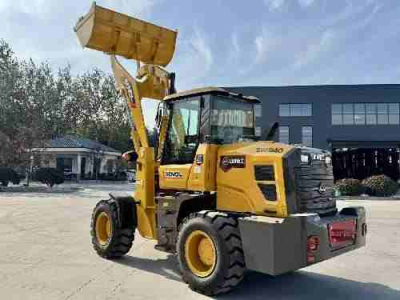
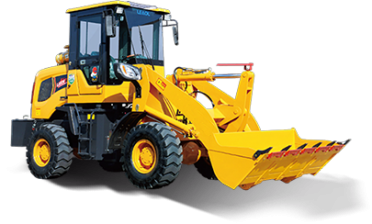
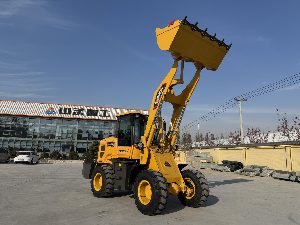
A modern heavy duty wheel loader is a complex integration of powertrain, hydraulics, structural engineering, and electronic control systems. At its core, a high-torque diesel engine—typically ranging from 100 to over 500 horsepower depending on the class—drives a powershift or continuously variable transmission (CVT) that delivers power to the four wheels through heavy-duty axles. The front-mounted bucket, connected to a robust lift arm assembly powered by high-pressure hydraulic cylinders, provides the lifting and dumping force required to handle heavy, abrasive materials.
Key technological features that distinguish modern wheel loaders include load-sensing hydraulic systems that adjust flow and pressure based on demand, reducing fuel consumption and heat generation; automatic bucket leveling systems that maintain bucket angle during lifting, preventing material spillage; and ride control systems that use hydraulic accumulators to cushion the lift arms, improving operator comfort and material retention over rough terrain. Many models also feature differential locks, limited-slip differentials, or all-wheel drive systems to maximize traction in loose or slippery conditions.
The operator cabin has evolved significantly, with modern units featuring ROPS/FOPS-certified structures, ergonomic seating, joystick controls, multi-function displays, and excellent all-around visibility. Advanced electronic systems include onboard diagnostics, telematics connectivity for remote monitoring, and integration with fleet management software—features that are increasingly expected by B2B buyers managing large equipment fleets.
Manufacturing and Application Process
The manufacturing of a wheel loader begins with the fabrication of the main frame and chassis, typically constructed from high-strength steel using precision cutting, robotic welding, and stress-relief processes to ensure structural integrity under extreme loads. The lift arm and bucket assembly are manufactured separately, with critical wear surfaces—such as bucket cutting edges and loader arm pivot points—fitted with hardened steel or wear-resistant alloy components.
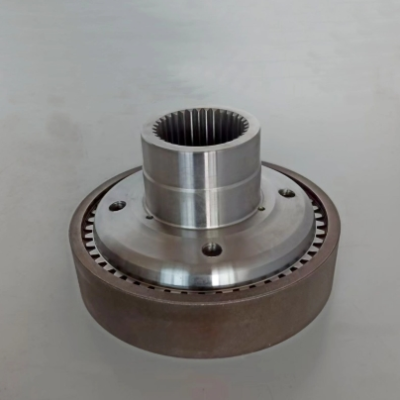
The powertrain assembly involves mounting the engine, transmission, torque converter, and axles to the chassis, followed by installation of the hydraulic system, including pumps, valves, cylinders, and high-pressure hoses. The operator cabin is assembled as a modular unit and then mounted to the chassis via vibration-isolating mounts. Final assembly includes installation of tires (typically heavy-duty L2 or L5 pattern for mining applications), hydraulic fluid and coolant filling, and comprehensive testing—including engine run-in, hydraulic pressure verification, brake system testing, and full-load cycle testing.
In field application, a wheel loader for mining operates by approaching the material pile with the bucket lowered, driving forward to fill the bucket through a combination of forward momentum and hydraulic lift and tilt actions, then reversing and traveling to the dump point—typically a haul truck or stockpile—where the bucket is raised and the material discharged. A skilled operator can complete a full loading cycle in as little as 30 to 60 seconds, making the wheel loader one of the most efficient material handling tools in mining and construction operations.
Key Advantages for B2B Buyers
Investing in a heavy duty wheel loader delivers substantial operational and financial benefits for B2B buyers. The machine's versatility is a primary advantage: with a range of available attachments—including general-purpose buckets, rock buckets, forks, grapples, and snow plows—a single wheel loader can perform multiple tasks, reducing the need for specialized equipment and lowering overall fleet capital expenditure. This versatility is particularly valuable for contractors who work across diverse project types and for rental fleet operators who need equipment that appeals to a broad customer base.
Fuel efficiency has become a critical purchasing criterion, and modern wheel loaders incorporate numerous technologies to reduce fuel consumption—including load-sensing hydraulics, automatic idle shutdown, eco-mode settings, and advanced transmission designs that optimize engine operating speed. For mining operations running equipment 24/7, even modest improvements in fuel efficiency translate to significant annual cost savings.
Durability and uptime are paramount, particularly in mining applications where downtime costs can exceed thousands of dollars per hour. Heavy duty wheel loaders are engineered with reinforced structures, heavy-duty components, and extended service intervals, contributing to high availability and low lifecycle costs. Many manufacturers offer comprehensive warranty programs, global parts distribution networks, and field service support—factors that B2B buyers should carefully evaluate when making purchasing decisions.
Market Trends: What's Shaping the Future
Several major trends are reshaping the wheel loader market and influencing B2B purchasing strategies. First, electrification is emerging as a transformative force. The global electric vehicles for construction, agriculture, and mining market was valued at USD 1.94 billion in 2026 and is projected to reach USD 67.22 billion by 2035, growing at an extraordinary CAGR of 48.29%. Battery-electric and hybrid wheel loaders are entering commercial production, offering zero local emissions, reduced noise levels, and lower operating costs. While initial purchase prices remain 30-40% higher than diesel equivalents, the total cost of ownership proposition is increasingly attractive, particularly for underground mining, indoor applications, and regions with strict emissions regulations.
Second, autonomy and telematics are rapidly advancing. Autonomous mining machinery installations increased by 28% in recent years, and semi-autonomous wheel loader features—including automatic digging, auto-load assist, and remote control operation—are becoming more prevalent. AI-based predictive maintenance systems have reduced mining equipment downtime by 17%, and telematics platforms now provide real-time data on machine location, fuel consumption, operating hours, and fault codes, enabling proactive maintenance and optimized fleet utilization.
Third, the energy transition is driving demand for minerals, which in turn fuels mining equipment demand. Copper, lithium, nickel, and rare earth elements are essential for batteries, electric motors, and renewable energy infrastructure, and mining companies are expanding production to meet this demand. This creates a direct growth opportunity for wheel loader for mining solutions, particularly large, high-capacity models suited for bulk material handling in open-pit operations.
Finally, sustainability and circular economy principles are influencing equipment design and procurement. Manufacturers are increasingly using recycled materials, designing for easier component remanufacturing, and offering engine retrofit programs that extend equipment life while reducing emissions. B2B buyers are incorporating sustainability criteria into procurement decisions, driven by corporate ESG commitments and regulatory requirements.
Frequently Asked Questions (FAQ)
What is the difference between a standard wheel loader and a heavy duty wheel loader?
A heavy duty wheel loader is designed for more demanding applications—typically mining, quarrying, and large-scale earthmoving—compared to standard wheel loaders used in general construction and landscaping. Heavy duty models feature larger payload capacities (often 11 tons and above), more powerful engines, reinforced frames and lift arms, heavy-duty axles and brakes, and more robust hydraulic systems. They often use specialized L5 or rock-type tires for abrasion resistance and may include additional features such as automatic lubrication systems, onboard weighing, and enhanced operator protection for harsh working environments.
What maintenance is required for a wheel loader used in mining?
Mining applications place extreme demands on equipment, requiring a rigorous maintenance regimen. Daily checks include engine oil, coolant, hydraulic fluid, and fuel levels; inspection of tires for cuts and wear; and visual checks for hydraulic leaks and loose hardware. Weekly maintenance includes greasing all pivot points, checking track or axle oil levels, and inspecting bucket cutting edges and teeth. Periodic maintenance—typically every 250, 500, and 1,000 hours—involves engine oil and filter changes, hydraulic filter replacement, transmission oil service, brake system inspection, and detailed undercarriage examination. Following the manufacturer's maintenance schedule and using genuine replacement parts is essential to maximize uptime and preserve warranty coverage in mining environments.
Can a wheel loader be used for both construction and mining applications?
Yes, many wheel loader models are versatile enough to serve both construction and mining applications, though the specific configuration matters. A mid-size wheel loader (6 to 10 tons payload) with a general-purpose bucket can handle typical construction tasks—loading aggregates, moving soil, stockpiling materials—and can also be used in lighter mining or quarrying operations with appropriate tire and bucket upgrades. However, for heavy mining applications involving abrasive rock, high volumes, and continuous operation, a purpose-built heavy duty wheel loader with reinforced components, rock buckets, and heavy-duty tires is recommended to ensure durability and productivity.
What is the typical lifespan and resale value of a wheel loader?
A well-maintained wheel loader typically has a service life of 10 to 15 years or 15,000 to 30,000 operating hours, depending on application intensity, maintenance quality, and operating environment. Construction-grade machines in moderate use often exceed 20,000 hours, while mining machines operating 24/7 in abrasive conditions may have shorter effective lifespans despite heavy-duty construction. Resale values vary by brand, model, condition, and regional market demand, with well-known brands and low-hour machines typically retaining 40-60% of their original value after five years. For B2B buyers, selecting machines with strong brand recognition, good parts availability, and documented maintenance histories can significantly improve resale value and reduce total cost of ownership.
Conclusion
The wheel loader remains a cornerstone of modern construction and mining operations, offering unmatched versatility, productivity, and durability in material handling applications. With a global market valued at nearly USD 20 billion and growing steadily, driven by infrastructure development, mining expansion, and fleet modernization, the demand for high-quality heavy duty wheel loader solutions shows no signs of slowing. For B2B buyers—whether managing a construction fleet, operating a mine, or running an equipment rental business—investing in reliable, fuel-efficient, and technologically advanced loaders means improved operational efficiency, reduced lifecycle costs, and a competitive edge in an increasingly demanding global market.